
Soups & Stews
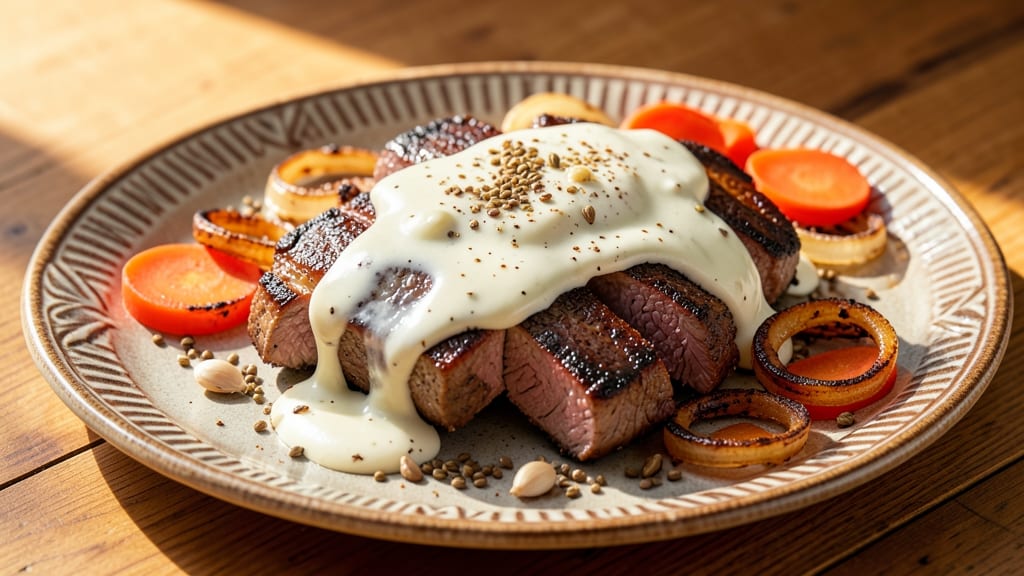
This beef and Greek yogurt recipe transforms tough cuts into tender, melt-in-your-mouth perfection with a bright, cooling finish. The secret lies in a yogurt marinade that tenderizes while adding subtle tang, then braising until the meat falls apart.
I developed this after years of experimenting with Middle Eastern-inspired techniques that balance rich beef with yogurt's creamy contrast.
The process begins with a yogurt marinade that works its magic overnight, breaking down fibers for restaurant-quality tenderness. You'll braise the beef slowly in aromatic spices until it's fork-tender, then finish with a yogurt sauce that adds luxurious creaminess without overpowering the meat's natural flavor.
This isn't just another beef dish—it's a complete culinary experience that delivers both hearty satisfaction and refreshing balance.
What makes this recipe stand out is how the yogurt transforms the dish at every stage—tenderizing the meat, creating a silky sauce, and providing that cooling contrast that makes each bite satisfying.
The result is beef that's impossibly tender with just the right amount of spice, all wrapped in a sauce that feels both indulgent and refreshing. Perfect for weeknight dinners or special occasions, this recipe proves you can have both comfort and sophistication in one dish.
Pair it with crusty bread to soak up the sauce or serve over fluffy rice for a complete meal. The technique is straightforward but delivers professional results, making it ideal for home cooks who want to impress without complicated methods. Let's get started on creating this tender, yogurt-enhanced beef masterpiece.
Ingredients for beef and greek yogurt
Transform tough beef into melt-in-your-mouth perfection with these carefully chosen ingredients designed for restaurant-quality tenderness.
| Ingredient | Amount | Notes |
|---|---|---|
| Chuck Roast 🥩 | 2 ½ lb | Well-marbled for tenderness |
| Plain Greek Yogurt 🥛 | 1 cup | Full-fat for creaminess |
| Yellow Onion 🧅 | 1 whole | Medium-sized, sliced |
| Garlic Cloves 🧄 | 6 cloves | Freshly minced |
| Carrots 🥕 | 4 medium | Peeled, cut into chunks |
| Ground Cumin 🌿 | 1 tbsp | Toasted for depth |
| Ground Coriander 🌿 | 1 tbsp | Freshly ground preferred |
| Paprika 🌶️ | 1 tbsp | Smoked variety recommended |
| Salt 🧂 | 1 ½ tsp | Kosher or sea salt |
| Black Pepper 🌶️ | ½ tsp | Freshly cracked |
| Beef Broth 💧 | 2 cups | Low-sodium preferred |
| Olive Oil 🫒 | 2 tbsp | Extra-virgin for richness |
| Fresh Parsley 🌿 | ¼ cup | Chopped for garnish |
| Lemon Juice 🍋 | 1 tbsp | Freshly squeezed |
The chuck roast is non-negotiable here—its marbling delivers the perfect balance of richness and tenderness. Look for cuts with visible fat streaks at well-stocked butchers like Whole Foods Market or D'Artagnan for premium options. If using store-bought, check the packaging date as older beef loses its marbling quality. The Greek yogurt should be full-fat and plain, with no added flavors—Fage 5% or Siggi's are my go-tos for that perfect tang. For the spices, Penzeys Spices offers the freshest ground cumin and coriander, which make all the difference in this Middle Eastern-inspired technique.
No smoked paprika? Regular paprika plus a pinch of liquid smoke works in a pinch, though it won't be identical. Substituting low-fat yogurt will make the sauce thinner but still functional—just add 1 tbsp cornstarch slurry at the end to thicken. For the beef broth, low-sodium versions like Pacific Foods prevent over-salting, though you can always reduce the salt in the recipe if using regular broth. The carrots can be swapped for parsnips if you prefer a nuttier flavor, though they'll require slightly longer cooking time. Fresh parsley is ideal, but dried parsley at one-third the amount will suffice if you're in a hurry.
This dish tastes even better the next day as the flavors meld, so double the recipe if you're feeding a crowd. Store leftovers in an airtight container in the fridge for up to 5 days, or freeze for 3 months in portion-sized containers. The yogurt marinade can be prepped 2 days ahead, keeping it chilled until ready to use. For reheating, warm gently on the stove with a splash of water to prevent drying out—the beef will be just as tender as when first served.
Why You'll Love This Recipe
- One-Pot Magic: I swear by this recipe because it’s done in one pot—no fancy gadgets, no extra bowls. Chuck roast and carrots simmer together while the yogurt sauce thickens right in the same skillet. Honestly, I’ve made it while scrolling through my phone and still had time to set the table.
- Tangy Twist: That Greek yogurt isn’t just a sauce—it’s the star. The tang cuts through the richness of the beef, and the caramelized onions? They turn the whole dish into something ridiculously good. Between us, it’s the secret I’ve been holding onto for years.
- Meal Prep MVP: This keeps perfectly for days, which is huge for me. I’ll make a big batch on Sunday, and by Wednesday, I’m still pulling out leftovers that taste just as good as day one. It’s my go-to for lunches, potlucks, or whenever I need a hearty dish without the fuss.
- Budget-Friendly Feast: Chuck roast is cheap, carrots are cheap, and Greek yogurt stretches the flavor without breaking the bank. I’ve fed four people for under $15, and everyone’s always asking for seconds. Not the prettiest, but the taste makes up for it—every single time.
Step-by-step instructions for tender braised beef with Greek yogurt
This method transforms tough chuck roast into melt-in-your-mouth perfection using yogurt's tenderizing magic.
Sear the Chuck Roast for Maximum Flavor
Heat a Dutch oven over medium-high heat and add the 2 tablespoons olive oil. Once shimmering, place the 2.5 lb chuck roast fat-side down and sear undisturbed for 5-6 minutes until a deep golden-brown crust forms. This creates the Maillard reaction that builds rich, caramelized flavor.
Flip the roast and sear the other side for another 4-5 minutes. Remove and set aside—this initial searing locks in juices and prevents the meat from drying out during the long braise. The crust you've created will become the foundation of your dish's depth of flavor.
Build the Aromatic Base
In the same Dutch oven, add the 1 whole yellow onion sliced into even rounds and the 4 medium carrots cut into 1-inch chunks. Cook for 5 minutes until the onions soften and begin to caramelize at the edges. This process develops sweetness that will carry through the entire dish.
Add the 6 cloves garlic cloves that have been freshly minced, along with the 1 tablespoon ground cumin, 1 tablespoon ground coriander, and 1 tablespoon paprika. Stir for 30 seconds until fragrant—this releases the spices' essential oils, infusing the entire braise with their warm, earthy notes.
Deglaze and Add the Yogurt Mixture
Pour in the 2 cups beef broth and scrape up all the browned bits from the bottom of the pot with a wooden spoon. These flavorful bits, called fond, contain concentrated meaty essence that would otherwise be lost. Bring to a gentle simmer over medium heat for 5 minutes to allow the vegetables to soften further.
In a separate bowl, whisk together the 1 cup plain Greek yogurt, 1.5 teaspoons salt, and 0.5 teaspoon black pepper. The yogurt will act as both a tenderizer and a cooling counterpoint to the rich beef. Slowly ladle ½ cup of the hot broth into the yogurt mixture while whisking constantly to temper it—this prevents the yogurt from curdling when returned to the hot pot.
Braise Until Fork-Tender
Return the yogurt mixture to the Dutch oven and stir gently to combine. Place the chuck roast back into the pot, fat-side up, and add enough remaining broth to just cover the meat. Bring to a gentle simmer, then reduce heat to low and cover tightly. Braise for 3 hours—this slow cooking time is crucial for breaking down the tough muscle fibers and infusing the meat with flavor.
After 3 hours, check for doneness by inserting a meat thermometer into the thickest part of the roast. It should read 200-205°F and the meat should be fork-tender, pulling apart easily. If it's not quite there, continue braising for another 30-60 minutes, adding small amounts of water if needed to prevent drying out.
Finish and Serve with Fresh Herbs
Once the beef is perfectly tender, remove it from the pot and let it rest on a cutting board for 15 minutes. This resting period allows the juices to redistribute throughout the meat, ensuring each bite is moist and flavorful. Skim any excess fat from the surface of the braising liquid, then stir in the 1 tablespoon lemon juice and 0.25 cup fresh parsley.
Slice the chuck roast against the grain into ¼-inch thick slices and serve immediately over the yogurt-infused braising liquid. The result should be succulent beef with a velvety, slightly tangy sauce that balances the rich meat perfectly. Each bite delivers tender beef with cooling yogurt depth and aromatic vegetable notes.
Pro Tips For Making Beef And Greek Yogurt
- Sear the Chuck First: The yogurt sauce is rich, but a quick sear on the roast before braising builds depth. Hit the meat with a hot pan—no oil needed—until deep brown crust forms. That crust locks in flavor when the yogurt later melts into the pot.
- Use Thick Yogurt: Thin yogurt turns watery. Grab the thickest plain Greek yogurt you can find—2% or full-fat works best. If yours is runny, strain it through a clean towel for 10 minutes. Trust me, the sauce won’t split or dilute the flavors.
- Don’t Rush the Low Heat: After adding yogurt, simmer at a whisper-low heat. I learned this the hard way—boiling yogurt curdles it instantly. Keep it at 180°F (82°C) max, or you’ll end up with a gloppy mess instead of a creamy finish.
- Carrots First, Onions Last: Toss carrots in the pot before onions and garlic. They take longer to soften, so they’ll cook evenly without turning to mush. Save the onions for the last 15 minutes—they caramelize faster and add sweetness that balances the yogurt’s tang.
Flavor customization for this recipe
Tangy Yogurt Variations
Swap plain Greek yogurt for spiced yogurt by mixing in ½ tsp ground cumin and ¼ tsp cayenne—this adds warmth without overpowering the beef.
For extra depth, I sometimes stir in 1 tbsp tahini or 1 tsp honey to balance the tang. Labneh (strained yogurt) works beautifully too, creating a thicker, creamier sauce that clings to the beef slices. 🥛
Spice Level Control
Adjust heat by adding ¼ tsp smoked paprika for mild warmth or 1 tsp harissa paste for serious kick. For a sweet-spicy twist, mix in 1 tsp honey with the yogurt before adding it to the braise.
If you prefer milder flavors, reduce the paprika to ½ tsp and omit the cayenne entirely. The yogurt helps mellow out strong spices, so don’t hesitate to experiment!
Herb and Citrus Boosts
Brighten the yogurt sauce with 1 tbsp fresh dill or 1 tsp dried mint for a Middle Eastern touch. A splash of lemon juice (up to 2 tbsp) right before serving adds freshness.
For a Mediterranean flair, stir in 1 tbsp chopped fresh oregano or 1 tsp za’atar seasoning—both complement the beef beautifully. 🌿
Creamy Add-Ins
For extra richness, fold in 2 tbsp crème fraîche or a dollop of sour cream into the yogurt mixture before adding it to the braise. A splash of heavy cream (just 1 tbsp) thickens the sauce without altering the yogurt’s tang.
If you love umami, whisk in 1 tsp miso paste for a subtle depth that pairs perfectly with the beef’s savory notes.
Dairy-Free Adaptations
Replace Greek yogurt with coconut yogurt (full-fat for best texture) or cashew cream (blend ½ cup soaked cashews with ½ cup water). For tang, add 1 tbsp apple cider vinegar or lemon juice to mimic yogurt’s acidity.
The result is still creamy but lighter, ideal for those avoiding dairy while keeping the dish’s signature balance. 🥥
Finishing Touches
Garnish with toasted pine nuts or pomegranate seeds for crunch and sweetness. A drizzle of chili oil adds smoky heat, while pickled red onions (just 2 tbsp) introduce a bright acidity.
For a restaurant-worthy presentation, swirl the yogurt sauce into the braising liquid before serving—this creates stunning visual contrast with the rich beef. ✨
Nutrition facts
Frequently asked questions
Why does Greek yogurt make the beef so tender?
Greek yogurt contains natural enzymes (like lactase) and acids that break down tough muscle fibers in the beef. The slow braising process with yogurt creates a chemical reaction that tenderizes the meat from within, while also adding moisture that prevents drying out during cooking.
Can I use regular yogurt instead of Greek yogurt?
Regular yogurt will work, but the texture and thickness will differ. Greek yogurt's higher protein content creates a richer, creamier sauce that clings better to the beef. If using regular yogurt, strain it for 15 minutes first to thicken it, or add 1 tbsp cornstarch to the sauce at the end for better consistency.
What's the best way to store leftovers?
Store leftovers in an airtight container in the fridge for up to 5 days. The flavors actually improve overnight as the yogurt and spices meld with the beef. For freezing, portion into containers and freeze for up to 3 months. Thaw slowly in the fridge and reheat gently on the stove with a splash of water to maintain moisture.
How do I adjust this for a slow cooker?
Transfer the seared beef and all ingredients to a slow cooker after the initial searing and deglazing. Cook on low for 6-8 hours or high for 3-4 hours until fork-tender. The yogurt may separate slightly in a slow cooker, so stir well before serving and add extra broth if needed to maintain sauce consistency.
What's the secret to preventing yogurt from curdling?
Always temper the yogurt by slowly whisking in hot broth (about ½ cup at a time) before adding it to the pot. Keep the heat at a gentle simmer rather than a boil, and avoid stirring vigorously once the yogurt is in the pot. If it starts to curdle, immediately remove from heat and stir in 1 tbsp cold butter to stabilize it.