
Soups & Stews
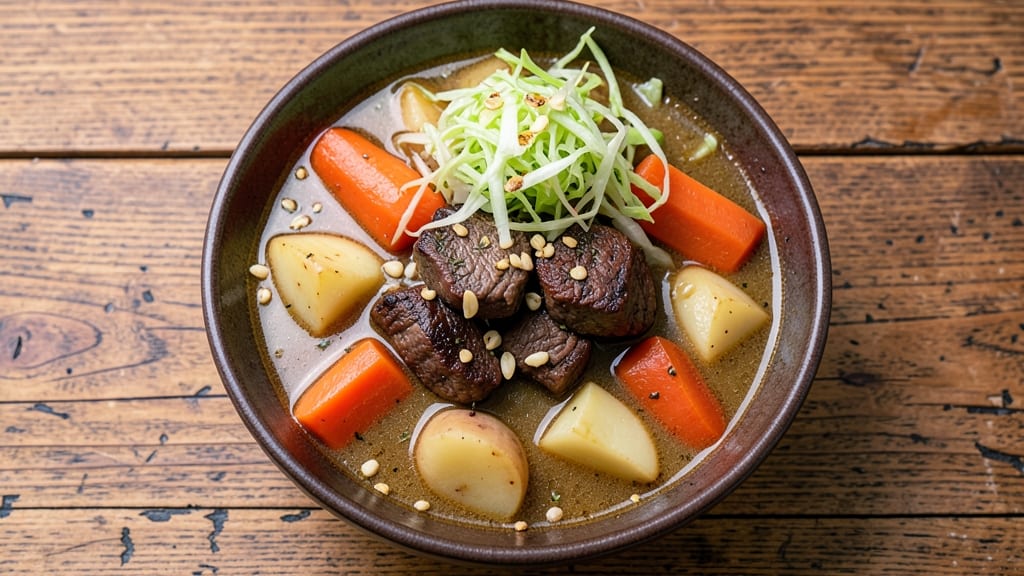
This beef and cabbage soup recipe with potatoes delivers the kind of comforting, one-pot meal that transforms a simple weeknight into a cozy gathering. The secret lies in slow simmering—where tough beef becomes tender, cabbage melts into sweetness, and potatoes soak up every rich, savory note.
I developed this recipe after years of perfecting the balance between hearty texture and deep, warming flavors, ensuring every spoonful feels like a hug in a bowl.
The beauty of this soup is its simplicity: just a few ingredients, one pot, and 30 minutes of hands-off time (plus simmering). You’ll start by browning the beef for deep flavor, then build layers of aroma with onions, garlic, and herbs before adding the vegetables.
The potatoes absorb the broth beautifully, while the cabbage softens into tender, slightly sweet strands. This isn’t just soup—it’s a foolproof weeknight staple that reheats perfectly and tastes even better the next day.
What makes this recipe stand out is its versatility. Serve it as a standalone meal with crusty bread for dipping, or pair it with a simple green salad for balance. The broth is rich enough to stand alone but light enough to complement other dishes.
Whether you’re feeding a family or meal prepping for the week, this soup delivers restaurant-quality comfort without the fuss. The key is patience—letting everything simmer until the flavors meld into something truly special.
For those short on time, a pressure cooker cuts the simmering time in half without sacrificing flavor. Garnish with fresh parsley or a drizzle of sour cream for extra brightness, but don’t skip the crusty bread—it’s essential for soaking up every last drop of that savory broth. Let’s get cooking!
Ingredients for beef and cabbage soup recipe with potatoes
Sixteen ingredients that transform into a deeply satisfying one-pot meal.
| Ingredient | Amount | Notes |
|---|---|---|
| Beef Chuck Roast 🥩 | 1 ½ lb | Cut into 1-inch cubes |
| Yellow Onions 🧅 | 2 whole | Medium size, sliced |
| Carrots 🥕 | 4 medium | Peeled, cut into chunks |
| Garlic Cloves 🧄 | 4 cloves | Minced for depth |
| Green Cabbage 🥬 | 1 small head | Core removed, chopped |
| Russet Potatoes 🥔 | 2 lb | Peeled, cut into chunks |
| Beef Broth 💧 | 6 cups | Low-sodium preferred |
| Tomato Paste 🍅 | 2 tbsp | For richness |
| Dried Thyme 🌿 | 1 tsp | Or 1 tbsp fresh |
| Bay Leaves 🍃 | 2 whole | Removed before serving |
| Salt 🧂 | 1 ½ tsp | Adjust to taste |
| Black Pepper 🌶️ | ½ tsp | Freshly ground |
| Olive Oil 🫒 | 2 tbsp | For browning beef |
| Fresh Parsley 🌿 | ¼ cup | Chopped for garnish |
The beef is the foundation—chuck roast delivers that melt-in-your-mouth texture when cooked low and slow. Costco or Walmart usually have it pre-cut, but if buying whole, trim excess fat for a cleaner broth. Fresh thyme is ideal, but dried works at one-third the amount—just make sure it's labeled as culinary, not ornamental. For the cabbage, green is sweeter than red, and the smaller the head, the more tender it'll become. Potatoes should be firm and free of sprouts—Russets hold up best in long simmers.
No beef broth? Vegetable broth plus 1 tbsp soy sauce works in a pinch. Substituting carrots? Celery or parsnips add similar sweetness. The tomato paste can be skipped if you prefer a lighter broth, but it adds depth that's worth the effort. For a quicker version, pre-chop your veggies while the beef browns—every minute counts. If you're using a pressure cooker, reduce the broth by 2 cups to account for steam buildup, and cook for 20 minutes after browning the beef.
This soup only gets better with time—day-old tastes richer as flavors meld. Store in airtight containers for 4-5 days in the fridge or freeze for 3 months. I double the recipe and freeze half—perfect for lazy Mondays. To reheat, warm over medium heat with a splash of water if it's too thick. The parsley can wait until serving, but the bay leaves? Remove them early—they're tough to chew.
Why You'll Love This Recipe
- One-Pot Magic: I swear by this recipe—dump everything in a pot, walk away, and come back to a house smelling like home. The chuck roast practically melts into tender shreds while the cabbage softens just enough to stay crisp in spots, and the onions caramelize right in the broth. No fancy techniques, just good old-fashioned patience.
- Deep Umami Bomb: That slow-cooked beef? It’s the star—rich, beefy, and packed with flavor from the garlic and onions. The carrots add natural sweetness that balances the cabbage’s slight bite, while the potatoes soak up every last drop of that savory broth. Honestly, I’ve made simpler soups that tasted flat by comparison.
- Lunchbox Hero: Between us, this is my go-to for meal prep. The leftovers reheat like a dream—just toss them in a thermos for work or pack them cold for school lunches. The potatoes stay hearty, the beef stays juicy, and even picky eaters go for seconds. (Yes, even my teenager.)
- Budget Winner: A pound of chuck roast stretches across three meals, and cabbage lasts forever in the fridge. I’ve fed four people for under $10 with this—no fancy cuts, no overpriced ingredients. Plus, it’s the kind of soup that tastes better the next day, so you’re not wasting a thing. My wallet thanks me every time.
Step-by-step instructions for beef and cabbage soup with potatoes
This hearty soup comes together in one pot with minimal prep and maximum flavor.
Brown the Beef for Deep Flavor
Heat the 2 tablespoons olive oil in a large Dutch oven or heavy pot over medium-high heat. Working in batches if needed, add the 1.5 lb beef chuck roast cut into 1-inch cubes and sear until deeply browned on all sides—about 8-10 minutes. This step is crucial; the Maillard reaction creates rich, caramelized flavors that form the soup's foundation.
Once browned, remove the beef with a slotted spoon and set aside. You'll notice the beef releases some fat into the pot—don't wipe it out. This rendered fat will help build the soup's depth. If the pot appears dry, add another 1 tablespoon olive oil to maintain even cooking.
Sauté Vegetables for Aromatic Base
In the same pot, add the 2 whole yellow onions sliced and the 4 medium carrots cut into chunks. Cook over medium heat for 5-6 minutes until the onions soften and the carrots begin to caramelize slightly. Stir occasionally to prevent sticking.
Add the 4 cloves minced garlic cloves and cook for another 30 seconds until fragrant. Here's where the flavor really starts to develop—you should smell sweet onions, earthy garlic, and the natural sweetness of the carrots. This aromatic base will infuse the entire soup with its rich foundation.
Build the Soup with Broth and Seasonings
Return the browned beef to the pot. Stir in the 2 tablespoons tomato paste and cook for 1 minute to deepen its flavor. Pour in the 6 cups beef broth, scraping up any browned bits from the bottom of the pot. Add the 1 small head green cabbage chopped, 2 lb russet potatoes cut into chunks, 1.5 teaspoons salt, 0.5 teaspoon black pepper, 1 teaspoon dried thyme, and the 2 whole bay leaves.
Bring everything to a gentle boil, then reduce heat to low-medium and cover partially. Let it simmer for 45-50 minutes until the beef is fork-tender and the potatoes are easily pierced with a knife. The soup should develop a rich, savory aroma as it cooks—this is your signal that all the flavors are melding together beautifully.
Finish and Adjust Seasoning
Once the soup is fully cooked, remove the 2 whole bay leaves and discard them. Taste the soup and adjust seasoning if needed—you might want to add a bit more salt or pepper to suit your preference. The soup should be hearty and flavorful, with the beef falling apart easily and the vegetables tender but still holding their shape.
Real talk: if the soup seems too thick after simmering, add ½ cup water or more broth to reach your desired consistency. The potatoes should be tender but not mushy, and the cabbage should be soft enough to eat with a spoon but still retain some texture.
Garnish and Serve
Ladle the hot soup into bowls and garnish each serving with 0.25 cup chopped fresh parsley. The parsley adds a fresh, bright note that cuts through the richness of the beef and vegetables. Serve immediately while hot—this soup tastes best straight from the pot, with all its comforting aromas wafting through the kitchen.
For the full experience, pair with crusty bread to soak up every last drop of that flavorful broth. The combination of tender beef, hearty vegetables, and rich broth makes this one-pot wonder perfect for chilly evenings or whenever you crave a homey, satisfying meal.
Pro Tips For Making Beef And Cabbage Soup Recipe With Potatoes
- Brown the Chuck: DESCRIPTION: I learned this the hard way—rushing the beef chuck in a pot of soup just gives you gray, mushy meat. Sear it first in a hot Dutch oven (no oil needed—it’s fatty enough) until deep brown on all sides. That crust locks in flavor and keeps it tender. Five minutes per side, no skimp.
- Core the Carrots: DESCRIPTION: Whole carrots take forever to soften, but if you slice them into ½-inch chunks and cut a shallow X in the bottom, they’ll cook faster and absorb broth better. No, it’s not fancy, but it works—your soup won’t have half-cooked chunks lurking at the bottom.
- Salt the Water Hard: DESCRIPTION: This isn’t the time to play nice. Use at least 2 teaspoons of salt in the broth (more if you’re using low-sodium bouillon). The cabbage and potatoes soak up flavor like sponges, and bland broth ruins everything. Taste the water after 20 minutes—if it’s not noticeably salty, add more.
- Add Cabbage Late: DESCRIPTION: Tossing cabbage in at the start turns it to mush. Wait until the beef is fork-tender and potatoes are nearly done, then add the wedges. They’ll just wilt enough to soften without turning to sludge. (Yes, even if you’re impatient like me.)
Essential equipment for this recipe
Dutch Oven Essentials
A large Dutch oven (like the Le Creuset 6-quart) is my go-to for this soup because it distributes heat evenly and handles both searing and simmering beautifully. Look for one with a tight-fitting lid to lock in moisture during the long simmer.
If you don’t own one, a heavy-bottomed stockpot (like All-Clad Stainless Steel) works too—just ensure it’s deep enough to accommodate all ingredients without boiling over. 🔥
Knife & Cutting Tools
Invest in a sharp chef’s knife (I love the Victorinox Fibrox) and a cutting board (like Teakhaus Bamboo) to prep ingredients efficiently. The beef should be cut into 1-inch cubes, onions into ¼-inch slices, and potatoes into 1-inch chunks for even cooking.
A mandoline (like OXO Good Grips) speeds up veggie prep if you’re making this often. 💡
Measuring & Mixing
Use a stainless steel measuring cup (like OXO Good Grips) for broth and a spoon rest (like Kuhn Rikon) to keep your utensils organized. A wooden spoon (not metal) helps stir the soup without scratching your pot.
For seasoning, a spice grinder (like Baratza Encore) ensures freshly ground pepper, which makes a noticeable difference. ✨
Pressure Cooker Shortcut
For faster cooking, a pressure cooker (like Instant Pot Duo 6-quart) cuts simmering time to 20 minutes after browning. Just reduce the broth to 4 cups to account for steam pressure.
The sous-vide attachment (like Anova Precision Cooker) also works—sear the beef first, then cook at 195°F for 3 hours before finishing in the pot. 💫
Storage & Serving
Store leftovers in glass airtight containers (like Pyrex 4-cup bowls) for up to 5 days in the fridge or 3 months in the freezer. For serving, a ladle with a strainer (like OXO Good Grips) helps portion soup neatly.
A slotted spoon (like Kuhn Rikon) is perfect for removing bay leaves or garnishing with parsley. 🍽️
Nutrition facts
Frequently asked questions
Can I use ground beef instead of chuck roast?
Ground beef works but will make the soup more tender rather than fork-tender. For best results, use 80/20 ground chuck (the fat adds flavor) and simmer for 30-40 minutes instead of 45-50 minutes. The texture will be meatier, but you'll lose that satisfying beefy bite from larger chunks.
Why does my soup taste watery even after simmering?
Watery soup usually means too much liquid or undercooked potatoes. First, check if your potatoes are fully tender (pierce with a fork—they should slide in easily). If the broth is still too thin, let it simmer uncovered for 10-15 minutes to reduce. For next time, reduce broth to 5 cups or add ½ cup tomato paste to thicken naturally.
How can I make this soup spicier?
Add heat with 1-2 teaspoons smoked paprika or ½ teaspoon cayenne pepper when browning the beef. For depth, stir in 1 tablespoon hot sauce (like Cholula) at the end, or top each bowl with diced jalapeños. If you love spice, simmer in a Dutch oven with a tight lid—it traps heat better for more intense flavors.
Can I make this recipe in a slow cooker?
Brown the beef first, then transfer everything (including broth) to a 6-quart slow cooker. Cook on low for 7-8 hours or high for 4-5 hours. The slow cooker's gentle heat ensures tender beef and perfectly cooked potatoes without monitoring. Just skip the bay leaves—they can turn bitter when overcooked in a slow cooker.
What’s the best way to reheat leftovers?
Reheat gently on the stove over medium-low heat with a splash of water or broth to loosen the soup. Never microwave directly—it can make the potatoes gummy. For even better results, transfer to a pot, cover, and simmer for 5-10 minutes. If the soup thickens too much, stir in 1-2 tablespoons water at a time until creamy again.