
Main Courses
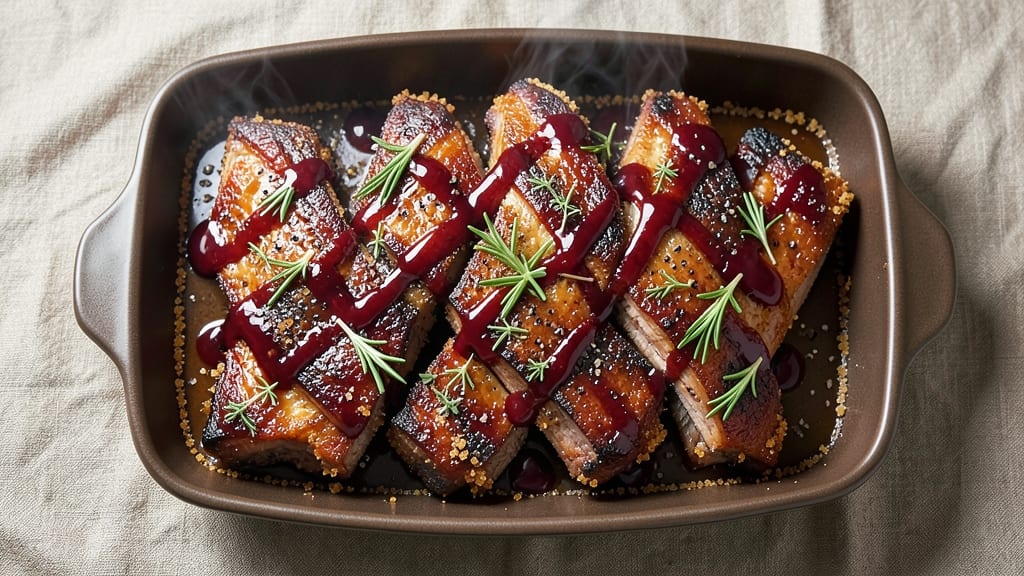
This baked boneless beef ribs recipe delivers fall-apart tenderness that transforms tough cuts into melt-in-your-mouth perfection. The secret lies in a slow bake with balsamic glaze that caramelizes into a sticky, flavorful crust while keeping the meat impossibly tender inside.
I've perfected this technique over years of testing—no braising required, just simple seasoning and patience for restaurant-quality results at home.
The process begins with a dry rub of salt, pepper, garlic powder, and smoked paprika, which forms a flavorful bark while the meat bakes. Unlike traditional ribs, boneless cuts cook faster but benefit from the same low-and-slow approach—just at a slightly higher temperature.
The balsamic glaze, brushed on during the final hour, adds depth and a subtle tang that balances the rich beef flavor.
By the time these ribs emerge from the oven, they'll be glazed, tender, and ready to slice—no forking required. The glaze clings to each bite, creating a perfect balance of sweetness and savory depth.
Serve with roasted potatoes or a fresh green salad to complete the meal. This recipe proves you don't need a smoker or hours of prep for ribs that impress.
What makes this method foolproof is the one-pan approach—minimal cleanup and maximum flavor. The ribs rest briefly before slicing, ensuring every bite stays juicy. Whether you're feeding a crowd or treating yourself to a special dinner, these ribs deliver restaurant-quality tenderness with minimal effort. Let's get started!
Ingredients for baked boneless beef ribs
Transform tough beef ribs into melt-in-your-mouth perfection with these carefully chosen ingredients.
| Ingredient | Amount | Notes |
|---|---|---|
| Boneless Beef Ribs 🥩 | 2 lb | Center-cut preferred for tenderness |
| Balsamic Vinegar 🍷 | ½ cup | High-quality aged variety |
| Brown Sugar 🍚 | ¼ cup | Light or dark preferred |
| Kosher Salt 🧂 | 2 tbsp | Diamond Crystal preferred |
| Freshly Ground Black Pepper 🌶️ | 1 ½ tbsp | Coarse grind preferred |
| Garlic Powder 🧄 | 1 tbsp | Freshly ground preferred |
| Smoked Paprika 🌶️ | 1 tbsp | Spanish smoked preferred |
| Olive Oil 🫒 | 2 tbsp | Extra-virgin for richness |
| Honey 🍯 | 1 tbsp | Wildflower preferred |
| Fresh Rosemary 🌿 | ¼ cup | Chopped, stems removed |
| Fresh Thyme 🌿 | ¼ cup | Leaves only, chopped |
| Butter 🧈 | 2 tbsp | Unsalted, softened |
The beef selection is critical—center-cut boneless ribs deliver the best tenderness. Look for cuts with good marbling at Whole Foods or your local butcher shop, where they can often recommend the freshest options. The balsamic vinegar should be aged at least 12 years for optimal depth of flavor, though good-quality supermarket brands work well too. If you can't find aged balsamic, a high-quality regular balsamic will suffice. The fresh herbs—rosemary and thyme—should be vibrant and fragrant; avoid any that smell musty or appear wilted.
No aged balsamic? Substitute with 2 tbsp of balsamic glaze plus 1 tbsp of red wine vinegar for similar tang. The honey can be swapped for maple syrup if you prefer a less floral note. For a deeper smoky flavor, increase the smoked paprika to 1.5 tbsp and add 0.5 tsp of liquid smoke. The butter can be replaced with vegetable shortening if you're concerned about dairy content, though it won't have the same rich flavor. If you're short on time, pre-chopped fresh herbs from the store work fine, though they may lack the same intensity as freshly chopped.
Store any unused balsamic vinegar in a cool, dark place for up to 1 year, while fresh herbs should be wrapped in damp paper towels and refrigerated for 5-7 days. The beef ribs can be prepped and refrigerated for up to 24 hours before baking, though they're best cooked fresh. Leftovers can be reheated in the oven at 350°F (175°C) for 10-15 minutes, covered with foil to retain moisture. For meal prep, portion the ribs into individual servings and freeze for up to 3 months—just thaw overnight in the fridge before reheating.
Why You'll Love This Recipe
- One-Pan Magic: I swear by this recipe—just toss the ribs, balsamic, and brown sugar on a sheet pan, and let the oven do the work. No messy sauces, no flipping, no stress. The ribs practically caramelize themselves while you’re making dinner.
- Sweet-Savory Balance: That balsamic glaze cuts through the richness of the beef like a perfect contrast. The brown sugar edges make every bite addictive—crispy, sticky, and impossible to stop eating.
- Game for Any Night: Honestly, this is my go-to when I need something impressive but effortless. Serve it with roasted potatoes for a weeknight win, or over mashed sweet potatoes for a cozy Sunday dinner. It works everywhere.
- Budget-Friendly Luxury: Between us, boneless beef ribs are way more affordable than full slabs, and this method stretches them beautifully. Leftovers? Even better—toss them in sandwiches or salads the next day. Smart, satisfying, and wallet-friendly.
Step-by-step instructions for baked boneless beef ribs
Transform tough rib meat into melt-in-your-mouth perfection using this precise baking method.
Prepare the Dry Rub and Marinate the Ribs
In a medium bowl, combine the 2 tbsp kosher salt, 1.5 tbsp freshly ground black pepper, 1 tbsp garlic powder, 1 tbsp smoked paprika, 0.25 cup chopped fresh rosemary, and 0.25 cup chopped fresh thyme. Mix thoroughly until the herbs are evenly distributed and the spices form a cohesive paste. This dry rub will create a flavorful crust while tenderizing the meat.
Pat the 2 lb boneless beef ribs dry with paper towels—removing all moisture ensures the rub adheres properly and promotes better browning. Rub the spice mixture all over the ribs, pressing firmly to create an even coating. For maximum flavor penetration, let the ribs sit at room temperature for 30 minutes while you prepare the oven.
Create the Balsamic Glaze and Preheat the Oven
In a small saucepan, combine the 0.5 cup balsamic vinegar, 0.25 cup brown sugar, 1 tbsp honey, and 2 tbsp olive oil. Bring to a simmer over medium heat, stirring constantly for 5-7 minutes until the mixture thickens slightly and reduces by about 25%. The glaze should coat the back of a spoon with a glossy, syrupy consistency. Remove from heat and set aside.
Preheat your oven to 325°F with the rack positioned in the lower-middle position. This temperature ensures even cooking without drying out the meat. Place a wire rack on a rimmed baking sheet and line it with aluminum foil for easy cleanup. The rack allows air to circulate around the ribs, promoting even browning.
Bake the Ribs Until Fork-Tender
Place the rubbed ribs on the prepared wire rack, fat-side up if applicable. Bake for 2 hours, then carefully flip the ribs and continue baking for another 1 hour. This two-stage approach ensures even cooking and prevents the ribs from drying out. After 2.5 hours, check the internal temperature using a meat thermometer—it should read 190-195°F at the thickest part. If not, continue baking for another 15-30 minutes.
The ribs are done when they pull apart easily with two forks and the edges begin to caramelize. If the ribs brown too quickly, tent loosely with foil to prevent over-browning while they finish cooking. The goal is tender, pull-apart texture with a slightly crisp exterior.
Glaze and Finish with Butter
Remove the ribs from the oven and increase the heat to 425°F. Brush the reserved balsamic glaze evenly over the ribs, working quickly so the glaze doesn't harden. Return the ribs to the oven for 5-7 minutes to caramelize the glaze and create a glossy finish. Watch closely—the glaze burns easily, so aim for a deep amber color rather than blackened patches.
In the final 2 minutes of cooking, remove the ribs and dot the top with 2 tbsp softened butter. Return to the oven just long enough for the butter to melt and create a rich, golden sheen. Let the ribs rest for 10 minutes before serving—this allows the juices to redistribute, ensuring each bite is moist and flavorful.
Serve with Confidence
Using two forks, carefully pull the ribs apart into individual pieces, arranging them on a serving platter. The meat should be fork-tender, with a dark, caramelized exterior and a glossy balsamic glaze. Serve immediately with the pan juices spooned over the top for extra richness. Pair with roasted vegetables or crusty bread to soak up the delicious sauce.
These ribs deliver fall-apart tenderness with a perfect balance of smoky, sweet, and tangy flavors. The key lies in patience—low-and-slow baking transforms tough meat into a restaurant-worthy centerpiece. Enjoy the results of your careful preparation!
Pro Tips For Making Baked Boneless Beef Ribs
- Preheat Pan to Smoke: Crank your oven to 425°F (220°C) and let it scream for 10 minutes before adding the ribs. I used to skip this, and the balsamic would just sit there like a sad puddle instead of caramelizing into a glossy glaze—high heat upfront is what turns that vinegar into liquid gold.
- Pat Dry, Then Salt: Wipe those ribs with paper towels until they’re bone-dry, then hit them with kosher salt before baking. Moisture is the enemy of crust here—salting first guarantees a better Maillard reaction, and the sugar in the glaze will stick like it’s supposed to.
- Deglaze First, Then Glaze: After searing the ribs (if you do), pour in the balsamic vinegar immediately and let it bubble for 2 minutes before adding brown sugar. I learned this the hard way—adding sugar too soon just makes a sticky mess instead of a sticky glaze.
- Tent Foil, Not Seal: Cover the baking dish with foil loosely—just crumpled over the top, not pressed down. You want steam to escape, not turn the ribs into a soggy science experiment. If they’re still not tender after 45 minutes, that’s when you crank the heat to 450°F for the last 10.
Perfect pairings for baked boneless beef ribs
Classic Side Pairings
For a complete meal, serve these ribs with garlic mashed potatoes—their creamy texture contrasts beautifully with the caramelized exterior. I like to make them with 1/2 cup sour cream and 4 cloves roasted garlic for extra richness.
A simple green salad with arugula, cherry tomatoes, and a balsamic vinaigrette adds freshness to balance the richness of the ribs. 🥗
Bread for Soaking Sauce
Crusty sourdough bread or focaccia is perfect for soaking up the delicious balsamic glaze and pan juices. Warm the bread slightly before serving so it's soft enough to absorb the flavors. For an extra touch, sprinkle flaky sea salt and fresh cracked black pepper on top before serving.
Vegetable Sides
Roasted carrots and parsnips with thyme and honey make an excellent seasonal pairing. Toss 1 lb mixed vegetables with 2 tbsp olive oil, 1 tbsp honey, and 1 tsp fresh thyme, then roast at 400°F for 25 minutes.
The natural sweetness complements the smoky ribs perfectly. 🌱
Drink Recommendations
A bold red wine like Cabernet Sauvignon or Malbec pairs wonderfully with the rich, smoky flavors. For a non-alcoholic option, try sparkling water with lemon or an iced hibiscus tea—both cleanse the palate between bites.
If you prefer beer, a dark lager or amber ale works beautifully with the caramelized glaze.
Extra Flavor Boosters
Add pickled red onions to your plate for a tangy crunch that cuts through the richness. Quick-pickle 1 red onion in 1/2 cup apple cider vinegar, 1 tbsp sugar, and 1/2 tsp salt for 20 minutes.
Fresh rosemary sprigs or thyme leaves garnished on top add a pop of color and fresh aroma to each plate. 🌿
Nutrition facts
Frequently asked questions
Can I use frozen boneless beef ribs for this recipe?
Yes, but thaw them completely first in the refrigerator for 24-48 hours. Never thaw at room temperature, as this promotes bacterial growth. Pat the ribs completely dry before applying the seasoning to ensure maximum flavor adhesion and proper browning during baking.
How do I know when the ribs are fully tender?
Use a meat thermometer to check the internal temperature at the thickest part—it should reach 190-195°F. When done, the ribs should pull apart easily with two forks and have a deep caramelization on the edges. If they're not tender enough, continue baking for 15-30 minutes more.
Can I make this recipe in a slow cooker?
While not ideal, you can adapt this recipe for a slow cooker. Place the seasoned ribs in the slow cooker, add 1/2 cup beef broth, and cook on low for 6-8 hours. During the last hour, brush with the balsamic glaze and finish under a broiler for 3-5 minutes to caramelize. The texture will be more saucy than fork-tender.
What if my balsamic glaze burns before the ribs are done?
Remove the ribs from the oven when the glaze reaches a deep amber color, then tent them loosely with foil. Return to the oven to finish cooking, then glaze again briefly at the end. For extra insurance, reduce the oven temperature to 400°F when applying the final glaze. This prevents burning while still achieving that perfect caramelized finish.
How far ahead can I prepare the dry rub?
You can prepare the dry rub up to 3 days ahead and store it in an airtight container. The herbs will lose some freshness but still provide flavor. For best results, use the rub within 24 hours of chopping the fresh herbs. Store the glaze ingredients separately and mix them fresh before baking.