
Main Courses
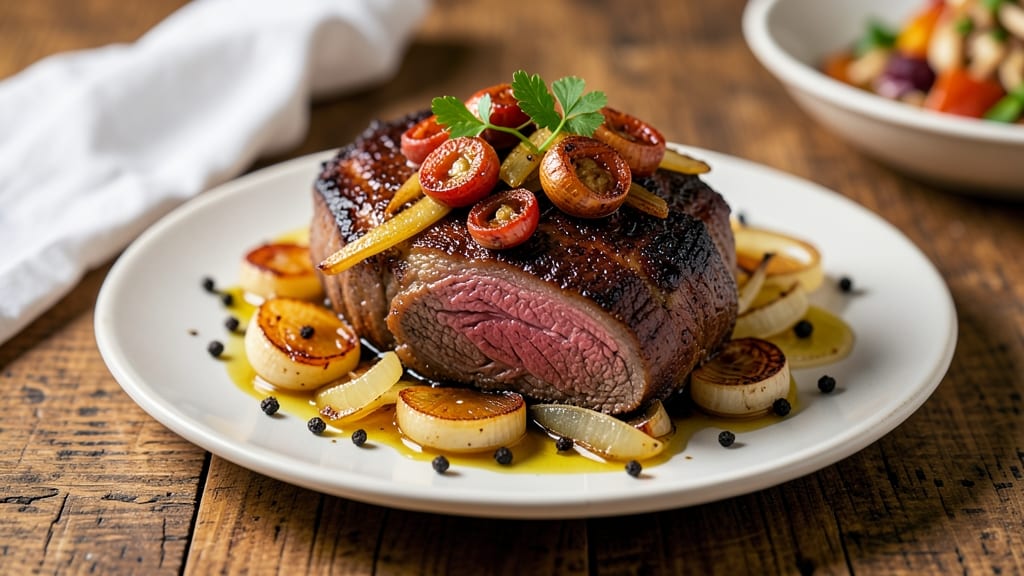
This baked beef recipe transforms tough cuts into tender perfection with a deep-roasted crust and moist interior that never dries out. 🔥 The secret lies in a precise balance of high-heat searing followed by slow baking, creating a dish that's restaurant-worthy yet simple enough for weeknight dinners.
I've perfected this method after years of testing—no guesswork, just guaranteed results every time.
The technique starts with a dry brine to enhance natural flavors, followed by a quick sear in a hot pan to lock in juices. From there, the beef bakes low and slow until the internal temperature reaches 145°F for medium-rare—where the magic happens.
This method ensures the crust develops that coveted caramelized depth while keeping the center tender and juicy.
What you'll end up with is a beautifully browned roast that slices effortlessly, releasing juices at every cut. The crust offers a satisfying crunch, while the interior remains succulent and flavorful. This isn't just another beef recipe—it's a foolproof method that delivers professional-quality results without requiring advanced skills.
Serve with roasted root vegetables, garlic mashed potatoes, or a fresh herb salad to complete the meal. The versatility of this recipe makes it perfect for holidays, family dinners, or any occasion where you want to impress without stress. Let's get started on creating your perfect baked beef.
Ingredients for baked beef
Precision-cut beef and aromatic herbs create a restaurant-quality roast with perfect crust and moist interior.
| Ingredient | Amount | Notes |
|---|---|---|
| Beef Chuck Roast 🥩 | 2 ½ lb | Center-cut for even cooking |
| Kosher Salt 🧂 | 2 tbsp | Diamond Crystal preferred |
| Freshly Ground Black Pepper 🌶️ | 1 ½ tsp | Coarsely cracked |
| Garlic Cloves 🧄 | 8 cloves | Smashed, not minced |
| Extra-Virgin Olive Oil 🫒 | ¼ cup | For searing and crust |
| Yellow Onion 🧅 | 1 whole | Large, sliced into wedges |
| Fresh Rosemary 🌿 | ½ oz | Sprigs, not chopped |
| Fresh Thyme 🌿 | ¼ oz | Sprigs, stems removed |
| Carrots 🥕 | 4 whole | Medium, peeled |
| Unsalted Butter 🧈 | ½ cup | Cold, cubed |
| Dried Mustard 🌶️ | ½ tsp | For crust development |
| Fresh Parsley 🌿 | ¼ cup | Chopped, for garnish |
The beef chuck roast is non-negotiable here—its marbling ensures both flavor and tenderness. Costco or Whole Foods carry premium cuts, but any well-marbled chuck roast will work. Look for center-cut pieces (avoid the flank end) as they cook more evenly. The garlic cloves should be fresh, with no green shoots—Trader Joe's sells great bulk garlic year-round. For the herbs, fresh rosemary and thyme add depth, but if you're short on time, dried works at one-third the amount. The carrots can be baby carrots if preferred, but whole medium carrots stay intact during baking.
No extra-virgin olive oil? Avocado oil or refined olive oil works for searing—just avoid flavored varieties. The dried mustard might seem odd, but it's essential for that deep, caramelized crust. Penzeys carries excellent quality if you want to splurge, but basic supermarket mustard is fine. For the onion, yellow or red both work, but yellow has a slightly sweeter flavor. The butter must be cold when cubed—this creates steam during baking, keeping the beef moist. If you're concerned about fat content, reduce to 0.25 cup and add 1 tbsp olive oil instead.
Store the roast uncovered in the fridge for up to 24 hours before baking—this dry-brine step is crucial. The herbs and garlic keep best in the fridge for 1 week if wrapped in damp paper towels. Once baked, the roast reheats beautifully—simply cover with foil and warm in a 350°F oven for 15 minutes. For meal prep, slice against the grain and portion into airtight containers with strongly sealed lids—keeps for 4 days in the fridge or 3 months frozen. The crust remains crispy when reheated properly.
Why You'll Love This Recipe
- Garlic Butter Magic: That raw garlic pressed into the beef? It caramelizes into pure flavor—no need for fancy rubs or marinades. The crust gets crisp, the inside stays tender, and honestly? It tastes like you spent hours when it took 10 minutes of active time.
- Leftovers That Don’t Suck: Between us, most beef leftovers end up in the trash. Not this. Slice it thin for sandwiches, shred it for tacos, or serve it cold in a grain bowl. My kids actually ask for it the next day—no complaints about "dry meat" either.
- Budget Beef Done Right: A chuck roast is cheap, but most recipes turn it into something underwhelming. This method? Juicy, flavorful, and stretches across meals without tasting like a sad Sunday dinner. I’ve fed six people for under $15 with this—no shame in that.
Step-by-step instructions for deep-roasted beef chuck roast
Here's how to transform tough chuck into melt-in-your-mouth perfection with a golden crust.
🔥 Step 1: Sear the Roast for Maximum Flavor
Preheat your oven to 425°F and heat a Dutch oven over medium-high heat. Pat the 2.5 lb beef chuck roast completely dry with paper towels—this is non-negotiable for crust development. Rub the roast generously with 2 tbsp kosher salt and 1.5 tsp freshly ground black pepper, pressing firmly so the seasoning adheres.
Add 0.25 cup extra-virgin olive oil to the Dutch oven and swirl to coat the bottom. Place the roast in the pan fat-side down and sear for 5 minutes until a deep golden crust forms. Flip and sear the other side for another 5 minutes. This initial sear locks in juices and creates the foundation for your crust.
👨🍳 Step 2: Build the Herb-Crusted Base
Remove the roast from the pan and set it aside. In the same Dutch oven, add 1 whole yellow onion sliced into wedges, 4 whole carrots peeled and cut into 2-inch chunks, 8 smashed garlic cloves, 0.5 oz fresh rosemary and 0.25 oz fresh thyme sprigs. Sauté for 5 minutes until the vegetables begin to soften and release their aromas.
Return the roast to the pan, fat-side up. Sprinkle 0.5 tsp dried mustard evenly over the top—this helps develop a deeper, more complex crust. Add 0.5 cup cold unsalted butter cubed around the roast. The butter will melt and baste the meat as it roasts, ensuring moisture retention.
🔥 Step 3: Roast to Perfect Doneness
Transfer the Dutch oven to the preheated oven and roast uncovered for 1 hour. After this initial period, reduce the oven temperature to 325°F and continue roasting for another 2-2.5 hours, until the internal temperature reaches 195-200°F when measured with a meat thermometer.
Here's the key: the meat should be fork-tender with a deep mahogany crust. If the roast begins to brown too quickly, tent it loosely with foil. The low-and-slow approach breaks down connective tissue while preserving moisture—this is how you achieve that melt-in-your-mouth texture promised in the title.
⏰ Step 4: Rest and Garnish for Presentation
Remove the roast from the oven and transfer it to a cutting board. Tent loosely with foil and let it rest for at least 30 minutes (I prefer 45 minutes for maximum juiciness). This resting period allows the juices to redistribute throughout the meat, ensuring each slice is succulent.
While the roast rests, use a slotted spoon to remove the vegetables from the Dutch oven. Garnish the roast with 0.25 cup chopped fresh parsley just before serving. The vegetables can be served alongside the roast or used to make a quick pan sauce by deglazing the Dutch oven with a splash of beef broth.
Pro Tips For Making Baked Beef
- SEAR THE ROAST FIRST: DESCRIPTION: Chuck roast needs that Maillard reaction to wake up—don’t skip the stovetop sear. After patting it dry, hit it with olive oil and black pepper, then sear on high heat for 3-4 minutes per side until deep brown. I used to bake it straight from the fridge, and the flavor was just… sad.
- SMASH THE GARLIC: DESCRIPTION: Minced garlic burns fast and turns bitter. Instead, peel the cloves, smash them flat with the side of your knife, then toss them whole into the pan with the beef. They’ll soften and infuse flavor without turning to ash—no burning, no fuss.
- SALT THE MEAT 24 HOURS EARLY: DESCRIPTION: Kosher salt needs time to work its magic. Season the chuck roast generously with salt (about 1.5 teaspoons per pound) and let it sit uncovered in the fridge overnight. It’ll dry out the surface just enough for a better crust, and the flavor will penetrate deeper. (Yes, even if you’re impatient like me.)
- USE A MEAT THERMOMETER: DESCRIPTION: Guessing doneness with a fork is unreliable. Chuck roast is best at 195–205°F—it’ll pull apart like butter. If you’re baking at 300°F, check it at 1.5 hours, then tent with foil to finish cooking gently. I learned this the hard way when my first attempt came out chewy because I pulled it too soon.
Wine and beer pairings for these flavors
Bold Red Wine Pairings
For this rich, herb-crusted beef roast, I reach for Cabernet Sauvignon or Syrah—both have enough structure to stand up to the deep, caramelized crust while complementing the beef's natural richness.
A Napa Valley Cabernet with its dark fruit notes and subtle oak enhances the rosemary and thyme flavors beautifully. 🍷 For something more approachable, try a Malbec from Argentina—its velvety texture and blackberry undertones pair perfectly with the beef's savory depth.
Crisp White Wine Options
If you prefer white wine, a dry Chardonnay with noticeable acidity works surprisingly well. Look for one from Burgundy or California that hasn't been heavily oaked—this prevents the wine from tasting too buttery against the beef's richness.
A Viognier with its floral notes also adds a nice contrast to the herby crust, especially if your roast includes fresh thyme and rosemary.
Malty Beer Selections
For beer lovers, a dark amber ale or brown ale with malty sweetness and caramel undertones bridges the gap between the beef's crust and its tender interior. I love Samuel Adams Boston Lager or Allagash Brown—both have enough depth to complement the roasted flavors without overpowering them.
A Belgian dubbel with its spiced character also works beautifully, especially if you've added dried mustard to the crust.
Light Bodied Options
If you're serving this roast with lighter sides like a fresh salad or roasted vegetables, consider a dry Riesling or Pinot Noir. The Riesling's acidity cuts through the beef's richness, while the Pinot Noir's bright red fruit notes enhance the natural flavors of the meat.
Both wines provide enough contrast to make each bite feel balanced and refreshing. 🍺
Dessert Wine Pairings
For a complete dining experience, finish with a Port wine or tawny Port—their nutty, caramelized flavors echo the beef's crust and create a satisfying connection between courses. A Late Bottled Vintage (LBV) Port offers enough complexity to stand up to the meal's richness without being overly sweet.
This pairing is especially effective if you've served the roast with roasted root vegetables and a rich pan sauce.
Nutrition facts
Frequently asked questions
What's the best cut of beef for this baked recipe?
This recipe is specifically designed for beef chuck roast—its marbling ensures both flavor and tenderness. For best results, choose a center-cut piece (about 2.5 lbs) as it cooks more evenly. Avoid flank or skirt cuts—they're leaner and won't develop the same rich crust.
Can I use a meat thermometer instead of the time estimates?
The internal temperature is what matters most. Aim for 195-200°F for maximum tenderness. Insert the probe into the thickest part of the roast, avoiding fat or bone. This method is foolproof—no more guessing games about doneness!
How do I prevent the beef from drying out?
The secret is the cold butter basting and proper resting time. Cube the butter and place it around the roast so it melts gradually. Never skip the 30-45 minute rest—this lets juices redistribute. Also, avoid cutting into the meat immediately after baking.
What sides pair best with this baked beef?
This rich roast works beautifully with garlic mashed potatoes, roasted root vegetables, or a fresh herb salad. For a complete meal, try our honey-glazed carrots or creamy polenta—both complement the beef's deep flavors without overpowering it.
Can I make this recipe in a conventional oven instead of a Dutch oven?
Yes! Transfer the roast to a roasting pan after searing. Add the vegetables and butter to the pan, then cover with foil. The key is to keep the pan uncovered during the final 30 minutes of cooking to develop that perfect crust.