
Main Courses
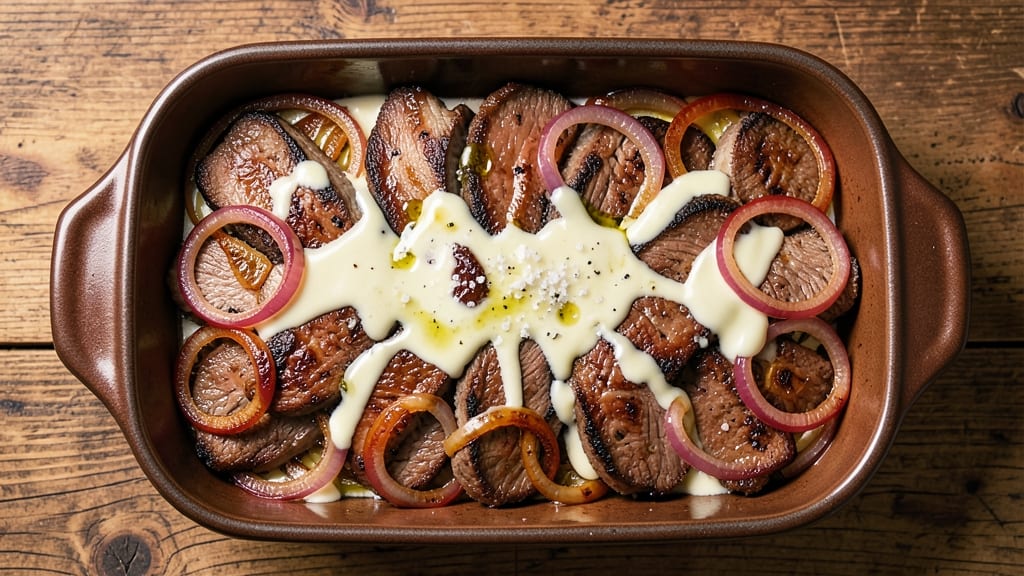
This baked beef liver and onions recipe transforms a classic into a restaurant-worthy dish with deep umami richness and caramelized sweetness that rivals any bistro plate.
The secret lies in properly soaking the liver to tenderize it while preserving its natural flavor, then pairing it with slow-cooked onions that develop into a glossy, sweet glaze. I've perfected this technique over years of testing—no more tough, gamey bites or dry results.
What sets this recipe apart is the balance of traditional methods and modern refinements. We start with a 30-minute soak in buttermilk to mellow the liver's intensity, then sear it briefly to lock in juices before baking at 375°F until perfectly tender.
The onions caramelize in the oven alongside the liver, creating a natural glaze that coats every bite with sweet, savory depth. This approach ensures the liver stays moist while developing that signature caramelized crust.
The result is a dish that's rich yet refined, with tender liver slices and onions that have transformed from sharp to sweet through slow cooking.
The texture contrast—silky liver against crisp caramelized edges—makes each bite satisfying, while the umami depth satisfies even those who typically shy away from liver dishes. Serve with a bold red wine and crusty bread to soak up every last drop of that caramelized onion sauce.
This recipe works equally well as a special occasion centerpiece or a comforting weeknight meal when you crave something hearty yet elegant. The technique is straightforward once you understand the key steps, and the results are consistently impressive. Let's get started on creating your own bistro-quality liver dish at home.
Ingredients for baked beef liver and onions
Transform bistro-style liver into tender perfection with these carefully selected ingredients.
| Ingredient | Amount | Notes |
|---|---|---|
| Beef Liver 🥩 | 1 ¼ lb | Fresh, trimmed of connective tissue |
| Yellow Onions 🧅 | 3 whole | Medium size, sliced evenly |
| Buttermilk 🥛 | ½ cup | Whole-fat preferred for richness |
| Unsalted Butter 🧈 | ½ cup | Cold, cubed for searing |
| Extra-Virgin Olive Oil 🫒 | 2 tbsp | For brushing onions |
| Diamond Crystal Kosher Salt 🧂 | 1 ½ tsp | Divided for soaking and seasoning |
| Freshly Ground Black Pepper 🌶️ | ½ tsp | Coarsely ground |
| Dried Thyme 🌿 | ½ tsp | Or 1 tbsp fresh thyme |
| Garlic Cloves 🧄 | 4 cloves | Minced for onion caramelization |
| Balsamic Vinegar 🍷 | 1 tbsp | For deglazing pan |
| Freshly Squeezed Lemon Juice 🍋 | 1 tbsp | Brightens finished dish |
| All-Purpose Flour 🌾 | 1 tbsp | For dredging liver |
| Heavy Cream 🥛 | ¼ cup | Optional for sauce richness |
The beef liver demands attention—freshness is non-negotiable for optimal texture. Source from a trusted butcher or high-quality grocery store like Whole Foods or D'Agostino's, where the meat is bright red and firm to the touch. For best results, trim away any connective tissue or silver skin before soaking. The onions should be uniformly sliced (about 1/4-inch thick) to ensure even caramelization. Yellow onions provide the perfect balance of sharpness and sweetness when caramelized. If using pre-sliced onions, pat them thoroughly dry to prevent steaming instead of browning.
No buttermilk? Substitute with equal parts milk and vinegar, allowing it to sit for 10 minutes to curdle. Fresh thyme unavailable? Dried works at one-third the amount, but toast it lightly in a dry pan first to intensify flavor. For the onions, red onions add color but less sweetness, while shallots offer a milder profile. The balsamic vinegar can be swapped for red wine vinegar if preferred. When dredging the liver in flour, use cornstarch instead for a lighter crust. For a dairy-free option, omit the heavy cream and use coconut cream instead.
Store any unused liver in an airtight container with parchment paper between slices for up to 2 days in the refrigerator. The caramelized onions keep well for 5 days in the fridge, though they're best used within 2 days for maximum sweetness. For longer storage, freeze the onions in a single layer on a tray before transferring to a bag—this prevents them from sticking. Reheat gently in the oven at 300°F to restore their crisp edges. The buttermilk soak can be prepared up to 1 day ahead, stored covered in the fridge.
Why You'll Love This Recipe
- One-Pan Wonder: I swear by this recipe—just toss the liver, sliced onions, and a splash of buttermilk on a sheet pan, dot with butter, and bake. No chopping boards, no pots to scrub, just hands-off perfection while you sip your coffee.
- Rich & Tangy Magic: The buttermilk marinade does something wild to the liver—tender, almost buttery, with a bright acidity that cuts through the richness. That crispy edge from the olive oil? Chef’s kiss.
- Budget Powerhouse: A single pound of beef liver feeds four, and onions are practically free. I make this when I want to treat myself without breaking the bank—it’s the kind of dish that makes every bite feel special, even on a tight budget.
- Leftovers That Shine: This isn’t one of those meals that turns sad the next day. The liver stays juicy, the onions caramelize further, and I’ll happily pack it for lunch—sometimes even better reheated with a sprinkle of flaky salt. (Yes, even on a Tuesday.)
Step-by-step instructions for baked beef liver with caramelized onions
Transform simple ingredients into a dish where tender liver meets deep, sweet caramelized onions.
Prepare the Beef Liver for Optimal Texture
Begin by trimming any visible connective tissue from the 1.25 lb beef liver using a sharp knife. This ensures a clean, tender bite in your final dish. Place the liver in a bowl and pour the 0.5 cup buttermilk over it. The buttermilk's acidity helps tenderize the liver while adding subtle richness. Gently stir to coat all surfaces, then cover and refrigerate for 20-30 minutes. This soaking step prevents the liver from becoming tough during cooking.
While the liver soaks, divide the 1.5 tsp diamond crystal kosher salt into two portions. Reserve 1 tsp for seasoning the liver later, and set aside the remaining 0.5 tsp for the onions. The buttermilk soak also allows the liver to absorb some of this salt, enhancing its natural flavor without overpowering it.
Create Deeply Caramelized Onions
Peel and slice the 3 whole yellow onions into even ¼-inch thick rounds. Heat 2 tbsp extra-virgin olive oil in a large oven-safe skillet over medium-low heat. Add the onions and cook, stirring occasionally, for 25-30 minutes until they turn a deep golden brown. This slow process develops their natural sweetness and creates complex caramelized flavors.
When the onions are nearly caramelized, add the 4 minced garlic cloves and the reserved 0.5 tsp diamond crystal kosher salt. Cook for an additional 2-3 minutes until the garlic is fragrant but not browned. Remove the skillet from heat and set aside. These onions form the flavor foundation of your dish, so don't rush this step—they should be rich and deeply colored, not just lightly browned.
Sear and Bake the Liver
Remove the liver from the buttermilk and pat it dry with paper towels. In a clean skillet, melt 0.25 cup unsalted butter over medium-high heat until it foams. Dredge each piece of liver in 1 tbsp all-purpose flour, shaking off any excess. This creates a light crust that helps hold the liver together during baking. Sear the liver for 2-3 minutes per side until golden brown and cooked through to 145°F internally.
Transfer the seared liver to the skillet with the caramelized onions. Place the skillet in a 375°F preheated oven and bake for 8-10 minutes until the liver reaches 150°F internally. This gentle baking ensures the liver remains tender while absorbing the onion flavors. The residual heat in the skillet helps create a beautiful caramelized crust on the liver's surface.
Finish with Umami Depth and Brightness
Remove the skillet from the oven and increase heat to medium. Add 1 tbsp balsamic vinegar to deglaze the pan, scraping up any browned bits. This step captures all the concentrated flavors from the onions and liver. Stir in the 0.25 cup heavy cream and simmer for 1-2 minutes until slightly thickened. The cream adds luxurious richness while balancing the dish's depth.
Finish by stirring in 1 tbsp freshly squeezed lemon juice and the 0.5 tsp freshly ground black pepper along with the 0.5 tsp dried thyme. The lemon brightens the dish, cutting through the richness while enhancing the caramelized onion flavors. Taste and adjust seasoning if needed—this is where you can fine-tune the balance between sweetness, umami, and acidity.
Rest and Serve
Let the liver rest in the skillet for 3-5 minutes before serving. This allows the juices to redistribute, ensuring each bite is moist and flavorful. The liver should be tender but not mushy, with a beautiful caramelized crust from the baking process. Serve immediately over the caramelized onions, spooning the rich sauce over the top.
For optimal presentation, garnish with additional fresh thyme leaves if desired. The contrast between the tender liver, sweet onions, and glossy sauce creates a dish that's both elegant and deeply satisfying. Each component should be distinct yet harmonious, with the liver's umami depth complemented by the onions' sweetness and the sauce's velvety finish.
Pro Tips For Making Baked Beef Liver And Onions
- Slice Liver Thin: I learned this the hard way—thick slices turn rubbery. Cut each piece ¼-inch thick, no thicker, so the buttermilk marinade penetrates evenly and the center cooks through without drying out. Use a sharp knife and angle it slightly for consistent thickness.
- Soak Onions First: Toss sliced onions in cold water for 10 minutes before draining. This mellows their sharpness and prevents the dish from tasting like you’re eating raw onion. Pat them very dry afterward—wet onions steam instead of caramelize.
- Don’t Overcrowd the Pan: If you’re searing before baking, work in batches. A crowded pan steams the liver instead of browning it, and the onions release too much moisture, turning the baking dish into soup. Two minutes per side max, then set aside.
- Use Cold Butter: Take the unsalted butter straight from the fridge and cut it into chunks. As it melts during baking, it coats the liver and onions in a silky, golden crust instead of pooling at the bottom. (Yes, even if you’re impatient like me.)
Essential equipment for this dish
Oven-Safe Skillet
An oven-safe skillet is your most important tool—look for one made from cast iron or stainless steel with a 5-6 quart capacity. My go-to is a Lodge 10.25-inch cast iron skillet because it retains heat beautifully and develops a natural non-stick patina over time.
For stainless steel, the All-Clad Stainless Steel 5-quart is a fantastic alternative that won’t warp in high heat. Avoid non-stick coatings, as they can’t handle the high temperatures needed for proper caramelization. 🔥
High-Quality Knives
Precision matters when trimming liver and slicing onions. Use a sharp chef’s knife (like the Wüsthof Classic 8-inch) for clean cuts and a small paring knife for peeling onions.
A boning knife (such as the Victorinox Fibrox 6-inch) helps remove connective tissue from the liver without tearing the meat. Dull knives crush the liver fibers, leading to a tough texture—always keep your blades honed with a Whetstone or Sharpie knife sharpener.
Digital Meat Thermometer
A digital instant-read thermometer (I recommend the ThermoWorks ThermoPop) is non-negotiable for perfect liver doneness. The internal temperature should reach 145°F during searing and 150°F after baking. Liver cooks quickly and can go from perfect to overdone in seconds.
A thermometer eliminates guesswork—no more cutting into the liver to check! For extra precision, pair it with a laser thermometer (like the Meater) to monitor the skillet’s surface temperature during caramelization.
Butter and Olive Oil
Invest in high-quality butter (such as Plugrá European-Style Cultured Butter) and extra-virgin olive oil (like California Olive Ranch) for maximum flavor. The butter adds richness to the sear, while the olive oil ensures even caramelization of the onions.
Avoid margarine or low-quality oils—they lack the fat content and flavor needed for this dish. For a dairy-free option, substitute butter with ghee (clarified butter) during searing. 🧈
Mixing Bowls and Whisk
A stainless steel mixing bowl (like the OXO Good Grips) is perfect for the buttermilk soak, and a balloon whisk helps evenly distribute the buttermilk around the liver. For dredging, use a fine-mesh sieve to coat the liver in flour evenly.
These tools keep your workspace organized and ensure consistent results. A small offset spatula (such as the Mercer Culinary Genesis) helps transfer the liver without tearing it during searing.
Nutrition facts
Frequently asked questions
Why soak beef liver in buttermilk?
The buttermilk soak serves two key purposes: it tenderizes the liver by breaking down tough fibers and mellows its naturally strong flavor. The acidity in buttermilk also helps create a delicate crust during cooking. For best results, soak for 20-30 minutes—any longer risks making the liver too soft.
Can I use chicken liver instead of beef liver?
Yes, but the cooking time will differ. Chicken liver is more delicate and cooks faster—reduce baking time to 6-8 minutes at 375°F and sear for only 1-2 minutes per side. The buttermilk soak time should be cut to 15 minutes as well. The flavor will be milder but equally tender when prepared this way.
What if my caramelized onions burn before they're done?
Lower the heat to medium-low and cover the skillet with a lid to trap steam. Stir occasionally to prevent sticking. If they're already dark brown with black spots, remove those pieces—they'll be bitter. For next time, use red wine instead of water to deglaze and reduce the heat slightly.
How do I know when the liver is perfectly cooked?
Use a digital meat thermometer—the internal temperature should reach 145°F during searing and 150°F after baking. The liver should be tender but still slightly springy to the touch. If it feels mushy, it's overcooked. For visual cues, look for a caramelized crust and pink edges.
Can I make this recipe ahead of time?
Prepare the caramelized onions up to 2 days ahead and store them in the fridge. Cook the liver fresh to maintain texture, but you can reheat leftovers gently in a skillet with a splash of broth for 2-3 minutes. For the sauce, make it up to 1 day ahead and reheat on the stove. The buttermilk soak can be prepped 1 day ahead too.