
Main Courses
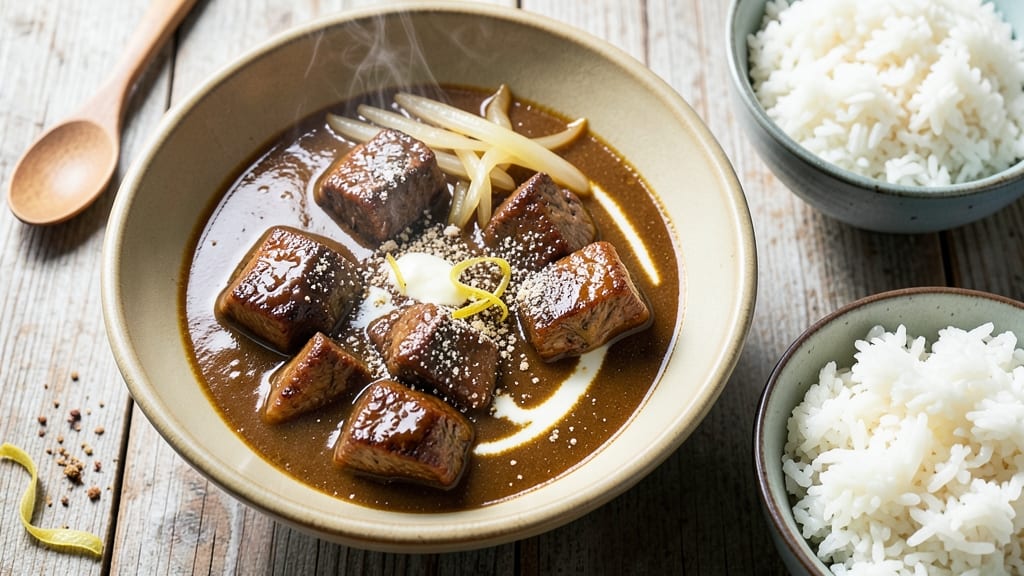
This authentic Japanese beef curry recipe delivers the deep, comforting flavors of Japanese home cooking—where tender beef simmers in a rich, aromatic roux until the meat practically melts in your mouth.
The secret lies in the kare jiru (curry roux), a blend of spices and flour toasted to perfection, which forms the heart of every authentic bowl. I've perfected this method over years of testing, ensuring the balance of sweet, savory, and umami that defines Japanese curry.
The process begins with a foolproof roux made from flour, butter, and the classic Japanese curry spice blend—no shortcuts here. The beef, marinated in a touch of soy sauce and mirin, cooks low and slow until fork-tender, absorbing the roux's complex flavors.
This isn't just a curry; it's a restaurant-quality dish that transforms simple ingredients into something deeply satisfying.
What you'll end up with is a slow-simmered masterpiece: beef so tender it shreds easily, a glossy sauce with just the right balance of sweetness and heat, and a depth of flavor that lingers long after the last bite.
The aroma alone—warm spices, caramelized onions, and the unmistakable richness of the roux—will have your kitchen (and your guests) craving seconds.
Serve it over steamed Japanese rice for the full experience, or pair it with quick-pickled vegetables to cut through the richness. The beauty of this recipe is its versatility—equally at home as a weeknight dinner or a special occasion dish. Ready to master the art of Japanese curry?
Ingredients for authentic japanese beef curry
Here’s what you’ll need to create this restaurant-quality Japanese beef curry.
| Ingredient | Amount | Notes |
|---|---|---|
| Japanese Curry Roux (Kare Jiru) 🌶️ | ½ cup | Pre-made or homemade blend |
| Chuck Roast 🥩 | 1 ½ lb | Well-marbled, cut into 1-inch cubes |
| Japanese Short-Grain Rice 🍚 | 2 cups | Uncooked, for serving |
| Unsalted Butter 🧈 | ½ cup | European-style preferred |
| All-Purpose Flour 🌾 | ½ cup | For roux foundation |
| Yellow Onion 🧅 | 1 whole | Medium, thinly sliced |
| Garlic Cloves 🧄 | 4 cloves | Minced for aromatic base |
| Japanese Soy Sauce 🥄 | 2 tbsp | For marinade and seasoning |
| Mirin 🍶 | 2 tbsp | Sweet cooking rice wine |
| Dried Shiitake Mushrooms 🍄 | 4 whole | Rehydrated, sliced |
| Carrots 🥕 | 2 medium | Peeled, sliced into rounds |
| Potatoes 🥔 | 2 medium | Russet, peeled, cubed |
| Apples 🍎 | ½ medium | Sweet variety, diced small |
| Water 💧 | 3 cups | For rice and curry |
| Salt 🧂 | 1 ½ tsp | Kosher or sea salt |
The curry roux is the soul of this dish—Japanese kare jiru is non-negotiable for authenticity. Mae Ploy or S&B Golden Curry are the gold standards, but homemade blends work too if you’ve got the time. For the beef, chuck roast is your best bet—it stays tender and absorbs all those rich flavors. Look for good marbling at Whole Foods or your local Asian market. The Japanese short-grain rice? Don’t skimp—Koshihikari or Nishiki brands are worth the splurge for that perfect sticky texture.
No Japanese curry roux? Start with a base of flour and butter, then boost with curry powder, turmeric, and a pinch of cayenne for heat. The apples might seem odd, but they’re essential—they caramelize beautifully and add just the right touch of sweetness. Fuji or Gala work best. Short on shiitake? Cream mushrooms or even white button mushrooms will do in a pinch, though they won’t have that deep umami punch. The potatoes and carrots can be swapped for sweet potatoes or parsnips if you’re feeling adventurous.
This curry tastes even better the next day—trust me, the flavors meld into something magical. Store leftovers in an airtight container for up to 5 days in the fridge, or freeze for 3 months. The roux keeps for 6 months in a cool, dark place if you make extra. Pro tip: Cook the rice separately—it absorbs the curry’s moisture and turns mushy if mixed in too soon. Serve with steamed rice and a side of quick-pickled veggies for the full experience.
Why You'll Love This Recipe
- One-Pot Magic: I swear by this recipe because it’s literally one pan, one spoon, and zero stress. Chuck roast braises in the roux while you stir—no chopping, no fussing, just deep, rich flavors developing right in the pot.
- Umami Bomb: That curry roux? It’s the star. The moment butter and flour toast in the roux, the aroma hits like a warm hug—sweet, smoky, and packed with depth. Chuck roast melts into tender perfection, soaking up every bit of that savory goodness.
- Lunchbox Hero: Between us, this is my go-to for meal prep. The rice stays fluffy for days, and the curry reheats like a dream—no soggy bits. Pack it in bento boxes or thermoses, and you’ve got a weeknight savior that tastes like you slaved over it.
- Budget Comfort: Chuck roast is cheap, curry roux lasts forever, and rice fills everyone up. Honestly, I make this when I’m broke or when I’m treating the family—same dish, always hits the spot. Leftovers? Even better the next day, if you can wait that long.
Step-by-step instructions for authentic Japanese beef curry
Here's how to craft restaurant-quality Japanese beef curry with deep umami flavors and melt-in-your-mouth meat.
Prepare the Roux Foundation
In a heavy-bottomed pot, melt the 0.5 cup unsalted butter over medium heat until it foams. Add the 0.5 cup all-purpose flour all at once and whisk vigorously for 2-3 minutes until the roux turns a rich golden brown color. This is your flavor base - don't rush this step or you'll miss the nutty depth.
Watch carefully as the roux transforms from pale to deep amber. You're aiming for what chefs call a "medium roux" - it should smell toasty and nutty. Immediately stir in the 0.5 cup Japanese curry roux (kare jiru) and cook for another 30 seconds to fully incorporate. This blend is what gives authentic Japanese curry its signature complex flavor profile.
Build the Aromatic Base
Add the 1 whole yellow onion and 4 cloves garlic cloves to the pot, stirring constantly for 2-3 minutes until the onions soften and the garlic becomes fragrant. The onions should turn translucent and slightly caramelized at the edges - this builds sweetness that balances the rich curry flavors.
Pour in 2 tablespoons Japanese soy sauce and 2 tablespoons mirin, stirring to combine. Let this mixture simmer gently for 1 minute until the alcohol smell from the mirin completely evaporates. This step develops the umami foundation that makes Japanese curry so distinctive - don't skip it.
Cook the Vegetables and Meat
Add the 2 medium carrots, 2 medium potatoes, and 0.5 medium apples to the pot. Stir to coat everything in the roux mixture, then pour in 3 cups water. Bring to a gentle simmer and cook for 10 minutes until the vegetables begin to soften.
Add the 1.5 lb chuck roast cut into 1-inch cubes and 4 whole dried shiitake mushrooms (previously rehydrated and sliced). The mushrooms should be plump and tender - they'll add an earthy depth to the curry. Sprinkle with 1.5 teaspoons salt and stir gently to distribute everything evenly.
Slow-Simmer for Tender Perfection
Cover the pot and reduce heat to low. Let the curry simmer gently for 2-2.5 hours, stirring occasionally. The key here is patience - the meat needs time to break down into tender pieces while absorbing all those rich flavors. You'll know it's ready when a fork slides through the meat with minimal resistance.
Check the consistency occasionally. If the curry becomes too thick, add 1-2 tablespoons water at a time. The sauce should coat the back of a spoon but still be spoonable. The vegetables should be tender but not falling apart, and the meat should be fork-tender with just a slight bite.
Serve with Perfectly Cooked Rice
While the curry simmers, cook the 2 cups Japanese short-grain rice according to package instructions using 1.5 cups water (or the amount specified). The rice should be fluffy and slightly sticky - this is crucial for the authentic Japanese curry experience.
Ladle the hot curry over the rice, making sure each serving gets a generous portion of both meat and vegetables. The curry should be rich and fragrant, with tender beef that pulls apart easily and vegetables that hold their shape. Serve immediately while the rice is hot - this dish tastes best straight from the pot.
Pro Tips For Making Authentic Japanese Beef Curry
- SEAR THE CHUCK ROAST: Hit that chuck roast with a dry pan and high heat until it’s deep brown in spots—this isn’t just for looks, it locks in flavor and prevents the curry from tasting bland. I used to rush this, and the meat would turn out mushy; now I let it sit 5 minutes after searing to relax the fibers before adding liquid.
- BLOOM THE ROUX LOW: Once you add the roux to the pot, drop the heat to medium-low and stir constantly for the first 3-4 minutes—this prevents burning and lets the spices wake up properly. I learned this the hard way after one batch tasted bitter because I kept the heat too high.
- SKIP THE PRE-RICE WASH: Japanese short-grain rice is already sticky—don’t rinse it before cooking, or you’ll dilute the starch that makes the curry cling to every bite. Just measure it, soak it for 20 minutes, then cook it separately while the curry simmers.
- THICKEN WITH FLOUR LAST: If your curry’s too thin, mix 1 tablespoon flour with cold water and whisk it in during the final 5 minutes—this avoids lumps and gives a glossy finish without overpowering the roux. I was skeptical until I tried it, and now it’s my go-to fix.
Troubleshooting perfect results
Roux Too Thick?
If your roux becomes too thick before adding the curry roux blend, immediately whisk in 1-2 tablespoons cold water to loosen it. The roux should be smooth and pourable but still coat the back of a spoon.
Overcooking at this stage causes bitterness—keep heat at medium and whisk constantly. For extra insurance, I like to add a pinch of salt at this stage to enhance flavor development. 🔥
Meat Not Tender Enough
If your beef remains tough after 2.5 hours of simmering, try this trick: Add ½ cup hot water and increase heat to medium-low for an extra 30 minutes. The increased moisture helps break down collagen faster.
For future attempts, consider marinating the beef overnight in 2 tbsp soy sauce + 2 tbsp mirin—this jumpstarts the tenderizing process. 💪
Sauce Too Thin
A watery curry usually means too much liquid was added early. Reduce heat to low and let it simmer uncovered for 10-15 minutes to evaporate excess moisture.
For a quick fix, mash 1-2 potatoes directly in the pot—their starch thickens the sauce instantly. If using pre-made roux, check the package for thickening instructions. 💡
Burnt Onions or Garlic
Browned onions and garlic add depth, but burnt flavors ruin the dish. Keep stirring constantly during the 2-3 minute sautéing phase—never let them sit unattended. If they do burn, remove the pot from heat immediately and scrape out the blackened bits.
For next time, lower heat to medium-low and add a splash of water if needed to prevent burning. ✨
Lacking Sweetness
Japanese curry relies on balanced sweetness from apples and mirin. If your curry tastes flat, add 1 tbsp honey or maple syrup during the final 10 minutes of simmering. For extra depth, caramelize ½ cup sugar separately in a pan until amber, then stir into the curry.
The apples should be diced small (¼ inch) to dissolve completely. 🍎
Roux Separating
If your roux looks grainy or separates, it means the flour wasn't fully incorporated. Whisk vigorously with 1-2 tablespoons cold water to smooth it out. For prevention, always cook the roux on medium heat and whisk continuously until it reaches a deep golden color.
If using pre-made roux, ensure it's fully dissolved in the butter before adding other ingredients. 🌾
Nutrition facts
Frequently asked questions
What makes Japanese beef curry different from Indian curry?
Japanese beef curry relies on a sweet, nutty roux made from flour, butter, and Japanese curry roux (kare jiru), while Indian curries use complex spice blends like garam masala and turmeric. The Japanese version also includes apples and mirin for natural sweetness, creating a milder, more approachable flavor profile. Plus, the beef is slow-cooked until fork-tender, rather than quick-seared like in many Indian dishes.
Can I substitute chuck roast with another cut of beef?
Yes, but choose wisely! Brisket or short ribs work well for their marbling, while sirloin or flank steak (cut into strips) can be used for quicker cooking. However, chuck roast is ideal—its collagen breaks down beautifully during the long simmer, creating melt-in-your-mouth texture. If using leaner cuts, marinate them for 30 minutes in soy sauce and mirin first.
How do I adjust the spice level for picky eaters?
Japanese curry is naturally mild, but if you want to reduce heat further, skip the cayenne in your homemade roux or use a milder curry roux blend (like S&B Mild). For extra safety, add 1 tbsp honey or sugar during the final 10 minutes of cooking to balance any residual spice. The apples and mirin already provide natural sweetness to counterbalance.
Can I make this curry in an Instant Pot?
Sauté the onions, garlic, and roux as directed, then add all ingredients (including 1 cup water instead of 3 cups). Cook on High Pressure for 40 minutes, then natural release for 10 minutes. The meat will be tender, but the sauce may be thinner—reduce it uncovered on the stove for 5-10 minutes afterward. The Instant Pot cuts cooking time to about 1 hour total.
What’s the best way to reheat leftovers?
Reheat gently on the stove over low heat with 2-3 tablespoons water to prevent drying out. Stir occasionally and simmer for 5-7 minutes until heated through. Avoid microwaving—it can make the sauce watery. For extra richness, add a pat of butter or a splash of mirin while reheating. Leftovers taste even better the next day!