
Main Courses
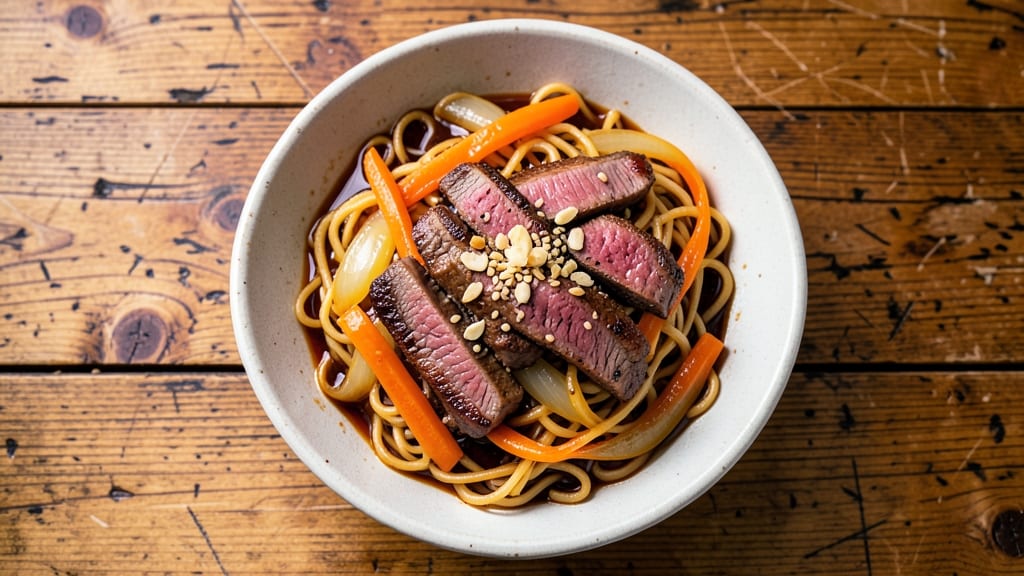
This authentic beef yakisoba recipe delivers the smoky, savory depth of Japan's beloved stir-fry in your kitchen. The secret lies in perfectly charred wok hei, where thinly sliced beef and crisp vegetables transform into a harmonious dish.
I've refined this recipe over years of testing—balancing tender beef, chewy noodles, and a rich Worcestershire-based sauce that's both traditional and approachable for home cooks.
The foundation starts with high-heat stir-frying, where beef and vegetables develop that signature wok char while remaining tender. Yakisoba noodles cook in the same pot, absorbing the savory sauce and developing a satisfying bite.
What sets this apart is the layered flavor: umami from Worcestershire, sweetness from carrots, and a touch of heat from chili flakes. Every element works together to create that restaurant-quality harmony.
By the time you're done, you'll have a steaming plate of authentic beef yakisoba with perfectly seared beef, crisp-tender vegetables, and noodles coated in a glossy, flavorful sauce.
The aroma alone will have everyone gathering at the table. This dish is designed to impress without requiring advanced skills—just a hot wok and attention to timing.
Serve it with a sprinkle of bonito flakes for extra umami or fresh green onions for brightness. The beauty of yakisoba is its versatility—customize it with your favorite vegetables or adjust the spice level to suit your taste.
Let's create this dish that tastes like a trip to Tokyo, right in your kitchen.
Ingredients for authentic beef yakisoba
High-heat stir-fry essentials for that signature wok char and savory harmony.
| Ingredient | Amount | Notes |
|---|---|---|
| Yakisoba Noodles 🍜 | 12 oz | Dried, for 4 servings |
| Thinly Sliced Beef (Ribeye or Sirloin) 🥩 | 1 lb | Marinated in soy sauce |
| Yellow Onions 🧅 | 1 whole | Thinly sliced, white part only |
| Carrots 🥕 | 2 medium | Julienned into thin matchsticks |
| Garlic Cloves 🧄 | 6 cloves | Minced, for aromatic base |
| Worcestershire Sauce 🍶 | 2 tbsp | High-quality, for umami depth |
| Soy Sauce 🥢 | 3 tbsp | Japanese preferred, not low-sodium |
| Mirin 🍶 | 1 tbsp | Sweet rice wine, essential for balance |
| Sesame Oil 🫒 | 1 tbsp | Toasted, for finishing aroma |
| Neutral Oil (Vegetable or Canola) 🫒 | 3 tbsp | High smoke point for stir-frying |
| Red Chili Flakes 🌶️ | 1 tsp | Adjust for heat preference |
| Sesame Seeds 🌱 | 1 tbsp | Toasted, for garnish |
| Green Onions 🧅 | 4 whole | Thinly sliced, for freshness |
| Bonito Flakes 🐟 | 1 tbsp | Optional, for umami depth |
| Salt 🧂 | 1 tsp | Kosher or sea salt |
The beef is non-negotiable here—ribeye or sirloin gives that perfect balance of tenderness and flavor. Thinly slice against the grain for maximum tenderness, and marinate in soy sauce for 15 minutes before cooking. Yakisoba noodles? Nissin or Maruchan are the gold standard—look for the ones labeled 'yakisoba' specifically. The carrots should be julienned into thin matchsticks (about 1/8-inch thick) for that crisp-tender texture. Japanese grocery stores often have pre-sliced veggies, but if you're slicing yourself, take your time—precision matters for that restaurant-quality crunch.
No mirin? Substitute with 1 tsp sugar + 1 tbsp dry sherry—it won't be identical, but it works in a pinch. Short on bonito flakes? Dried shiitake mushrooms or extra Worcestershire add umami depth. The Worcestershire sauce is where the magic happens—Lea & Perrins is the classic choice, but avoid reduced-sodium versions. For the oil, avocado oil has the highest smoke point, but neutral vegetable oil works fine. The sesame oil is strictly for finishing—don't cook with it, or the flavor will turn bitter. And if you're feeling adventurous, swap the beef for chicken thigh or pork shoulder—just marinate it longer.
Prep the beef and veggies first—everything should be sliced and ready before you heat the wok. Yakisoba noodles keep in the pantry for 6 months, but once cooked, they're best eaten fresh. The sauce components (soy, mirin, Worcestershire) can be mixed ahead and stored in the fridge for 1 week. For leftovers, store in an airtight container with a paper towel pressed on top to keep them from getting soggy. Reheat in a dry skillet over medium heat—no microwave or the noodles turn mushy. This dish reheats even better the next day as flavors meld.
Why You'll Love This Recipe
- One-Pan Magic: I swear by this recipe for lazy nights—just toss everything in one skillet, stir, and let the beef caramelize while the noodles soften. No fancy tools, no stress, and that smoky garlic aroma fills the kitchen before you even finish chopping.
- Umami Bomb: That first bite? The thinly sliced ribeye hits you with a deep, savory punch, while the caramelized onions and yakisoba sauce tie it all together. Honestly, I’ve tried store-bought yakisoba mixes, but this version—with the beef seared just right—is in a league of its own.
- Lunchbox Hero: Between us, this is my go-to for meal prep. Cook a big batch on Sunday, and you’ve got hearty, flavorful lunches all week. The noodles hold up surprisingly well, and the beef stays tender—no sad, dry leftovers here.
- Budget Beef Boost: Sirloin or ribeye on sale? Grab it. Thinly sliced, it stretches further than you’d think, and the onions and carrots bulk it up nicely. I’ll be real: it’s the kind of recipe that makes expensive meat feel like a steal without sacrificing that restaurant-quality taste.
Step-by-step instructions for authentic beef yakisoba
Here's how to craft restaurant-quality yakisoba with perfect wok hei and tender beef.
Prepare the Yakisoba Noodles
Boil a large pot of well-salted water and cook the 12 oz yakisoba noodles for 4-5 minutes until al dente. They should still have a slight bite when you taste test. Drain immediately and rinse under cold water for 10 seconds to stop the cooking process and remove excess starch.
Here's the thing—yakisoba noodles are delicate. Overcooking turns them mushy, while undercooking makes them chewy. I like to give them a quick rinse after draining to prevent them from sticking together when we stir-fry later. Toss them gently with 1 tablespoon toasted sesame oil to add aroma and prevent drying during cooking.
Marinate and Sear the Beef
In a small bowl, combine the 1 lb thinly sliced beef with 3 tablespoons soy sauce and let it marinate for 10 minutes at room temperature. This brief marinade ensures maximum flavor absorption without making the beef tough. Pat the beef dry with paper towels before cooking—this creates a better sear.
Heat 2 tablespoons neutral oil in a wok or large skillet over high heat until shimmering. Add the beef in a single layer and sear for 1-2 minutes until the edges turn deep brown and slightly crispy. Don't overcrowd the pan or the beef will steam instead of sear. Remove the beef and set aside on a plate.
Build the Flavor Base
In the same wok, add 1 tablespoon neutral oil and stir-fry the thinly sliced white part of 1 whole yellow onion and 2 medium julienned carrots for 2-3 minutes until they begin to soften but still maintain their shape. Add the 6 minced garlic cloves and 1 teaspoon red chili flakes, cooking for another 30 seconds until fragrant.
This is where the authentic flavor develops. The onions and carrots should be tender-crisp, not fully cooked. If you notice any browned bits sticking to the bottom, deglaze immediately with 1 tablespoon mirin to lift those flavorful fond pieces. The mirin adds that essential sweetness that balances the savory soy sauce.
Combine and Finish
Return the seared beef to the wok along with the cooked noodles. Add 2 tablespoons Worcestershire sauce, 1 tablespoon bonito flakes (if using), and toss everything together for 1-2 minutes until well combined. The bonito flakes add an incredible umami depth—if you're sensitive to fishy flavors, you can omit them.
Push the mixture to one side of the wok and let it sit for 30 seconds to develop a slight char. Then add the remaining 1 tablespoon neutral oil and stir-fry for another 1-2 minutes until everything is evenly coated and slightly caramelized. This final step creates that signature wok hei—smoky, charred flavor that makes yakisoba authentic.
Garnish and Serve
Transfer the yakisoba to serving plates and garnish with 1 tablespoon toasted sesame seeds and 4 thinly sliced green onions. The sesame seeds add a nutty crunch while the green onions provide freshness. Serve immediately while everything is hot and the noodles are still slightly springy.
For the best experience, I recommend serving with a side of pickled vegetables or a simple miso soup to complement the rich flavors. The dish should have a perfect balance of tender beef, chewy noodles, and that irresistible charred wok aroma. Each bite should deliver layers of umami from the soy sauce and Worcestershire, with a touch of sweetness from the mirin and heat from the chili flakes.
Pro Tips For Making Authentic Beef Yakisoba
- CRISP THE ONIONS FIRST: I learned this the hard way—sautéing onions until they’re translucent and slightly caramelized (about 5-6 minutes on medium-high) before adding everything else builds flavor that just disappears if you rush. The beef and veggies will cook faster later, but those onions are the base—don’t skip the patience.
- SLICE BEEF THIN AND REST: Ribeye or sirloin needs to be paper-thin—less than ⅛-inch—or it’ll turn chewy. After slicing, let it sit uncovered on a plate for 10 minutes. Sounds weird, but it works: the surface firms up, so it sears instead of sticking like glue to your wok.
- DON’T OVERCROWD THE PAN: I was skeptical until I tried it: cook the beef in batches if needed. A packed pan steams the meat instead of searing it, and you’ll end up with soggy noodles. Two minutes per batch on high heat gives you that perfect crust—no crowding, no regrets.
- UPGRADE WITH A DASH OF SOY SAUCE: Skip the pre-made yakisoba sauce if you’re feeling fancy. After searing the beef, deglaze the pan with 1 tablespoon of soy sauce (dark or light) and a splash of water. Let it reduce by half—this cuts through the richness and adds depth without extra effort. (Your future self will notice.)
Best sauces and condiments for these flavors
Classic Yakisoba Sauce
The heart of this dish is the Worcestershire-mirin-soy sauce blend that creates that signature umami depth. I start by mixing 2 tablespoons Worcestershire sauce (Lea & Perrins is my go-to) with 3 tablespoons Japanese soy sauce and 1 tablespoon mirin in a small bowl.
This combination delivers that perfect balance of savory, sweet, and tangy flavors that define authentic yakisoba. The Worcestershire adds complexity while the mirin prevents the sauce from being too heavy. 🍶
Sesame Oil Finish
Never cook with sesame oil—it burns easily and turns bitter. Instead, use it strictly as a finishing touch. After stir-frying, drizzle 1 tablespoon toasted sesame oil over the hot yakisoba just before serving. This adds an aromatic, nutty depth that elevates the dish instantly.
For extra authenticity, toast the sesame seeds in a dry pan over medium heat until golden brown, then sprinkle them on top. The combination of toasted seeds and oil creates that signature Japanese restaurant aroma. 🌱
Spicy Variations
If you love heat, add ½ teaspoon gochujang (Korean chili paste) or 1 extra teaspoon red chili flakes to the sauce mixture. For a smoky kick, stir in ½ teaspoon smoked paprika with the garlic.
I also like to serve spicy yakisoba with a side of pickled daikon radish to cut through the heat and add refreshing tang. The key is balancing the spice with enough umami from the Worcestershire and bonito flakes. 🌶️
Sweet and Tangy Twist
For a sweeter version, increase the mirin to 1½ tablespoons and add 1 teaspoon honey or ½ teaspoon sugar to the sauce. This works beautifully with the natural sweetness of the carrots. I also recommend adding 1 tablespoon rice vinegar to brighten the flavors.
This variation pairs perfectly with a side of quick-pickled cucumbers for extra freshness. The contrast between the sweet-tangy sauce and crisp vegetables makes every bite more dynamic. 🍯
Umami Boosters
For maximum umami depth, don't skip the bonito flakes—they add a fishy, savory note that's essential in traditional yakisoba. If you can't find bonito, substitute with 1 teaspoon dried shiitake powder or an extra ½ tablespoon Worcestershire.
Another pro tip: Add 1 teaspoon fish sauce to the sauce mixture for an extra layer of complexity. The umami builds with each bite, making this dish incredibly satisfying. 🐟
Homemade Sauce Base
For a restaurant-quality sauce, make a simple base by simmering 1 cup dashi stock (or chicken broth in a pinch) with 2 tablespoons soy sauce, 1 tablespoon mirin, and 1 teaspoon sugar until reduced by half.
Strain and use this as your sauce foundation. I find this method creates a more complex, layered flavor than store-bought sauces. Store any leftovers in the fridge for up to 5 days—it's perfect for quick stir-fries. 💡
Nutrition facts
Frequently asked questions
Can I use regular spaghetti instead of yakisoba noodles?
Not for authentic results—yakisoba noodles are wheat-based with a chewy texture and slightly darker color from their unique seasoning blend. Spaghetti won't have the same satisfying bite or flavor profile. If you must substitute, look for ramen noodles (discard seasoning packet) or udon noodles, but neither will be identical. The noodles are the soul of yakisoba!
How do I get that smoky wok hei flavor at home?
Start with a clean, dry wok on maximum heat until it's nearly smoking. Use high-heat oil (like avocado oil) and work quickly—don't overcrowd the pan. Let the beef and veggies develop brown spots before stirring. The key is high heat + quick cooking + slight char. If your pan isn't hot enough, you won't get that signature smoky aroma.
What's the best way to store leftovers?
Let the yakisoba cool completely, then store in an airtight container with a paper towel pressed on top to absorb moisture. Refrigerate for up to 3 days or freeze for 2 months. To reheat, use a dry skillet over medium heat (never microwave) and add 1 teaspoon water to prevent drying. The flavors actually improve after resting!
Can I make yakisoba without Worcestershire sauce?
Yes, but it won't be as authentic. Substitute with 1 tbsp soy sauce + 1 tsp fish sauce + ½ tsp sugar for umami depth. For a vegetarian version, use 1 tbsp soy sauce + 1 tsp mushroom powder + ½ tsp sugar. The Worcestershire provides that unique tangy-savory complexity that's hard to replicate, but these combos work in a pinch.
Why does my beef turn out tough instead of tender?
This usually happens from overcooking or not slicing thinly enough. Always slice beef against the grain into ⅛-inch thick strips and cook for only 1-2 minutes until just browned. Pat it dry before cooking—moisture steams the beef instead of searing. For extra tenderness, marinate for 30 minutes (not longer) in soy sauce before cooking.