
Main Courses
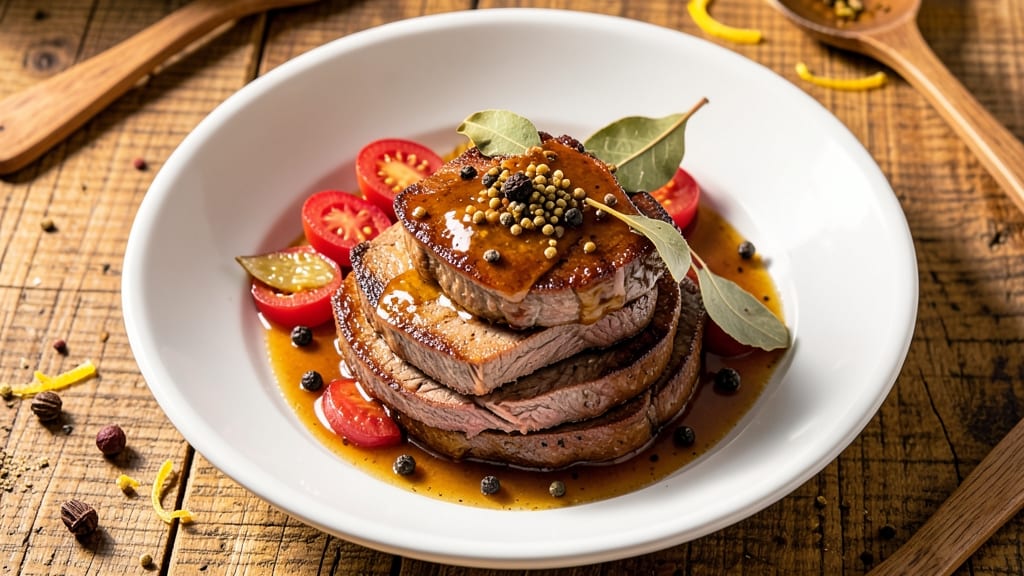
Austrian boiled beef delivers melt-in-your-mouth tenderness that transforms tough cuts into restaurant-quality perfection. This traditional method relies on a spiced pickle brine marinade that infuses flavor while breaking down fibers, creating beef so tender it practically falls apart at the touch.
The secret lies in slow, gentle cooking that preserves moisture and develops deep, savory notes—no dry, stringy results here.
The process begins with marinating beef chunks in a tangy brine of vinegar, spices, and pickled vegetables for at least 24 hours, though I recommend going 48 for maximum tenderness.
This isn't just cooking—it's a flavor-building technique that creates beef with layers of complexity, from the bright acidity of the brine to the earthy warmth of bay leaves and mustard seeds. The slow simmer in broth transforms the meat without overcooking, ensuring every bite stays juicy and flavorful.
What you'll end up with is beef so tender it's nearly impossible to resist—each piece rich with marinade-infused flavor and perfectly balanced texture.
The accompanying spiced broth makes an excellent base for dumplings or red cabbage, while the beef itself can be sliced for sandwiches or served whole with traditional sides. This is comfort food at its finest, with the kind of satisfying texture that makes every bite worth the effort.
The beauty of this recipe lies in its versatility. Serve it as a centerpiece for family dinners, pack it for lunches, or use it in hearty stews.
The marinade and cooking method work equally well with chuck roast, brisket, or even beef shank, making this a go-to technique for anyone who loves tender, flavorful beef. Let's get started on creating this Austrian classic.
Ingredients for austrian boiled beef
Sixteen ingredients transform tough beef into melt-in-your-mouth perfection through slow marinating and spiced broth.
| Ingredient | Amount | Notes |
|---|---|---|
| Chuck Roast 🥩 | 3 lb | Tough cut preferred for tenderness |
| White Vinegar 💧 | 1 cup | Distilled for tangy flavor |
| Dill Pickles 🥒 | 1 lb | Sliced, with brine reserved |
| Bay Leaves 🌿 | 4 whole | Fresh if possible |
| Mustard Seeds 🌶️ | 1 tbsp | Whole, toasted lightly |
| Black Peppercorns 🌶️ | 1 tbsp | Crushed for depth |
| Allspice Berries 🌶️ | 1 tsp | Crushed for warmth |
| Beef Broth 🍲 | 6 cups | Homemade or quality store-bought |
| Yellow Onion 🧅 | 1 whole | Peeled, halved |
| Carrot 🥕 | 2 whole | Peeled, halved lengthwise |
| Celery Stalks 🥬 | 2 whole | Trimmed, cut into chunks |
| Garlic Cloves 🧄 | 4 cloves | Smashed for flavor |
| Salt 🧂 | 2 tbsp | Kosher or sea salt |
| Fresh Parsley 🌿 | ¼ cup | Chopped, for garnish |
The chuck roast is non-negotiable—its tough fibers break down beautifully during the long marinade and slow cook. Costco or Whole Foods carry excellent cuts, but any grocery store should have chuck roast labeled for stews or braises. Look for good marbling; the fat renders during cooking and keeps the meat moist. For the pickles, Heinz brand dill pickles work perfectly, but any dill pickle with a tangy brine will do. Reserve that brine—it's liquid gold for the marinade, adding acidity and depth. The bay leaves and allspice berries are essential for that classic Austrian warmth; Penzeys Spices sells them whole if you want to toast them yourself for extra flavor.
No dill pickles? Sour pickles or even a splash of pickle juice will work in a pinch, though the flavor won't be identical. Running short on mustard seeds? Ground mustard at half the amount is a decent swap, though the texture won't be the same. The beef broth matters—homemade is ideal, but Swanson or Pacific Foods brands are reliable store-bought options. For the aromatics, don't skip the garlic. Fresh is non-negotiable here—jarred minced garlic lacks the punch. The celery and carrots can be pre-cut from a bag of mixed vegetables if you're short on time, but fresh is always better. If you're feeling adventurous, add a small piece of kombu seaweed to the broth for an umami boost—it dissolves completely and adds depth without altering the flavor profile.
Marinated beef keeps in the fridge for 4-5 days if stored in its marinade, but the flavor deepens after 48 hours. The cooked beef reheats beautifully—simmer gently in its broth for 10-15 minutes to restore moisture. For meal prep, portion the beef into containers with some of the broth and reheat separately. The broth itself freezes well for up to 3 months, making it perfect for future soups or stews. If you're making this ahead for a gathering, cook the beef completely, then refrigerate it in the broth. The flavors meld even more overnight, resulting in beef that's practically falling apart.
Why You'll Love This Recipe
- Tangy Magic Simmer: The vinegar and pickles do all the work—no fancy marinades or hours of prep. Chuck roast stays juicy while the acid tenderizes it right in the pot, and honestly? That briny, herby punch is chef’s kiss without extra effort.
- Leftovers That Don’t Lie: Between us, this beef gets better the next day. Thinly slice it for sandwiches, toss it into salads, or just reheat with a splash of broth—it’s the kind of meal that turns into three lunches without a second thought.
- Budget-Friendly Feast: A chuck roast stretches for a crowd, and the rest of the ingredients? Pantry staples. You’re feeding six for the price of takeout, and the mustard seeds add just enough je ne sais quoi to make it feel special.
- Weeknight Workhorse: One pot, minimal chopping, and zero stress. The bay leaves and pickles infuse flavor while you handle the rest—no last-minute grocery runs or complicated techniques. (Yes, even on a Tuesday night.)
Step-by-step instructions for Austrian boiled beef
This method transforms tough chuck roast into melt-in-your-mouth perfection through precise marination and slow cooking.
Prepare the Spiced Pickle Brine
In a large bowl, combine the 1 cup white vinegar, 1 lb dill pickles (sliced), 4 whole bay leaves, 1 tablespoon mustard seeds, 1 tablespoon black peppercorns, and 1 teaspoon allspice berries. Crush the peppercorns and allspice berries lightly between two spoons to release their oils—this ensures maximum flavor infusion during the marinade.
Add the 3 lb chuck roast to the bowl and turn to coat completely. The vinegar will begin breaking down the meat fibers immediately, so don't skip this step. Let the roast marinate in the refrigerator for at least 4 hours, or preferably overnight. This acid bath tenderizes even the toughest cuts while infusing them with the tangy, spiced pickle flavor that defines Austrian boiled beef.
Build the Flavor Base and Sauté Aromatics
In a large Dutch oven or heavy pot, combine the 6 cups beef broth, 1 whole yellow onion (halved), 2 whole carrots (halved lengthwise), 2 whole celery stalks (trimmed and cut into chunks), and 4 smashed garlic cloves. Bring to a gentle simmer over medium heat for 10 minutes, allowing the vegetables to soften and release their natural sweetness into the broth.
While the broth simmers, remove the marinated chuck roast from the refrigerator and pat it dry with paper towels. This step is crucial—excess moisture on the meat can dilute the broth and prevent proper browning later. Season the roast generously with 2 tablespoons salt, pressing it into the meat to create a flavorful crust that will seal in juices during cooking.
Slow Cook to Perfect Tenderness
Add the marinated chuck roast to the Dutch oven along with the spiced pickle mixture. The liquid should come about halfway up the sides of the roast. Bring everything to a gentle boil over high heat, then immediately reduce the heat to maintain a barely simmering state—you should see only the occasional tiny bubble at the surface. This controlled simmer is what transforms tough meat into tender slices.
Cover the pot and cook for 3 hours, checking occasionally to ensure the liquid remains at a gentle simmer. If the liquid reduces too much, add hot water to maintain the level. The meat is done when it easily pulls apart with a fork and the internal temperature reaches 195°F—this is the magic number for fork-tender beef. Resist the urge to rush this step; slow cooking is what makes this dish legendary.
Rest and Garnish for Serving
Remove the chuck roast from the broth and place it on a cutting board. Tent loosely with aluminum foil and let it rest for 15 minutes. This resting period allows the juices to redistribute throughout the meat, ensuring every slice remains moist and flavorful. While the roast rests, skim any excess fat from the surface of the broth and discard the vegetables and bay leaves.
Slice the chuck roast against the grain into ¼-inch thick slices. Ladle the warm broth into serving bowls and garnish each portion with the 0.25 cup chopped fresh parsley. The bright green parsley provides a fresh contrast to the rich, spiced beef and adds a final touch of elegance. Serve immediately with crusty bread to soak up every last drop of that flavorful broth.
Pro Tips For Making Austrian Boiled Beef
- Sear the Roast First: That vinegar-and-pickle braise is delicious, but a quick sear in a hot pot—2 minutes per side—adds depth you won’t get otherwise. I used to skip it, thinking the long simmer would handle everything, but the Maillard reaction makes a real difference when the flavors mingle.
- Use Whole Pickles, Not Chopped: Tossing in whole dill pickles (spears or gherkins) keeps the brine intact and infuses the broth better than chopped ones. I learned this the hard way—chopped pickles bleed flavor too fast, leaving the dish tasting flat. Save the chopping for serving.
- Simmer Low and Slow: This isn’t a race. After the initial boil, drop the heat to a gentle simmer—barely bubbles, more like a lazy sigh—and cover the pot. I used to crank the heat, and the meat turned out dry or mushy. The chuck roast needs patience; give it 2.5–3 hours for tender perfection.
- Add Vinegar Late: Pouring the white vinegar in too early makes the meat tough. Instead, add it in the last 30 minutes of cooking—just enough to brighten the broth without overpowering. I was skeptical until I tried it; the acid cuts through the richness just right.
Make-ahead tips for leftovers
Marinade Prep Ahead
Prepare the spiced pickle brine 24 hours before cooking—this gives the vinegar and spices time to deeply penetrate the beef. Store the marinated roast in its marinade in a glass container (I use Pyrex) in the fridge.
The longer it marinates, the more tender the beef becomes, so don't hesitate to go 48 hours for maximum tenderness. This step is non-negotiable for that signature Austrian melt-in-your-mouth texture. 🥩
Broth Prep Strategy
Make the broth base 1 day ahead and store it in the fridge. The flavors meld beautifully overnight, and you can use it directly in the recipe.
If you're short on time, use store-bought beef broth (like Swanson) but add a 1-inch piece of kombu seaweed while heating to boost umami. The broth can also be frozen for up to 3 months in airtight containers. 🍲
Cooking Timeline
For maximum efficiency, marinate the beef overnight, then start cooking the broth base in the morning. The 3-hour slow cook can be done while you handle other tasks—just keep the heat at a gentle simmer.
If you're prepping for a gathering, cook the beef completely and refrigerate it in its broth. The flavors deepen overnight, and you can reheat portions easily. 🕒
Portioning for Meals
Slice the cooked beef into ¼-inch thick portions and store them in airtight containers with some broth. Reheat gently on the stovetop with a splash of broth or water to restore moisture.
I like to portion the broth separately so it can be used for dumplings or reheated as a soup. Label containers with dates—the beef stays fresh for 4-5 days in the fridge. ❄️
Freezer-Friendly Tips
Freeze the beef in single-serving portions with broth for easy meal prep. Use freezer-safe bags (like Ziploc) and leave 1 inch of headspace for expansion. Thaw overnight in the fridge before reheating.
The broth freezes beautifully too—just thaw and reheat for soups or stews. This method saves time and keeps the beef tender. 🧊
Reheating Perfection
Reheat beef in its broth on the stovetop over low heat for 10-15 minutes until warmed through. Avoid microwaving—it dries out the meat. If the beef looks dry, add a splash of broth or water and cover the pan.
The slow reheating process ensures every bite stays juicy and flavorful, just like fresh-cooked. 🔥
Nutrition facts
Frequently asked questions
Why does Austrian boiled beef need to marinate so long?
The 24-48 hour pickle brine marinade is essential for breaking down tough beef fibers while infusing that signature tangy-spiced flavor. The vinegar and spices create an acid bath that tenderizes even chuck roast, while the pickles add depth you won't find in other boiled beef recipes. Think of it as a flavor-building powerhouse that transforms tough cuts into melt-in-your-mouth perfection.
Can I use a slow cooker instead of a Dutch oven?
Transfer everything to a 6-quart slow cooker after marinating, then cook on low for 8 hours or high for 5 hours. The key is maintaining that gentle simmer—just add ½ cup hot water if the liquid gets too low. The slow cooker's even heat makes it perfect for hands-off cooking while keeping the beef incredibly tender.
What's the best way to serve leftover Austrian boiled beef?
Slice the beef ¼-inch thick and serve it in open-faced sandwiches with mustard and sauerkraut, or pile it onto buttered egg noodles. The broth makes excellent dumpling soup—just shred the beef and mix it into the broth with cooked dumplings. For a hearty meal, layer it with roasted potatoes and caramelized onions. The possibilities are endless!
Can I substitute the chuck roast with another cut?
Yes, but choose wisely! Brisket or beef shank work beautifully—they have more connective tissue that breaks down during slow cooking. Avoid lean cuts like sirloin, as they won't become tender. For best results, stick with 3-4 lb cuts that can handle the long marinade and cooking time.
How do I know when the beef is perfectly tender?
The beef is done when it reaches an internal temperature of 195°F and easily pulls apart with a fork. You should also see the meat fibers beginning to separate slightly at the edges. If you're unsure, cut into a small piece—it should be fork-tender with no resistance. Patience is key here; rushing leads to tough, dry beef.