
Soups & Stews
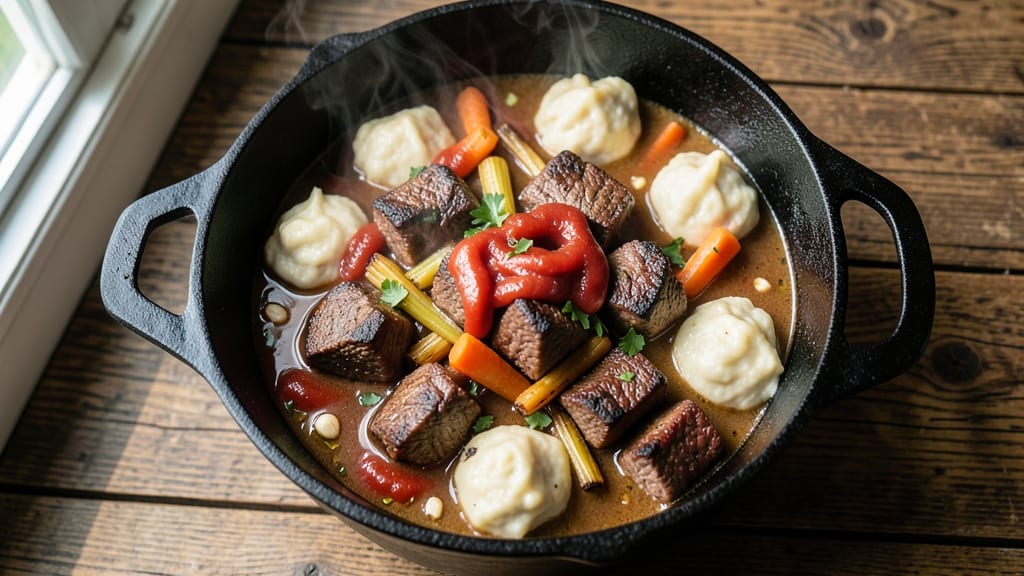
This Austrian beef stew recipe delivers the hearty, comforting flavors of Alpine tradition in a single pot. The secret lies in slow-browning beef and vegetables until they develop deep, caramelized richness, creating a sauce so velvety it practically melts into every bite.
What sets this apart is the balance of sweet and savory—caramelized onions and root vegetables mellow into a complex, gravy-like consistency that clings to perfectly tender beef.
The process is straightforward yet transformative: beef sears in batches to develop a flavorful crust before simmering for hours with aromatic vegetables and herbs. This method ensures meat that falls apart at the touch of a fork while maintaining a sauce with body and depth.
The result is a dish that feels both rustic and refined, perfect for cold evenings when you crave something substantial.
By the time you serve this stew, you'll have achieved restaurant-quality tenderness with minimal effort. The aroma alone transforms any kitchen into a cozy Austrian tavern, while the texture—crisp edges on vegetables, melt-in-your-mouth beef—proves that slow cooking pays off.
Serve with crusty bread or buttery dumplings to soak up every last drop of that rich gravy.
Modern adaptations keep this classic accessible—no need for specialty equipment, just patience and attention to technique. Whether you're feeding a family or treating yourself to a hearty meal, this stew delivers satisfaction in every spoonful.
The beauty lies in its simplicity: good ingredients, time, and a little care create something extraordinary.
Ingredients for austrian beef stew
Good beef, slow time, and simple ingredients create this Alpine comfort masterpiece.
| Ingredient | Amount | Notes |
|---|---|---|
| Chuck Roast Beef 🥩 | 3 lb | Cut into 1.5-inch cubes |
| Yellow Onions 🧅 | 3 large | Thinly sliced, about 6 cups |
| Carrots 🥕 | 4 medium | Peeled, cut into 1-inch pieces |
| Celery Stalks 🧄 | 4 whole | Diced, about 2 cups |
| Garlic Cloves 🧄 | 6 whole | Minced, about 2 tbsp |
| Tomato Paste 🍅 | ½ cup | Smooth, not chunky |
| Red Wine 🍷 | 1 ½ cups | Bold dry red, like Cabernet |
| Beef Broth 💧 | 4 cups | Homemade or high-quality |
| All-Purpose Flour 🌾 | 2 tbsp | For thickening gravy |
| Bay Leaves 🌿 | 2 whole | Fresh preferred |
| Fresh Thyme 🍃 | 2 tbsp | Leaves only, chopped |
| Salt 🧂 | 2 tsp | Kosher or sea salt |
| Black Peppercorns 🌶️ | 1 tsp | Freshly cracked |
| Olive Oil 🫒 | ¼ cup | Extra-virgin for richness |
| Fresh Parsley 🌿 | ¼ cup | Chopped, for garnish |
The beef is non-negotiable here—chuck roast gives you that melt-in-your-mouth texture, while sirloin stays tough. Grab it from the butcher counter if possible, where they'll cut it for you, or buy pre-cubed from Costco for convenience. Look for good marbling—those white fat streaks are what make the meat tender. The onions? Yellow onions work best for caramelizing, but red onions add color if you're feeling fancy. Celery adds earthiness, so don't skip it—it's one of those 'holy trinity' veggies that balances everything.
No red wine? Substitute with beef broth plus a splash of balsamic vinegar—it'll still taste rich and complex. Fresh thyme is ideal, but dried works at half the amount if that's all you've got. The tomato paste can be those little squeeze tubes from Trader Joe's—they're perfect for this since you only need half a cup. For the beef broth, homemade is best, but store-bought works in a pinch. Just avoid the low-sodium kind unless you're adding extra salt. The flour is just for thickening at the end—don't add it too early or your gravy will get clumpy.
This stew tastes even better the next day—3-4 days in the fridge, honestly. Freeze portions for up to 3 months if you're making a big batch. I like to portion it into containers with a little extra gravy on top—just reheat on the stove with a splash of water or broth. The beef will be fork-tender, and the sauce will thicken up beautifully. Garnish with fresh parsley right before serving so it stays vibrant. Leftovers reheat perfectly for lunches all week.
Why You'll Love This Recipe
- I swear by this: chop the onions, carrots, and celery once, dump them in a pot, and walk away. No fancy techniques—just a slow simmer while you handle the rest of your day. The beef practically melts into tenderness on its own.
- Foolproof Prep: I swear by this: chop the onions, carrots, and celery once, dump them in a pot, and walk away. No fancy techniques—just a slow simmer while you handle the rest of your day. The beef practically melts into tenderness on its own.
- Rich, Deep Umami Bomb: That chuck roast? It turns into something luxurious—tender, dark, and packed with flavor from the caramelized onions and garlic. Honestly, the first bite makes you forget it’s just a weeknight stew.
- Leftovers That Beg for More: This stew only gets better the next day. I’ve reheated portions for lunch all week, and my kids still fight over the last bowl. Between us, freezing half means I never have to cook again for a month.
Step-by-step instructions for Austrian beef stew
This method delivers melt-in-your-mouth beef and velvety gravy—no shortcuts, just deep flavor.
Sear the Beef for Maximum Flavor
Heat the 0.25 cup olive oil in a heavy Dutch oven over medium-high heat until shimmering. Working in batches, add the 3 lb chuck roast beef cut into 1.5-inch cubes, letting each piece develop a deep brown crust before turning—this takes about 5-7 minutes total. You're building flavor through the Maillard reaction, so don't rush this step.
Once all beef is browned, remove it from the pot and set aside. The rich, caramelized fond at the bottom will form the base of your stew's depth of flavor. If the fond starts to smoke, reduce heat slightly—you want golden, not burnt.
Build the Aromatic Base
In the same pot, add the 3 large yellow onions (thinly sliced), 4 medium carrots (cut into 1-inch pieces), and 4 whole celery stalks (diced). Cook for 5-6 minutes until the vegetables begin to soften and the onions turn translucent. This foundational step ensures your stew has that classic sweet-savory balance.
Add the 6 whole garlic cloves (minced) and cook for another 30 seconds until fragrant. Here's where it gets good—stir in the 0.5 cup tomato paste and cook for 1 minute to deepen its flavor. The paste will darken slightly, intensifying the umami that carries through the entire dish.
Deglaze and Simmer the Stew
Pour in the 1.5 cups red wine, scraping up all those browned bits from the bottom of the pot. Let it simmer for 3-4 minutes until reduced by half. This deglazing step captures all the meaty goodness that would otherwise stick to the pot.
Return the beef to the pot, then add the 4 cups beef broth, 2 whole bay leaves, 2 tbsp fresh thyme (chopped), 2 tsp salt, and 1 tsp black peppercorns. Bring to a gentle boil, then reduce heat to low, cover partially, and let it simmer for 2 hours. The stew should bubble gently—this slow cook ensures the beef becomes fork-tender while the vegetables absorb all that rich flavor.
Thicken the Gravy
After 2 hours, remove the lid and increase heat to medium. Sprinkle the 2 tbsp all-purpose flour over the stew and stir vigorously for 1-2 minutes to cook off the raw flour taste. Pour in ½ cup of the stew's liquid and stir until smooth. Let it simmer uncovered for another 10-15 minutes until the gravy thickens to your desired consistency—it should coat the back of a spoon but still be pourable.
Taste and adjust seasoning if needed. The stew should be rich, slightly sweet from the carrots, and deeply savory from the beef and wine. If it needs more depth, a splash of additional broth or a pinch of salt can balance it.
Finish and Serve
Remove the bay leaves and discard. Stir in the 0.25 cup fresh parsley (chopped) just before serving to brighten the dish with freshness. The parsley not only adds color but also cuts through the richness with its bright, herbal note.
Ladle the stew into bowls and serve immediately with crusty bread or buttered egg noodles. Each bite should deliver tender beef that falls apart easily, vegetables that are cooked just until tender-crisp, and a gravy so rich it coats every spoonful. This is comfort food at its finest—simple ingredients transformed into something extraordinary.
Pro Tips For Making Austrian Beef Stew
- Sear the Chuck Hard: The first 5 minutes in a screaming-hot pot with 2 tablespoons of oil are where flavor gets locked in. I used to rush this, and my stew always tasted like it needed more salt—until I learned to walk away and let the beef develop that dark crust. (Yes, even if you’re impatient like me.)
- Cut Onions Like Dice: No, not "roughly chopped"—actual ¼-inch cubes. Big chunks turn to mush, and you’ll end up with a watery stew. My grandmother swore by this, and she was right: uniform pieces cook evenly and soak up the sauce instead of turning to paste.
- Don’t Overcrowd the Pot: After searing, let the beef rest 5 minutes before adding onions, carrots, and celery. Cramming everything in at once steams the meat instead of browning it, and you’ll end up with a sad, pale stew. (Your future self will thank you.)
- Deglaze with Beer First: Skip the wine if you’re in a hurry—but if you have a dark lager or stout, use it. The maltiness cuts through the richness of the beef fat better than stock alone, and it adds depth without needing extra salt. (I was skeptical until I tried it.)
Make-ahead tips for leftovers
Prep Ahead Strategy
Start by prepping all ingredients the night before—chop onions, carrots, and celery, then store them in airtight containers in the fridge. The beef can be cubed and refrigerated uncovered on a plate for 24 hours to dry-brine slightly, enhancing tenderness. This step alone makes a noticeable difference in texture. 🥕
Slow Cooker Adaptation
For hands-off cooking, brown the beef in a skillet first, then transfer everything to a 6-quart slow cooker. Cook on low for 8 hours or high for 5-6 hours, adding the flour slurry at the end.
The slow cooker maintains even heat, ensuring perfect tenderness without watching the pot.
Freezer-Friendly Portions
Divide the fully cooked stew into quart-sized freezer bags, leaving 1 inch headspace for expansion. Label with the date—it keeps for 3 months. To reheat, thaw overnight in the fridge, then warm on the stove with ¼ cup broth to restore richness. The flavor actually improves after freezing!
Make-Ahead Gravy Boost
For an extra flavorful stew, make the gravy base (onions, carrots, celery, and tomato paste) a day ahead. Store it in the fridge, then finish cooking with the beef when ready. This pre-caramelization adds deep, sweet notes that develop overnight. Just reheat gently before adding the meat and liquid.
Dumpling Prep
If serving with bread dumplings, mix the dough (1 cup flour, ½ tsp salt, ½ cup milk) the night before and refrigerate. Drop spoonfuls into the simmering stew during the last 20 minutes of cooking—they'll puff up beautifully.
This makes the stew feel like a restaurant-worthy meal with minimal extra effort.
Garnish Last Minute
Fresh parsley and a drizzle of crème fraîche or sour cream elevate the dish at serving time. Keep these garnishes separate until ready to serve—adding them too early makes the stew watery.
A sprinkle of freshly cracked black pepper right before eating adds a bright finish that cuts through the richness. 🌿
Nutrition facts
Frequently asked questions
Can I use a different cut of beef for this stew?
While chuck roast is ideal for its fat content and tenderness, you can substitute with brisket or short ribs—just increase cooking time to 3 hours for brisket. Avoid lean cuts like sirloin, as they won't become tender enough. The key is choosing a cut with good marbling to keep the meat juicy during long cooking.
What's the best way to thicken the stew if it's too thin?
If your stew is watery, simmer uncovered for 10-15 minutes to reduce naturally. For faster thickening, mix 1 tbsp flour with 1 tbsp cold water to make a slurry, then stir it into the stew and cook for 2-3 minutes. Avoid over-thickening—aim for a gravy that coats the back of a spoon but remains pourable.
Can I make this stew in an Instant Pot?
Yes! Brown the beef in the Instant Pot first, then add all ingredients except flour. Cook on high pressure for 45 minutes, then quick-release. Stir in flour mixed with 2 tbsp broth and cook for 2 minutes on sauté mode. The pressure cooker cuts time to 1 hour total while keeping flavors deep.
How do I know when the beef is tender enough?
The beef should be fork-tender after 2 hours of simmering. Test by inserting a fork—it should slide in easily with no resistance. If it's still slightly tough, cook for 30 more minutes. Overcooking can make it mushy, so aim for that perfect "almost falling apart" texture.
What's the secret to making this stew taste even richer?
For extra depth, add 1 tsp smoked paprika with the flour or a splash of beef drippings instead of olive oil. A pinch of sugar (½ tsp) with the tomato paste enhances caramelization. The wine should be bold—Cabernet Sauvignon or Merlot work best for their tannins.