
Main Courses
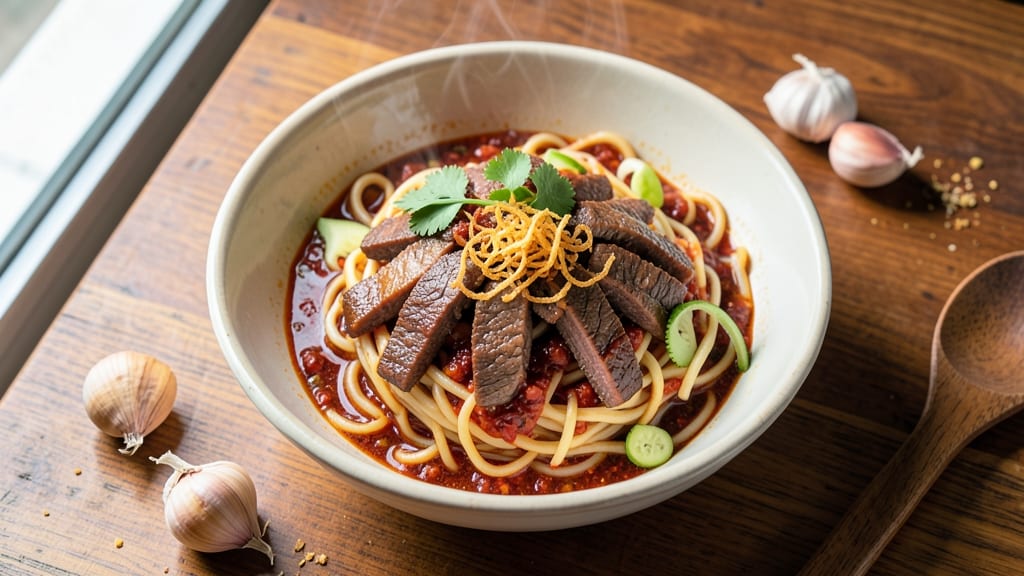
This Asian spicy beef noodle recipe delivers the perfect balance of bold umami heat and silky noodles in every bite—just like your favorite takeout, but better. The secret lies in a layered sauce that builds depth through slow simmering, while tender beef and chewy noodles create the ideal texture contrast. I've perfected this dish over years of testing, ensuring each component comes together harmoniously for restaurant-quality results at home.
What sets this recipe apart is the marinade, which transforms tougher cuts of beef into fork-tender strips through a combination of soy sauce, garlic, and ginger.
The sauce itself is where the magic happens—a complex blend of chili paste, fish sauce, and brown sugar that develops rich, caramelized notes as it simmers. The key technique is deglazing the pan after searing the beef, capturing all those flavorful browned bits that form the foundation of the sauce.
By the time you plate this dish, you'll have perfectly cooked beef with a caramelized crust, silky noodles that hold up to the bold sauce, and a balance of heat and umami that keeps everyone reaching for seconds.
The aroma alone will have your kitchen smelling like a bustling Asian street market. This is comfort food at its finest—warm, satisfying, and packed with layers of flavor.
The best part? It comes together in under 45 minutes with minimal prep. The beef cooks quickly in the wok, the sauce simmers while you prepare the noodles, and everything comes together in one pan.
Serve with quick-pickled vegetables or a side of steamed greens to round out the meal. Let's get cooking!
Ingredients for asian spicy beef noodle
Nine essential ingredients transform into bold, umami-packed beef noodles with restaurant-quality depth.
| Ingredient | Amount | Notes |
|---|---|---|
| Flank Steak 🥩 | 1 lb | Thinly sliced against grain |
| Egg Noodles 🍜 | 8 oz | Fresh or dried, uncooked |
| Soy Sauce 🍶 | ½ cup | High-quality, preferably Japanese |
| Garlic Cloves 🧄 | 6 cloves | Minced, fresh preferred |
| Fresh Ginger 🌿 | 2 tbsp | Finely grated, peeled |
| Red Chili Paste 🌶️ | 2 tbsp | Thai or Korean variety |
| Fish Sauce 🍶 | 1 tbsp | Red Boat brand preferred |
| Brown Sugar 🍬 | 2 tbsp | Light or dark, packed |
| Sesame Oil 🫒 | 1 tbsp | Toasted, for aroma |
| Vegetable Oil 🫒 | 2 tbsp | High smoke point |
| Green Onions 🧅 | 4 whole | Thinly sliced, white and green parts |
| Lime Wedges 🍋 | 2 whole | For serving |
| Salt 🧂 | 1 tsp | Kosher or sea salt |
| Black Pepper 🌶️ | ½ tsp | Freshly ground |
The beef is non-negotiable for texture. Flank steak slices beautifully against the grain, giving you those silky strands. Most grocery stores carry it, but Asian markets often have it pre-sliced—perfect if you're short on time. Look for good marbling; it keeps the meat tender. I always buy the thickest cut I can find and slice it myself—about 1/8-inch thick—so it cooks perfectly without turning tough. Fresh ginger and garlic are worth hunting down at the market too—they make all the difference in the marinade. Penzeys or the bulk bins at Whole Foods are my go-tos for quality spices.
No flank steak? Sirloin or ribeye works in a pinch, but slice it extra thin. Running low on fish sauce? Soy sauce plus a splash of Worcestershire gets you close, though it won't be identical. The chili paste can be swapped for sriracha or gochujang—just reduce the amount by half since they're hotter. For the noodles, fresh egg noodles are ideal, but dried ones work too (just cook them al dente). The sesame oil might seem like an afterthought, but it's what gives that authentic aroma—don't skip it. If you're sensitive to heat, cut the chili paste to 1 tbsp and add a pinch of sugar to balance it.
This sauce reheats beautifully—better the next day, actually. Store leftovers in an airtight container in the fridge for up to 4 days, or freeze for 3 months. I always make a double batch because it disappears fast. The noodles stay fresh in the fridge for 3 days if you cook them ahead, but I prefer making them fresh. For serving, keep lime wedges on the table—fresh lime brightens every bite. The beef can be marinated for up to 12 hours, which deepens the flavor even more, but even 30 minutes makes a difference.
Why You'll Love This Recipe
- No Chopping Nightmare: I swear by this recipe because the flank steak only needs quick slicing against the grain—no fancy knife skills required. The garlic and ginger get minced fast, and the soy sauce ties everything together without fuss.
- Umami Bomb Combo: That first bite? The tender flank steak with its crispy edges, slathered in salty-sweet soy, then hit with fresh ginger’s zing—it’s like a flavor explosion in your mouth. The egg noodles soak up all the goodness without turning mushy.
- Lunchbox Hero: Between us, this is my go-to for meal prep. Cook a big batch of noodles and beef, store them separately, and toss them together cold or reheated. Honestly, it tastes just as good the next day—perfect for busy mornings or post-work cravings.
- Budget Power Move: Flank steak stretches far when sliced thin, and a single jar of soy sauce covers multiple meals. I’ll be real: it’s the kind of dish where you end up with leftovers, but you won’t mind because it’s cheap, filling, and still feels special.
Step-by-step instructions for Asian spicy beef noodle recipe
Let's build this bold, umami-packed dish with layers of heat and silky texture.
Prepare the Flank Steak for Maximum Tenderness
Slice the 1 lb flank steak thinly against the grain into ¼-inch thick strips. This is crucial—cutting against the grain shortens the muscle fibers, ensuring each bite is tender. Place the sliced steak in a bowl and season with the 1 tsp salt and 0.5 tsp black pepper. Let it sit for 15 minutes while you prep the rest—this helps the seasoning penetrate deeply.
While the steak marinates, make the marinade by combining the 0.5 cup soy sauce, 2 tbsp brown sugar, 1 tbsp fish sauce, and 1 tbsp sesame oil in a small bowl. Whisk until the sugar dissolves completely. Pour this marinade over the steak, tossing gently to coat evenly. Let it marinate for at least 20 minutes—this creates that signature umami depth and tenderizes the beef further.
Build the Spicy Sauce Base
Heat the 2 tbsp vegetable oil in a large wok or deep skillet over medium-high heat until shimmering. Add the 6 cloves minced garlic cloves and 2 tbsp finely grated fresh ginger, stirring constantly for 30 seconds until fragrant but not browned. Garlic burns quickly, so keep your eye on it—you want aromatic, not bitter.
Immediately add the 2 tbsp red chili paste and stir for another 30 seconds. The paste will darken and release its fiery aroma. This is where the heat builds—don't rush this step. The chili paste should look glossy and well-distributed. If you're sensitive to heat, reduce the chili paste slightly next time, but trust me, this level of spice is what makes this dish sing.
Cook the Steak to Perfect Tenderness
Working in batches if needed, add the marinated steak to the wok in a single layer. Let it sear undisturbed for 1-2 minutes until the edges turn deep golden brown. This creates that beautiful caramelized crust we want. Stir and cook for another 1-2 minutes until the steak is just cooked through—it should still have a slight pink center when cut, as it'll finish cooking in the sauce.
Remove the steak with a slotted spoon and set it aside. Leave the flavorful browned bits in the wok—these are packed with umami goodness that will infuse your sauce. If you're worried about overcooking, this is the moment to trust your instincts. The steak should be tender but not mushy, with a beautiful sear on the outside.
Combine and Simmer the Noodles
In the same wok, add the 8 oz egg noodles and stir to coat them in the chili-garlic-ginger mixture. Pour in 4 cups hot water (enough to generously cover the noodles) and bring to a boil. Once boiling, reduce heat to medium-low and simmer for 5-6 minutes until the noodles are tender and the water has mostly evaporated.
Return the cooked steak to the wok along with any accumulated juices. Stir everything together, letting the steak absorb those last bits of flavorful sauce. Taste and adjust seasoning—you might want to add a splash more soy sauce or a pinch of salt if needed. The noodles should be coated in a glossy, slightly thick sauce with visible red chili flecks and tender beef pieces.
Finish with Fresh Aromatics
Turn off the heat and stir in the 4 whole green onions (sliced white and green parts) and the remaining 1 tbsp sesame oil. The sesame oil adds a nutty aroma that cuts through the heat beautifully. Taste again and add a squeeze of lime if you have it—this brightens the dish and balances all the rich flavors.
Serve immediately with the 2 whole lime wedges on the side. Each bowl should be packed with silky noodles, tender beef, and a perfect balance of umami, spice, and freshness. The lime juice will let you adjust the heat to your preference right at the table. This dish tastes even better the next day, so make extra if you can—it's that good.
Pro Tips For Making Asian Spicy Beef Noodle
- SLICE THIN, SLICE FAST: I learned this the hard way—thinly sliced flank steak cooks faster and stays tender. Use a sharp knife and cut against the grain at a 45-degree angle for uniform slices about ⅛-inch thick (yes, even if your hands get tired).
- GINGER: GRATE, DON’T CHOP: Fresh ginger loses its punch when chopped. Use a microplane or fine grater for the zest and juice—about 2 teaspoons of that fiery paste. Skip the peeling; the skin adds depth without bitterness.
- SOY SAUCE: SALT IT FIRST: Store-bought soy sauce is often diluted. Start with 2 tablespoons of unsalted soy sauce (or 1.5 if using salted) and adjust to taste—this ensures your noodles aren’t swimming in saltwater later.
- SAUCE: DEGLAZE HOT, NOT LUKEWARM: After searing the beef, hit the pan with a splash of water or broth immediately—it’ll sizzle and lift all those caramelized bits. Let it reduce by half before adding the rest of your sauce; this builds flavor faster than slow simmering.
Storing and reheating this asian spicy beef noodle
Refrigerator Storage
Store your beef noodles in an airtight container for up to 4 days—the flavors actually deepen overnight as the sauce melds. I use glass Pyrex containers because they keep the dish from absorbing fridge odors.
Let the noodles cool completely before storing to prevent condensation, which can make them soggy. The sauce will thicken slightly in the fridge, so add a splash of hot water when reheating. 💪
Freezer Prep
For longer storage, freeze portions in single-serving containers for up to 3 months. I recommend quart-sized freezer bags with 1-inch headspace to prevent ice crystals. Label with the date—trust me, you'll forget!
When reheating, thaw overnight in the fridge before warming through. The texture holds up surprisingly well, though the noodles may soften slightly. 🥶
Stovetop Reheat
My preferred method: Heat noodles in a wok or deep skillet over medium heat with 2 tbsp water or beef broth. Stir constantly for 5-7 minutes until bubbly and heated through. The residual sauce prevents sticking, and you'll get that perfect wok hei aroma.
If it looks dry, add another splash of water. Taste and adjust salt—reheated dishes often need a pinch more. 🔥
Microwave Shortcut
For quick meals, transfer noodles to a microwave-safe bowl with 2 tbsp water, cover loosely, and heat on high for 2-3 minutes. Stir halfway, then continue until 165°F internal temperature.
The microwave can make noodles mushy, so I add 1 tbsp sesame oil after heating to restore richness. Add fresh green onions and lime juice to revive the dish. ⏱️
Sauce-Only Storage
Save the sauce separately for up to 1 week in the fridge—it's perfect for drizzling over rice or eggs. Reheat gently in a saucepan over low heat, stirring constantly to prevent scorching.
If it thickens too much, thin with 1 tsp water. This concentrated sauce is where all the umami magic lives, so don't waste it! 🍶
Noodle Prep Ahead
Cook noodles al dente (1 minute less than package instructions) and rinse with cold water to stop cooking. Store in a separate container with a splash of oil to prevent sticking.
When ready to serve, reheat noodles in boiling water for 30 seconds, then toss with the reheated sauce and beef. This keeps them chewy and fresh-tasting. 🍜
Nutrition facts
Frequently asked questions
Can I use ground beef instead of sliced flank steak?
You can, but the texture will be different. Ground beef works best if you brown it thoroughly first to remove excess fat, then drain before adding to the sauce. For best results, use lean ground beef (90% lean or higher) and cook it until it develops a nice crust. The dish will still be delicious, but you'll lose that silky, strand-like texture from sliced flank steak.
How can I make this less spicy?
Reduce the chili paste to 1 tbsp instead of 2, and add 1 extra tbsp brown sugar to balance the heat. For extra mildness, stir in 1 tbsp hoisin sauce at the end—it adds sweetness that mellows the spice. Always taste as you go! You can also serve extra lime wedges to let everyone adjust the heat at the table.
What's the best way to make this dish vegetarian?
Swap the beef for mushroom strips (shiitake or oyster) or extra-firm tofu pressed and pan-fried. For umami depth, add 1 tbsp soy sauce to the marinade and consider using vegetarian fish sauce (like Veganamin). The sauce will still taste rich and spicy—just make sure your protein gets a good sear to mimic the beef's texture.
Can I make this recipe gluten-free?
Yes! Use gluten-free tamari or coconut aminos instead of soy sauce, and check that your fish sauce is gluten-free (most are). For the noodles, choose gluten-free egg noodles or rice noodles. The flavor profile will be slightly different but still delicious. Just be mindful that some chili pastes contain wheat—opt for a dedicated gluten-free brand if needed.
Why does my sauce get too thin?
This usually happens if you don't let the water evaporate enough when cooking the noodles. Simmer the noodles until most of the liquid is absorbed (about 5-6 minutes on medium-low). For extra thickness, stir in 1 tsp cornstarch mixed with 1 tbsp water at the end. The sauce should coat the back of a spoon but still be pourable.