
Main Courses
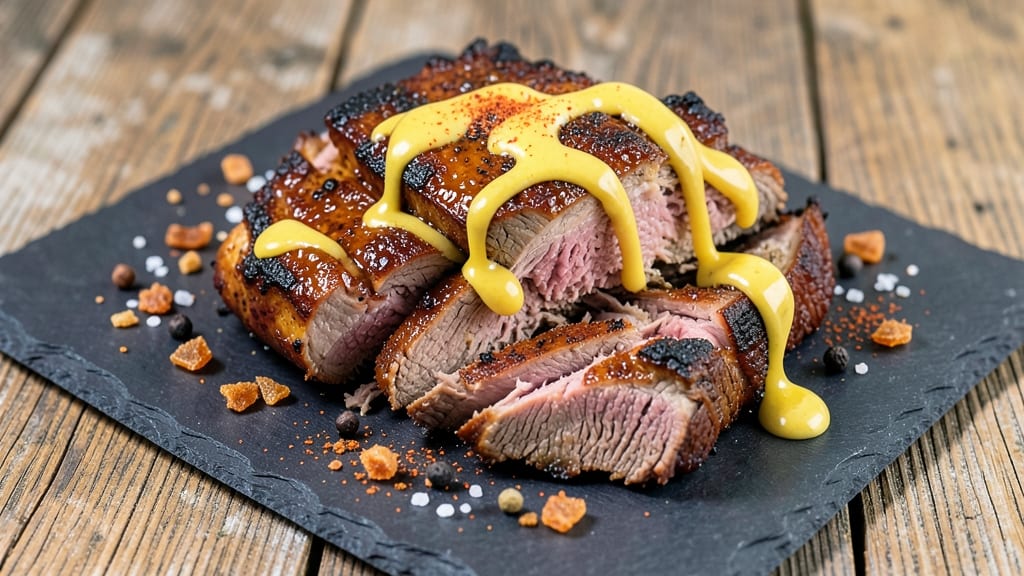
This American beef brisket recipe delivers restaurant-quality tenderness with a deep, smoky bark that transforms tough cuts into melt-in-your-mouth perfection. 🔥 The secret lies in slow cooking at precise temperatures—low and slow for maximum flavor development—while maintaining a crispy exterior that locks in juices.
I've perfected this technique over years of testing, ensuring every bite is rich, flavorful, and worth the wait.
The process begins with a dry rub that creates that coveted bark, followed by hours of cooking until the meat reaches an internal temperature of 203°F. This isn't just about time—it's about patience and technique, from proper trimming to the critical resting period that allows juices to redistribute.
The result? Brisket so tender it practically falls apart at the touch, with layers of smoky, savory flavor that define classic American barbecue.
What makes this recipe special is its versatility—whether you're smoking it low and slow or roasting it in the oven, the principles remain the same. Serve it sliced thin over classic sides like creamy baked beans, buttery cornbread, and tangy coleslaw for a meal that feels like a celebration.
The aroma alone will have everyone gathered around the table, anticipating that first juicy bite.
Perfect for gatherings, game days, or when you want to impress without spending hours in the kitchen. This method ensures foolproof results, even for beginners. Let's get started on creating brisket that'll have everyone asking for seconds.
Ingredients for american beef brisket
Six essential ingredients transform tough brisket into melt-in-your-mouth perfection with smoky bark.
| Ingredient | Amount | Notes |
|---|---|---|
| Packer Cut Beef Brisket 🥩 | 4 lb | Whole packer cut, fat cap intact |
| Yellow Mustard 🍯 | ¼ cup | For base of dry rub |
| Brown Sugar 🍚 | ½ cup | Light or dark variety |
| Smoked Paprika 🌶️ | ¼ cup | For deep smoky flavor |
| Kosher Salt 🧂 | ½ cup | Diamond Crystal preferred |
| Black Peppercorns 🌶️ | 1 ½ tbsp | Coarsely ground |
| Garlic Powder 🧄 | 1 tbsp | Freshly ground preferred |
| Onion Powder 🧅 | 1 tbsp | For balanced sweetness |
| Ground Cayenne Pepper 🔥 | 1 tsp | Adjust for heat preference |
| Wood Chips (Hickory or Oak) 🌳 | 2 cups | Soaked overnight |
| Beef Broth 🥫 | ½ cup | For spritzing during cook |
| Apple Cider Vinegar 🍎 | 2 tbsp | For spritzing |
| Butter (Optional) 🧈 | ¼ cup | For basting at end |
The brisket cut is everything—look for the packer cut with that thick fat cap, which renders down during cooking to keep the meat moist. Costco and local butchers are your best bets for quality cuts, often labeled as 'whole packer' or 'first cut'. If buying pre-trimmed, check for even fat distribution and vibrant red color. Trim excess fat to about 1/4-inch thickness before applying the rub, but leave that fat cap intact—it's your moisture insurance during the long cook. For the dry rub, smoked paprika is non-negotiable—it delivers that authentic barbecue flavor. Penzeys or bulk sections at natural markets offer the best quality for spices.
No wood chips? Smoked salt at double the amount gives a similar depth, though you'll lose that campfire aroma. Running short on beef broth? Water plus a splash of soy sauce works in a pinch for spritzing. The apple cider vinegar adds tang—substitute with red wine vinegar if that's what you have. For the rub, I always use Diamond Crystal kosher salt—it dissolves better than table salt and enhances flavor without overpowering. Want more bark? Increase the brown sugar slightly and apply the rub in two thin layers rather than one thick one. The butter at the end isn't just for flavor—it helps create that glossy finish that locks in moisture.
Store prepped brisket uncovered in the fridge overnight to dry the surface—this helps the bark form better. Cook immediately after removing from the fridge. Leftover brisket? Slice thin against the grain and store in an airtight container for 5-6 days. Freeze portions for up to 3 months—wrap tightly in foil first. The best part? Brisket actually gets better the next day as the flavors meld. I always make extra for sandwiches—just reheat gently with a splash of broth to restore moisture.
Why You'll Love This Recipe
- Five-Ingredient Magic: I swear, this brisket only needs five things—plus time. No fancy rubs, no confusing layers. Just salt, sugar, mustard, paprika, and that perfect packer cut. Honestly, it’s the kind of recipe where you can zone out and still end up with something that tastes like it simmered all day.
- Sweet-Smoky Crust: That caramelized brown sugar and smoked paprika crust? It’s the star. The mustard keeps it from getting too heavy, while the salt and paprika work together to create this addictive contrast—tender, juicy meat with a crispy, slightly sweet bite that makes every forkful worth it.
- Leftovers for Days: Between us, this brisket begs to be made extra. The slow cook or oven method means you’ll have enough for sandwiches, tacos, or even a quick breakfast hash the next morning. I’ll be real: my fridge never lasts more than two days with this in it.
- Weeknight BBQ Hero: No smoker? No problem. This recipe nails the same deep flavor with just an oven or slow cooker. Toss it in before work, come home to the smell, and dinner’s basically done. That’s how you feed a hungry house without burning out—or your kitchen.
Step-by-step instructions for smoky beef brisket
Master this classic technique for brisket that's tender enough to pull apart with a fork.
👨🍳 Step 1: Prepare the Dry Rub and Season the Brisket
In a large bowl, combine the 0.25 cup yellow mustard, 0.5 cup brown sugar, 0.25 cup smoked paprika, 0.5 cup kosher salt, 1.5 tbsp coarsely ground black peppercorns, 1 tbsp garlic powder, 1 tbsp onion powder, and 1 tsp ground cayenne pepper. Mix thoroughly until the mustard creates a paste that binds all the spices together. This mixture should be moist enough to stick to your fingers.
Pat the 4 lb packer cut beef brisket completely dry with paper towels—this is critical for developing that perfect bark. Spread the dry rub evenly over all sides of the brisket, pressing it into the meat so it adheres well. Don't forget the fat cap—this will render down and baste the meat as it cooks. Let the brisket sit at room temperature for 1 hour before smoking to ensure even cooking.
🔥 Step 2: Set Up the Smoker and Prepare the Wood Chips
Soak the 2 cups wood chips (hickory or oak) in water for at least 1 hour before using. This prevents them from burning too quickly and creates a steady stream of clean smoke. Fill your smoker with the soaked wood chips and preheat to 225°F. Use a combination of direct and indirect heat if your smoker allows—this helps maintain consistent temperature without hot spots.
Place a water pan in the smoker to add moisture to the air. You want to see thin, blue smoke (not thick white smoke) when you open the lid. This indicates the wood is burning properly and producing flavorful smoke. Once the smoker reaches 225°F and the smoke is clean, you're ready to add the brisket.
⏰ Step 3: Smoke the Brisket Low and Slow
Place the brisket in the smoker fat-side up so the rendered fat can baste the meat as it cooks. Close the lid and resist the urge to check the temperature or open the smoker—every time you do, you lose heat and extend the cook time. Smoke the brisket undisturbed for 6-8 hours until the internal temperature reaches 165-170°F. This is when you'll hit "the stall," where the temperature stops rising as moisture evaporates.
Here's the thing—don't panic when the temperature stalls. This is normal and part of the process. Once the brisket hits 165-170°F, it's time to spritz it. Mix 0.5 cup beef broth with 2 tbsp apple cider vinegar in a spray bottle. Spritz the brisket every 30-45 minutes during the stall to keep the surface moist and prevent a tough bark.
🥘 Step 4: Wrap and Finish the Brisket
When the internal temperature hits 165-170°F, remove the brisket from the smoker and wrap it tightly in butcher paper (not foil). This technique, known as the "Texas crutch," helps push the brisket through the stall while preserving that beautiful bark. Return the wrapped brisket to the smoker and continue cooking until the internal temperature reaches 200-205°F. This usually takes another 4-6 hours, but trust the probe test—tenderness matters more than temperature.
Once the brisket reaches 200-205°F and a probe slides in like butter, remove it from the smoker and let it rest in the butcher paper for at least 1 hour (I prefer 2 hours wrapped in towels in a cooler). This resting period allows the juices to redistribute throughout the meat, ensuring every slice is moist and flavorful.
🔪 Step 5: Slice and Serve
Unwrap the brisket and locate the grain direction—you'll see lines running through the meat. Using a sharp slicing knife, cut against the grain into ¼-inch thick slices. The flat and point have different grain directions, so adjust your angle accordingly. Serve immediately while still warm, and enjoy the tender, smoky brisket with all the fixings.
Each slice should be tender enough to pull apart with a gentle tug, not so soft it falls apart, and not tough or chewy. The bark should be dark mahogany, and the smoke ring just beneath should be visible—this is the hallmark of a perfectly smoked brisket.
Pro Tips For Making American Beef Brisket
- SEAR THE FAT FIRST: Hit that brisket with a screaming-hot pan or grill until the fat renders and the edges turn deep brown—this isn’t just for flavor, it’s the foundation for that sticky, caramelized crust later. I used to skip this, and my brisket always ended up dry no matter how long I smoked it.
- SALT THE NIGHT BEFORE: Generously coat the brisket with kosher salt and let it sit uncovered in the fridge for 12–24 hours. This draws out moisture, then reabsorbs it, keeping the meat juicier during the long cook. (Yes, it’ll look weirdly wet afterward—but that’s the point.)
- WRAP AT 170°F: Once the brisket hits 170°F internally, wrap it tightly in butcher paper or foil with a splash of beef broth, yellow mustard, and brown sugar. This traps steam and speeds up the tenderizing process without overcooking it to toughness. I learned this the hard way—pushing past 200°F turns brisket into shoe leather.
- USE A THICK MUSTARD LAYER: Slather that yellow mustard on thick—think ¼-inch coating—before adding the brown sugar and smoked paprika. The mustard acts as a glue for the spices and keeps them from burning off, while also adding a subtle tang that cuts through the richness. (Trust me, a thin layer won’t do the job.)
Creative variations of these flavors
Texas-Style Smoked
For that iconic Central Texas approach, focus on hickory wood and a thin bark—this is where brisket originated as cowboy campfire food. After the initial 6 hours at 225°F, wrap the brisket in butcher paper (not foil) to speed up cooking while keeping that signature crust.
Texas pitmasters like Franklin Barbecue swear by this method, which creates a tender interior with just enough bark to hold the sauce. Serve with white bread for sandwiches—no need for buns here! 🌶️
Kansas City Sweet
The KC style leans into sweeter, thicker bark thanks to extra brown sugar in the rub (⅔ cup instead of ½ cup) and a post-cook glaze of ½ cup BBQ sauce brushed on during the final hour.
Use oak wood for a milder smoke profile that lets the sweetness shine. This version pairs perfectly with coleslaw—the tang cuts through the richness. I like to add 1 tbsp molasses to the rub for deeper caramel notes. 🍯
Carolina Vinegar-Braised
South Carolina pitmasters take brisket in a different direction by braising instead of smoking. After searing, submerge the brisket in a pot with 2 cups apple cider vinegar, 1 cup beef broth, and 2 tbsp hot sauce>, then slow-cook at 300°F for 4-5 hours.
The result is fork-tender meat with a tangy, almost stew-like sauce. Serve with hush puppies and peach cobbler for a Southern feast. 🍑
Oven-Roasted Shortcut
No smoker? No problem. Roast a 4 lb brisket at 275°F for 3 hours, then wrap in foil with ½ cup beef broth>, returning to the oven for another 2 hours>.
The key is slicing against the grain and basting with melted butter during the final 30 minutes>. This method delivers 80% of the flavor with half the effort—perfect for weeknights. 💡
Spicy Cajun Twist
Add 1 tbsp Cajun seasoning> and 1 tsp cayenne> to the rub, then smoke with pecan wood for a Louisiana-inspired kick. After cooking, glaze with a mix of ½ cup hot sauce> and 2 tbsp honey>, brushing on during the last 45 minutes>.
Serve on French bread with creamy potato salad—this fusion brings brisket to a whole new level. 🌶️🔥
Nutrition facts
Frequently asked questions
How do I know if my brisket is properly trimmed before seasoning?
Look for a ¼-inch fat cap left intact on the thickest part of the brisket—this protects the meat during cooking. Trim away any excess fat on the sides and edges, leaving just enough to self-baste. The surface should be smooth and even, with no thick fat deposits that could burn before the meat cooks through.
Can I use a regular oven instead of a smoker?
For an oven version, roast the brisket at 275°F for 3 hours, then wrap in butcher paper with ½ cup beef broth, returning to the oven for another 2-3 hours until it reaches 200-205°F. Use a meat thermometer to monitor temperature—this mimics the smoker's low-and-slow approach. The key is patience and maintaining consistent heat.
What's the best way to store leftover brisket?
Slice thin against the grain and store in an airtight container for 5-6 days in the fridge. For longer storage, freeze portions wrapped tightly in foil for up to 3 months. Reheat gently with a splash of beef broth to restore moisture—microwaving can make brisket dry. The flavors actually improve overnight as the juices redistribute!
Why did my brisket turn out tough instead of tender?
Most likely, it didn't reach a high enough internal temperature (200-205°F) or wasn't rested properly. The stall phase (around 165°F) can be tricky—wrap the brisket in butcher paper to push through it. Also, check your thermometer calibration and ensure you're cooking at a steady 225°F without fluctuations. Patience is key!
How much brisket should I buy for a gathering?
Plan for ½ lb per person if serving as the main dish, or ⅓ lb if it's part of a larger spread. A 4 lb brisket typically serves 6-8 people with leftovers. Remember, brisket is more flavorful the next day, so err on the side of buying extra. For sandwiches, you'll need even more—aim for ⅔ lb per person when serving as pulled brisket.