
Main Courses
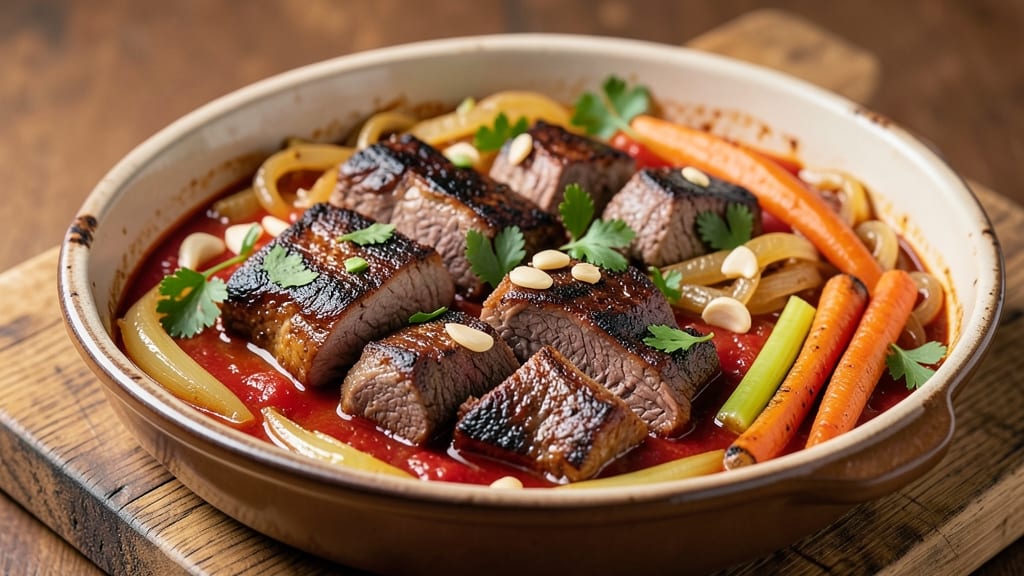
Al’s beef recipe delivers the kind of slow-simmered richness that transforms tough cuts into melt-in-your-mouth perfection. This isn’t just another beef dish—it’s a method I’ve refined over years of testing, where deep umami flavors develop through patience and precise technique.
The secret lies in balancing acidity, sweetness, and slow cooking to create a dish that’s both restaurant-worthy and foolproof for home cooks.
What makes this recipe stand out is its versatility—whether you’re working with short ribs, chuck roast, or brisket, the same principles apply. You’ll start with a dry rub or marinade to build flavor, then slow-cook until the meat falls apart effortlessly.
The result? A dish so tender it practically dissolves on your tongue, with a sauce that’s rich yet balanced, thanks to a touch of vinegar and a splash of red wine.
The beauty of this method is that it rewards your time with minimal effort. While the beef simmers away, you can prepare complementary sides like roasted root vegetables or a simple green salad.
By the time dinner rolls around, your kitchen will smell like an Italian trattoria, and every bite will be worth the wait. This is comfort food at its finest—deeply satisfying and impossible to resist.
Perfect for feeding a crowd or meal prepping, this recipe scales beautifully without sacrificing flavor. The leftovers reheat just as well as the first serving, making it ideal for busy weeks. Let’s get started on creating a dish that’ll have everyone asking for seconds—and maybe even requesting the recipe.
Ingredients for al's beef
Pantry staples plus a few key ingredients for deep, slow-simmered beef flavor.
| Ingredient | Amount | Notes |
|---|---|---|
| Beef Chuck Roast 🥩 | 3 lb | With good marbling, cut into 2-inch chunks |
| Yellow Onion 🧅 | 1 whole | Chopped, yellow or red |
| Carrots 🥕 | 4 whole | Peeled, cut into chunks |
| Celery Stalks 🧅 | 4 whole | Cut into 1-inch pieces |
| Garlic Cloves 🧄 | 8 cloves | Peeled, smashed |
| Tomato Paste 🍅 | ½ cup | Squeeze tube or can |
| Red Wine 🍷 | 1 cup | Bold dry variety like Cabernet |
| Beef Broth 💧 | 2 cups | Low-sodium preferred |
| Balsamic Vinegar 🍶 | ¼ cup | For brightness |
| Dried Thyme 🌿 | 1 tbsp | Or 1 tbsp fresh thyme |
| Ground Black Pepper 🌶️ | 1 tbsp | Freshly cracked |
| Kosher Salt 🧂 | 1 ½ tbsp | For seasoning |
| Olive Oil 🫒 | 2 tbsp | Extra-virgin for searing |
| Fresh Rosemary 🌿 | ¼ cup | Chopped, optional but recommended |
The beef is everything here. Chuck roast with visible fat marbling gives the best texture—ask your butcher to cut it into 2-inch chunks if they don't pre-package it that way. Costco or Whole Foods usually have great cuts, but any grocery store beef department will work. For the aromatics, don't skimp on garlic—8 cloves might sound like a lot, but you want that deep flavor. I always grab extra rosemary too (half goes in the pot, half gets tied into a bundle for extra aroma).
No red wine? Substitute beef broth with 1 tbsp balsamic vinegar—it keeps that same rich depth. Fresh thyme is ideal, but dried works at the same amount (no need to adjust). The tomato paste can be from a squeeze tube—Trader Joe's has great ones that last forever. For the carrots and celery, baby versions work fine if you're short on time. And if you're worried about the balsamic vinegar being too sweet, add an extra splash of red wine vinegar to balance it out.
This reheats like a dream—honestly better the next day once all the flavors meld. Keeps in the fridge for 5 days or freezes beautifully for 3 months. I always make a double batch because it's perfect for meal prep. Store in glass containers (the flavors taste better) and portion out for easy lunches. The sauce thickens as it cools, so just add a splash of broth when reheating.
Why You'll Love This Recipe
- I’ll be real: slow-cooking isn’t for everyone, but this? It’s foolproof. Sear the beef, dump in the ingredients, and walk away for three hours. No hovering, no stress—just come back to a pot of rich, saucy beef that tastes like it simmered all day. And if you’re short on broth, a splash of extra balsamic vinegar keeps it just as deep.
- One-Pot Magic: Honestly, I love recipes that don’t require a million dishes—just one Dutch oven, a little chopping, and you’re set. The beef browns while you prep the onions, carrots, and celery, and by the time you’re done, everything’s simmering together in that same pot. No cleanup battles here—just flavor.
- Umami Bomb: Between us, that combo of tomato paste, red wine, and rosemary is chef’s kiss. The seared beef chunks add a deep, caramelized richness, while the balsamic vinegar cuts through with just enough tang. It’s the kind of dish where every bite feels like a little reward—no sad, dry meat here, just melt-in-your-mouth perfection.
- Weeknight Crowd-Pleaser: This isn’t just a fancy dinner—it’s the dish I pull out when my in-laws visit or when I need to feed a houseful of hungry teens. The leftovers? Even better the next day, and it reheats like a dream. Plus, the veggies (onions, carrots, celery) add bulk without cost, so it’s budget-friendly too.
Step-by-step instructions for slow-simmered beef chuck roast
Here's the straightforward method to transform tough chuck roast into melt-in-your-mouth perfection.
Sear the Beef for Deep Flavor
Heat a Dutch oven over medium-high heat and add the 2 tablespoons olive oil. Once shimmering, add the 3 lb beef chuck roast cut into 2-inch chunks. Sear on all sides until deeply browned, about 5-7 minutes total. This step creates the rich, caramelized crust that forms the foundation of your dish.
Work in batches if needed to avoid crowding the pan. The goal is to develop maximum flavor through the Maillard reaction. Once browned, remove the beef and set aside on a plate. You'll notice the pan will have beautiful browned bits stuck to the bottom—this is flavor gold that we'll incorporate later.
Build the Aromatic Vegetable Base
In the same Dutch oven, add the chopped 1 whole yellow onion, 4 whole carrots cut into chunks, and 4 whole celery stalks cut into 1-inch pieces. Sauté for 5-6 minutes until the vegetables begin to soften and release their natural juices. This creates the aromatic base that infuses the beef with layers of flavor.
Add the 8 peeled and smashed garlic cloves and cook for another 30 seconds until fragrant. Here's where it gets good—stir in the 0.5 cup tomato paste and cook for 1 minute until it darkens slightly. This step develops the deep umami foundation that makes this dish so special.
Deglaze and Simmer the Beef
Pour in the 1 cup red wine and scrape up all those browned bits from the bottom of the pan. Let it simmer for 3-4 minutes until the wine reduces by half. Add the 2 cups beef broth, 0.25 cup balsamic vinegar, 1 tablespoon dried thyme, 1 tablespoon ground black pepper, and 1.5 tablespoons kosher salt. Stir well to combine all ingredients.
Return the beef to the pot along with the 0.25 cup chopped fresh rosemary. Bring to a gentle simmer, then reduce heat to maintain a low bubble. Cover partially and let it cook for 2.5-3 hours. Your oven might run hot, so start checking at the 2-hour mark when the meat should be fork-tender.
Finish with Perfect Texture
Once the beef is tender enough to pierce with a fork (it should fall apart easily), remove the roast from the pot and set it aside. Strain the cooking liquid through a fine-mesh sieve into a measuring cup, pressing on the vegetables to extract all the flavor. You should have about 2 cups of rich cooking liquid.
Return the strained liquid to the pot and bring to a gentle simmer. Skim off any excess fat that rises to the surface. The sauce should coat the back of a spoon and have a velvety consistency. If it's too thin, simmer uncovered for another 5-10 minutes to reduce it to your desired thickness.
Serve with Confidence
Slice the beef against the grain into ¼-inch thick slices. The meat should be incredibly tender, falling apart easily with minimal effort. Spoon the reduced sauce over the top and serve immediately with the sliced vegetables on the side.
This dish tastes even better the next day as the flavors continue to meld. The combination of rich beef, aromatic vegetables, and deep umami sauce makes this a showstopper for any meal. Don't be tempted to rush the cooking time—patience here ensures melt-in-your-mouth perfection.
Pro Tips For Making Al'S Beef
- Sear in Batches: Crowding the pan turns searing into steaming—your beef ends up gray and flavorless. Work in batches, even if it takes a little longer, and let the oil recover its heat between loads. That caramelized crust is what makes this dish sing.
- Smash That Garlic: Whole garlic cloves? No way. Smash those 8 cloves with the flat side of your knife first—it releases more flavor faster. Skip this, and you’re just stirring in garlic perfume instead of actual punch.
- Don’t Skimp on Salt: The 1.5 tablespoons kosher salt isn’t optional—it’s the difference between "meh" and "wow." Add it with the beef broth, not just at the end. Taste the broth before returning the meat; if it’s bland now, the final dish will be too.
- Strain Like You Mean It: Press those cooked veggies through the sieve with the back of a spoon—you’re not just filtering, you’re squeezing out every last drop of flavor. Lazy straining means a thinner, less rich sauce. (Yes, even if it looks like overkill.)
Flavor customization for al's beef
Spicy Kick
For heat lovers, swap the 1 tbsp ground black pepper with 1 tbsp smoked paprika and add 2 tbsp chopped chipotle peppers in adobo sauce when deglazing with red wine. The smoky heat from chipotle pairs perfectly with the rich beef.
I like to add a pinch of cayenne pepper (start with ½ tsp) to intensify the flavor without overpowering. 🌶️
Sweet Glaze Twist
Balance the richness with a touch of sweetness by adding 2 tbsp honey or maple syrup when you pour in the red wine. This creates a beautiful caramelized glaze on the beef while keeping the sauce velvety.
For extra depth, I sometimes add 1 tsp grated ginger to complement the sweetness. This variation works especially well with brisket.
Herb-Forward Version
If you love herbs, double the fresh rosemary to ½ cup and add 1 tbsp chopped sage when searing the beef. The earthy notes from sage and rosemary elevate the dish, especially when paired with a splash of white wine instead of red.
I also like to finish with fresh thyme sprigs on top for a pop of color and aroma.
Umami Boost
For an extra layer of umami, stir in 1 tbsp soy sauce or 1 tsp fish sauce when adding the beef broth. This deepens the savory profile without altering the dish's balance.
I also add 1 tbsp Worcestershire sauce for a tangy twist that ties all the flavors together beautifully. This works especially well if you're serving it with mashed potatoes or crusty bread.
Creamy Finish
For a luxurious finish, stir in ¼ cup heavy cream or ½ cup Greek yogurt during the final simmer. This adds a velvety texture that contrasts the rich beef.
I like to add a pinch of nutmeg (about ¼ tsp) to complement the creaminess. This variation is perfect for serving with roasted vegetables or a fresh salad.
Regional Adaptations
For a Southern-inspired twist, add 1 tbsp hot sauce (like Crystal) and ½ tsp smoked paprika to the sauce. This gives it a spicy, smoky kick that pairs well with cornbread.
In Italian style, replace the red wine with ½ cup white wine and add 1 tbsp lemon zest for brightness. Both versions keep the dish's hearty, comforting nature while adding regional flair. 🗺️
Nutrition facts
Frequently asked questions
Why does this beef need to simmer for so long?
The long simmer—2.5-3 hours—is key to breaking down tough muscle fibers in the chuck roast until it becomes fork-tender. This slow cooking method also lets all the flavors meld together, creating that deep, rich umami taste. Patience here transforms what would otherwise be a chewy cut into melt-in-your-mouth perfection.
Can I use a different cut of beef?
While chuck roast is ideal, you can swap it for brisket or short ribs. Just adjust the cooking time—brisket may need 3-4 hours while short ribs might be ready in 2-2.5 hours. The same method works because the slow simmer is what makes the meat tender.
What if my sauce turns out too thin?
Simmer the sauce uncovered for 5-10 extra minutes to reduce it to your desired thickness. If it's still too thin, mix 1 tbsp cornstarch with 2 tbsp cold water, stir it in, and simmer for another 2 minutes until it thickens. The goal is a velvety consistency that coats the back of a spoon.
How do I know when the beef is fully cooked?
The beef is done when it easily pierces with a fork and falls apart with minimal effort. For chuck roast, this typically happens around 2.5-3 hours of simmering. If you're unsure, check the internal temperature—it should reach 203°F for perfect tenderness.
Can I make this in a slow cooker?
Yes! Brown the beef first in a skillet, then transfer everything to your slow cooker. Cook on low for 6-7 hours or high for 3-4 hours. The slow cooker method is even more hands-off, letting the beef become tender while you handle other tasks. Just remember to reduce the sauce separately at the end.