
Main Courses
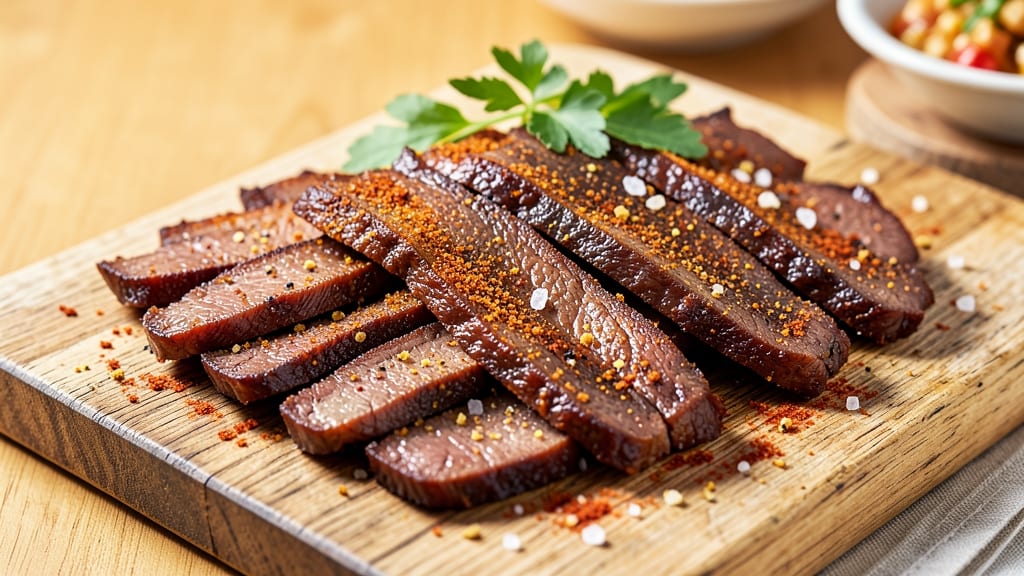
This all-natural beef jerky recipe transforms lean beef into chewy, smoky-sweet strips that keep for weeks—no preservatives needed. 🔥 The secret lies in a precise smoky-sweet spice blend and careful dehydration, ensuring every bite delivers that perfect balance of savory, sweet, and umami flavor without artificial additives.
I've perfected this method over years of testing, and it consistently yields jerky that's restaurant-quality at home.
What sets this recipe apart is its focus on natural ingredients and proper food safety techniques, making it ideal for meal prep, camping trips, or snacking.
You'll need just 5 key ingredients—lean beef, a homemade spice rub, and a few pantry staples—plus a dehydrator or oven to achieve that signature chewy texture. The process is straightforward but requires patience, as proper dehydration is critical for both safety and flavor development.
By the end, you'll have crispy-edged, tender jerky with a deep smoky aroma that fills your kitchen. The spice blend infuses the meat perfectly, creating layers of flavor that stay vibrant even after weeks of storage.
This recipe delivers jerky that's healthier than store-bought versions while packing serious flavor—no compromises needed.
Whether you prefer classic beef jerky or want to experiment with teriyaki or peppery variations, this method adapts easily. The best part? You can make a large batch and store it for months, ensuring you always have a protein-packed snack on hand.
Let's get started on making jerky that's as nutritious as it is delicious.
Ingredients for all natural beef jerky
Lean beef meets smoky-sweet magic—just five ingredients transform into restaurant-quality jerky at home.
| Ingredient | Amount | Notes |
|---|---|---|
| Lean Beef Top Round Roast 🥩 | 2 lb | Trimmed of fat and silver skin |
| Brown Sugar 🍯 | ½ cup | Packed, light variety preferred |
| Smoked Paprika 🌶️ | 2 tbsp | For authentic smoky depth |
| Kosher Salt 🧂 | 1 ½ tbsp | Diamond Crystal preferred |
| Ground Black Pepper 🌶️ | 1 ½ tbsp | Freshly cracked for sharpness |
| Garlic Powder 🧄 | 1 tbsp | Not garlic salt |
| Onion Powder 🧅 | 1 tbsp | For subtle sweetness |
| Ground Cayenne Pepper 🔥 | ½ tbsp | Adjust for heat preference |
| Extra-Virgin Olive Oil 🫒 | 2 tbsp | For tenderizing the meat |
| Lemon Juice 🍋 | 2 tbsp | Freshly squeezed, brightens flavor |
| Apple Cider Vinegar 🍎 | 1 tbsp | For acidity and preservation |
The beef is everything here. Top round roast is the gold standard—lean enough to dehydrate properly but still packed with flavor. Grab it from the butcher counter if possible, as pre-packaged roasts often have more fat. Trim any visible silver skin or marbling before slicing, and keep it cold until ready to use. For the best results, buy it the day you plan to make jerky—freshness matters. If you're working with a larger roast, freeze it in individual portions first to make slicing easier later.
No smoked paprika? Mix 1 tbsp regular paprika with 1 tsp liquid smoke for a close substitute. The brown sugar can be swapped for maple syrup or agave (use half the amount) if you're avoiding refined sugar, but it helps with caramelization. For the acidity boost, balsamic vinegar works too—just reduce the amount slightly since it's stronger. The olive oil and lemon juice marinade is non-negotiable though; it tenderizes the meat and helps the spices stick. Pro tip: Make a double batch of the spice rub and store it in a small jar—it keeps for months and perfects future jerky batches.
This jerky keeps for 3-4 months in an airtight container at room temperature, or 6 months in the freezer if you want to extend shelf life. Store it in parchment-lined containers to prevent moisture buildup. For camping trips, pack it in resealable bags with a silica gel packet to keep it crispy. The flavor actually improves after a week of aging—don't eat it all at once! If you notice any sliminess or off smells, toss it immediately. This recipe makes enough for 4 servings (about 16 oz total), but you'll want to double it for serious snacking.
Why You'll Love This Recipe
- No-Fuss Prep: I swear by this method—just slice the lean top round, toss it in a marinade of brown sugar and smoked paprika, then let the dehydrator do the work. No chopping, no fuss, and zero guesswork.
- Sweet-Smoky Crave: That caramelized brown sugar crust with the deep, smoky paprika? It’s the kind of flavor that sticks with you. Honestly, I’ve seen people eat it straight from the bag—no shame.
- Snack Attack Ready: Stash it in your gym bag, desk drawer, or camping cooler. It’s my go-to for road trips, hiking, or when I’m too tired to cook but still need protein. (Yes, even on a Tuesday night.)
- Budget-Protein Power: A single roast stretches for weeks, and the ingredients cost pennies. I’ve fed my whole family for under $10—no fancy packaging, just pure, tasty protein that won’t break the bank.
Step-by-step instructions for making smoky-sweet beef jerky
Here's how to transform lean beef into chewy, flavor-packed jerky with a perfect smoky-sweet balance.
👨🍳 Step 1: Trim and Slice the Lean Beef Top Round Roast
Start by trimming all visible fat and silver skin from the 2 lb lean beef top round roast using a sharp boning knife. This ensures you get maximum flavor without greasiness. For even drying, slice the meat against the grain into ¼-inch thick strips—about ⅛-inch wide—using a long, sharp carving knife or meat slicer.
Real talk: the thinner the slices, the faster they'll dry, but don't go under ⅛-inch or they'll turn brittle. Arrange the slices on a plate and refrigerate while you prepare the marinade. This keeps them firm for easier handling later.
🍳 Step 2: Create the Flavor-Packed Marinade
In a large bowl, whisk together the 0.5 cup packed brown sugar, 2 tbsp smoked paprika, 1.5 tbsp kosher salt, 1.5 tbsp ground black pepper, 1 tbsp garlic powder, 1 tbsp onion powder, and 0.5 tbsp ground cayenne pepper until completely combined. This dry rub forms the foundation of your jerky's complex flavor profile.
In a separate small bowl, mix the 2 tbsp extra-virgin olive oil, 2 tbsp lemon juice, and 1 tbsp apple cider vinegar. The acidity from the vinegar and lemon juice helps tenderize the meat while preserving its texture during drying. Pour this wet mixture over the dry rub and stir until you have a thick, paste-like marinade.
🥘 Step 3: Coat and Cure the Beef Strips
Transfer the beef strips to a large resealable plastic bag and pour the marinade over them. Seal the bag and massage the marinade into every strip, ensuring complete coverage. This step is crucial—uneven coating leads to bland spots. Let the beef marinate in the refrigerator for at least 12 hours, but I recommend 24 hours for maximum flavor penetration.
Here's the thing—don't skip the marinating time. The acid in the vinegar and lemon juice begins breaking down the muscle fibers, creating that perfect chewy texture while infusing deep flavor. If you're short on time, a minimum of 8 hours will work, but you'll sacrifice some tenderness.
🔥 Step 4: Dry the Jerky Using the Dehydrator Method
Preheat your dehydrator to 160°F and line the trays with parchment paper. Arrange the marinated beef strips in a single layer, leaving about ½-inch between each piece for proper air circulation. This spacing prevents moisture buildup that could lead to spoilage.
Dehydrate for 4-6 hours, checking periodically. You're looking for jerky that's dry to the touch but still slightly pliable—not brittle. The drying time varies based on humidity and your dehydrator's efficiency, so start checking after 4 hours. The jerky should pull away from the parchment paper easily when lifted gently.
⏰ Step 5: Test for Doneness and Store Properly
To test for doneness, pick up a strip between your fingers—it should feel dry and leathery but not hard. If it's still damp, return it to the dehydrator for another 30-60 minutes. Once fully dried, let the jerky cool completely before packaging to prevent condensation.
Store your homemade jerky in an airtight container in the refrigerator for up to 2 weeks or in the freezer for up to 6 months. The smoky-sweet flavor will intensify as it ages, making it even more addictive. For maximum crunch, let it come to room temperature before eating—this restores some of the moisture lost during drying.
Pro Tips For Making All Natural Beef Jerky
- Freeze the Meat First: I learned this the hard way—skipping the freeze makes slicing uneven and messy. Pop the top round in the freezer for 30 minutes before slicing; it’ll hold the knife better and give you those clean, even strips that dry perfectly.
- Mix Dry Rub Early: Brown sugar and smoked paprika clump like glue if you wait until the last second. Whisk them with the kosher salt and black pepper before applying—this keeps the coating even and prevents sticky patches on your jerky.
- Use a Meat Thermometer: Jerky’s done at 160°F internal, but visual cues lie. A cheap thermometer saves you from over-drying (which turns it into leather) or under-processing (which risks spoilage). Stick it in the thickest strip—no guessing.
- Skip the Crowding in the Dehydrator: I used to stack slices too close, and they’d steam instead of dry. Leave at least ¼-inch between strips for airflow—this cuts drying time by nearly 2 hours and keeps every piece crisp, not soggy.
Essential equipment for great all natural beef jerky
Dehydrator Essentials
Your dehydrator is the star of this recipe—Excalibur 9-tray or Nesco FD-75A are top-tier choices that maintain consistent 160°F temperatures. Look for models with adjustable thermostats and even heat distribution to prevent uneven drying. A good dehydrator will give you restaurant-quality jerky every time without the guesswork. 🌡️
Oven Alternative Setup
No dehydrator? No problem! Use your oven with the door propped open slightly (use a wooden spoon handle) to allow moisture to escape. Set it to its lowest setting—usually 170°F—and place a wire rack on top of a baking sheet.
Line the rack with parchment paper and arrange strips with ½-inch spacing between them. This method takes 6-8 hours to achieve the same results.
Precision Slicing Tools
For even slices, invest in a long, sharp carving knife or a mandoline slicer with a ¼-inch blade. I use a Victorinox 10-inch boning knife for manual slicing—it gives me clean, consistent cuts every time.
If you're making jerky regularly, a meat slicer (like the West Bend 3025) is worth the investment for professional results.
Marinating Gear
Use a large resealable plastic bag (like Ziploc gallon bags) for marinating—it makes massaging the marinade into the beef effortless. For extra flavor penetration, I like using glass storage containers (like Pyrex) when storing the spice rub between batches.
A meat tenderizer mallet (optional) can help break down tough fibers if your beef is particularly dense.
Storage Containers
Store your finished jerky in airtight glass jars (like Ball Mason jars) or vacuum-sealed bags to maintain freshness. For camping trips, use resealable Mylar bags with oxygen absorbers to extend shelf life.
I keep mine in amber-colored jars in my pantry—they block light and preserve flavor better than clear containers. 💫
Safety Must-Haves
Always have food-grade silicone mats on hand for easy cleanup and a digital meat thermometer (like Thermoworks Smoke) to verify internal temperatures stay below 40°F during prep. A high-quality kitchen scale ensures precise measurements for the spice blend—OXO Good Grips is my go-to for accuracy.
Nutrition facts
Frequently asked questions
Can I use ground beef instead of sliced top round roast?
No, ground beef won't work for this recipe—it needs to be sliced thin against the grain for proper dehydration. The lean top round roast provides the perfect balance of tenderness and chewiness. If you're set on ground beef, try making beef jerky patties instead, but they'll have a different texture and require a different drying approach.
How do I adjust the spice level for sensitive eaters?
Simply reduce or omit the ground cayenne pepper entirely. For a mild version, use just ¼ tsp instead of the full ½ tbsp. The smoky-sweet base will still shine through—it's the cayenne that adds heat. You can also substitute with ½ tsp sweet paprika for a milder smoky flavor without any spice.
Why did my jerky turn out too chewy or too dry?
Too chewy? Your strips were likely too thick—aim for ¼-inch maximum. Too dry? You probably over-dried it or used an oven that wasn't properly ventilated. The jerky should be leathery but pliable—not brittle. For oven drying, check every 30 minutes after 4 hours of cooking time at 160°F.
Can I make this recipe without a dehydrator?
Use your oven set to 170°F with the door slightly open (use a wooden spoon handle to prop it). Place strips on a wire rack over a baking sheet with ½-inch spacing between pieces. This takes 6-8 hours total, but requires more attention to prevent burning. A fan oven works even better for even drying.
How long will homemade jerky last compared to store-bought?
Properly made homemade jerky lasts 3-4 months at room temperature in an airtight container—longer than most store-bought versions (which often contain preservatives). For maximum shelf life, vacuum-seal it and freeze for up to 6 months. The flavor actually improves as it ages, unlike commercial jerky that can dry out or lose freshness.