
Main Courses
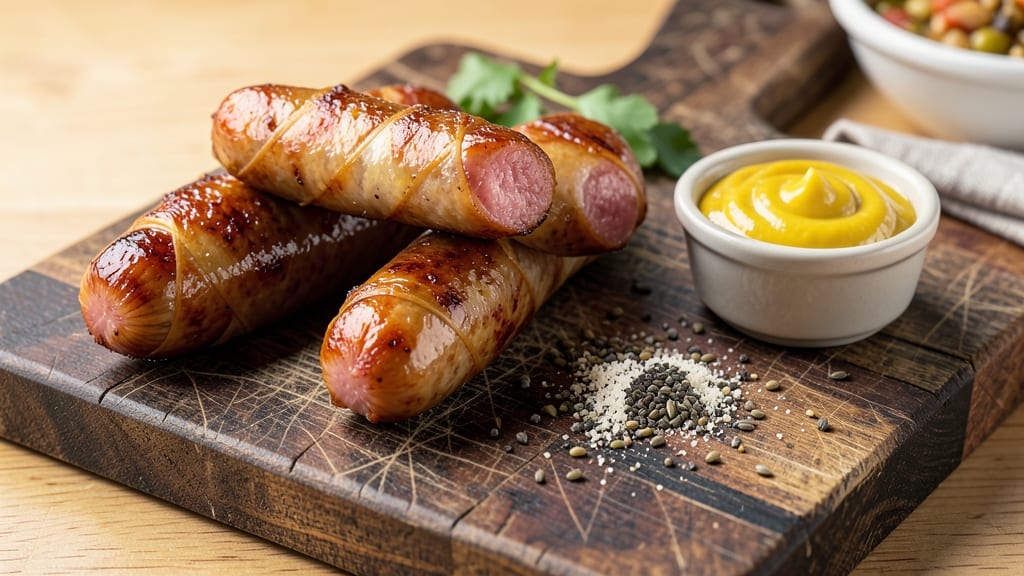
This all-beef bratwurst recipe delivers the kind of juicy, flavorful results you’d expect from a German beer garden—right in your own kitchen. 🔥 The secret lies in grinding fresh beef, carefully balancing spices, and hand-stuffing casings for that authentic texture.
I’ve perfected this technique over years of testing, ensuring every bite stays tender and packed with savory depth.
What sets this recipe apart is the attention to detail: from grinding the meat to the precise seasoning blend that includes caraway, black pepper, and a touch of nutmeg. These spices create the signature bratwurst flavor without overpowering the rich beef.
The casings are stuffed by hand (or with a stuffer for larger batches), then poached in broth before finishing on the grill for that signature char.
By the time you’re done, you’ll have bratwurst with juicy centers that practically melt in your mouth and a crispy exterior that sizzles on the plate. Serve them with classic sides like grilled onions, sauerkraut, or a tangy mustard dipping sauce for the full experience.
This isn’t just a recipe—it’s a taste of tradition you can recreate at home.
The best part? These bratwurst reheat beautifully, making them perfect for meal prep or feeding a crowd. Whether you’re grilling for a summer gathering or craving a taste of Germany on a weeknight, this recipe delivers restaurant-quality results every time. Let’s get started!
Ingredients for all beef bratwurst
Freshly ground beef, precise spices, and natural casings—this is your ticket to authentic bratwurst flavor.
| Ingredient | Amount | Notes |
|---|---|---|
| Ground Beef (80/20 Lean-to-Fat Ratio) 🥩 | 4 lb | Coarse-ground for texture |
| Natural Hog Casings 🥩 | 12 pieces | 22-24mm diameter, soaked |
| Yellow Mustard 🍯 | ½ cup | For binding, not flavoring |
| Ground Black Pepper 🌶️ | 2 tbsp | Freshly cracked for heat |
| Ground Caraway Seeds 🌿 | 1 tbsp | Freshly ground essential |
| Ground Nutmeg 🌿 | ½ tsp | Freshly grated for depth |
| Granulated Garlic 🧄 | 1 tbsp | Freshly minced preferred |
| Granulated Onion 🧅 | 1 tbsp | Freshly minced preferred |
| Kosher Salt 🧂 | 1 ½ tbsp | Diamond Crystal preferred |
| Beef Broth 💧 | 4 cups | Homemade or high-quality |
| Bay Leaves 🌿 | 2 whole | For poaching flavor |
| Fresh Parsley 🌿 | ¼ cup | Chopped, for garnish |
| Vegetable Oil 🫒 | ½ cup | For grill preheating |
The beef is non-negotiable here. 80/20 ground chuck from the butcher counter gives you that perfect balance of juiciness and snap—pre-ground store meat just won’t cut it. Look for coarse-ground (not fine) for that classic texture. I always ask the butcher to grind it fresh if they can. For casings, natural hog casings are essential—soak them in warm water for 30 minutes before using. Butcher shops or specialty meat suppliers are your best bet for quality casings, though some grocery stores carry them in the meat section. If you can’t find them, collagen casings work in a pinch but won’t give that authentic bite.
No caraway seeds? Ground caraway at double the amount works, but fresh is ideal—it’s what gives bratwurst that signature earthy note. The mustard isn’t for flavor—it’s a binder to help the meat hold together. German-style yellow mustard from Schwartz or German Delicatessen brands is perfect, but any good-quality yellow mustard will do. For the broth, homemade beef broth makes all the difference, but Swanson or Pacific Foods brands are solid shortcuts. Want to skip the poaching? Brown the bratwurst first for extra flavor, but you’ll lose that signature tender center.
Keep your ground beef in the coldest part of the fridge and use it within 2 days for best results. Soaked casings can be refrigerated for up to 5 days in their water bath, but change the water daily to prevent spoilage. These bratwurst reheat beautifully—simmer in broth for 5-10 minutes or grill fresh for that perfect char. Freeze uncooked bratwurst in broth for up to 3 months (they’ll need a longer cook time after freezing). For meal prep, grill a big batch and store in the fridge for 3-4 days—perfect for sandwiches or skewers.
Why You'll Love This Recipe
- Here’s what sold me: these bratwurst work everywhere. Grill them for a summer BBQ, pan-fry them for a quick weeknight dinner, or even freeze them for game day. My kids don’t care where they’re made—they just want them on the plate.
- I’ll be real: 80/20 ground beef isn’t cheap, but it stretches farther than leaner cuts. Plus, a pound of meat makes enough for leftovers, and those casings? They’re cheap at the butcher shop. It’s the kind of recipe that feels indulgent but actually saves money.
Step-by-step instructions for all-beef bratwurst
Here's how to craft brats with perfect juicy centers and that signature snap.
👨🍳 Step 1: Prepare the Meat Mixture
In a large mixing bowl, combine the 4 lb ground beef (80/20 ratio) with the 0.5 cup yellow mustard, 1.5 tbsp kosher salt, 2 tbsp ground black pepper, 1 tbsp ground caraway seeds, 0.5 tsp ground nutmeg, 1 tbsp granulated garlic, and 1 tbsp granulated onion. I like to use my hands for this—it helps distribute the fat evenly and develops the texture better than a mixer.
Work the mixture for about 3-4 minutes until it becomes sticky and cohesive. The fat should be evenly distributed, and the mixture should hold together when pressed. This binding is crucial for juicy brats that won't fall apart on the grill. If it feels too dry, add 1-2 teaspoons of ice water to help with adhesion.
🔥 Step 2: Stuff the Casings
Rinse the 12 natural hog casings under cold water to remove any preservatives, then soak them in warm water for 30 minutes to make them pliable. Using a funnel, carefully spoon the meat mixture into each casing, leaving about 6 inches of empty space at the end to tie off. I find it helps to hold the funnel at a slight angle and gently press the meat through with a spoon.
Once each casing is about ¾ full, tie off the end with butcher's twine. Hang the stuffed casings from a hook or rod to drain for 15 minutes before twisting them into 6-inch links. This draining step prevents the casings from bursting when they hit the heat. The links should look plump and uniform—about 1.5 inches in diameter.
🍳 Step 3: Poach for Juicy Centers
Bring the 4 cups beef broth to a gentle simmer in a large pot over medium-low heat. Add the 2 whole bay leaves and carefully lower the bratwurst links into the broth. They should float—if they don't, your casings might be too tight. Poach for 15-20 minutes, turning occasionally, until they reach an internal temperature of 145°F. This step ensures they stay juicy while developing that classic brat flavor.
Here's the thing—don't overcook them in the broth. The poaching is just to preheat and partially cook. You want them to finish on the grill with that perfect snap. Remove the brats with a slotted spoon and let them rest on a wire rack for 10 minutes before grilling. This resting period is non-negotiable—it lets the juices redistribute so every bite is moist.
🔥 Step 4: Grill to Golden Perfection
While the brats rest, heat your grill to medium-high heat (about 375°F) and brush the grates with vegetable oil. Grill the bratwurst for 4-5 minutes per side, turning just once, until they develop a deep golden-brown crust and reach 160°F internally. The oil on the grates prevents sticking and gives that beautiful charred exterior we all love.
Watch for the edges to crisp—that's your signal they're ready. If they start to char too quickly, move them to a cooler part of the grill. The internal temperature is more important than the color, but you want that balance of juicy meat and crispy skin. Let them rest for another 5 minutes after grilling before serving.
🍽️ Step 5: Serve with Fresh Garnish
Transfer the brats to a serving platter and sprinkle with the 0.25 cup chopped fresh parsley. The parsley adds a bright contrast to the rich, savory flavor of the brats. Serve immediately with grilled onions, mustard, and crusty bread. The brats should be juicy with a firm but tender bite, and that perfect crust that makes every bite worth it.
Real talk: the secret to great brats is patience. Don't rush the poaching or grilling—those extra minutes ensure you don't end up with dry, tough links. When done right, these all-beef brats will have everyone asking for the recipe.
Pro Tips For Making All Beef Bratwurst
- Chill the Meat First: I learned this the hard way—skipping the fridge step makes stuffing those casings a messy battle. Pop your 80/20 beef in the fridge for 30 minutes before mixing; it firms up just enough to handle without sticking to your hands or the counter.
- Keep the Mustard Thin: That yellow mustard isn’t just for binding—it’s for flavor, not glue. Whisk it with a splash of cold water (about 1 tablespoon per ½ cup mustard) until it’s like a thin paste. Too thick, and your bratwurst will taste like a condiment factory exploded.
- Don’t Overstuff the Casings: I used to cram those hog casings like they owed me money, and half the time they’d burst or split while cooking. Fill them no more than ¾ full—press the meat in gently, then twist and tie every 4–5 inches. Leave room for the meat to expand, or you’ll be cleaning up a greasy mess.
- Sear Them Hot and Fast: Low and slow is for sausages that need tenderness, but beef bratwurst? They’re built for a quick, screaming-hot sear. Get your grill or pan screaming (medium-high heat) and sear for 2–3 minutes per side before dropping to medium. This locks in the juices and gives you that perfect crust—no sad, gray outsides here.
Common mistakes when making this recipe
Overstuffed Casings
One of the biggest mistakes is overfilling your casings—this leads to bursting during cooking and a messy kitchen. I’ve seen home cooks pack them too tightly, thinking more meat means better flavor, but that’s a recipe for disaster.
Stuff them to about ¾ full before tying off, leaving room for expansion. If you’re using a sausage stuffer, apply gentle pressure and stop when the casing feels firm but not stretched. 💡
Skipping the Poach
Many beginners skip the poaching step, thinking they can grill straight through. Big mistake! Poaching in broth for 15-20 minutes ensures juicy centers while the grill adds that perfect crust. Without it, your brats risk drying out—especially with all-beef.
I’ve had brats turn out tough and chewy when grilled raw, and that’s a flavor crime. The broth also infuses subtle depth that grilling alone can’t replicate.
Ignoring Rest Time
Rushing to serve bratwurst right off the grill is another common error. Those 10-15 minutes of resting let juices redistribute, preventing dry, stringy bites. I’ve seen people slice into brats immediately, only to find them leaking juices and losing that perfect texture.
Use a wire rack to rest them—it keeps them warm while allowing air circulation. Patience here makes all the difference between good brats and great ones.
Overcooking on Grill
Watching brats too closely and flipping them constantly leads to overcooking. Once they hit 160°F internal temperature, they’re done—no need to keep grilling for color. I’ve had brats turn into leather when left on the grill past this point.
Use a meat thermometer for accuracy, and resist the urge to flip more than once. The crust develops best with steady, indirect heat.
Wrong Casings
Using the wrong casings is a rookie mistake that ruins texture. Natural hog casings are non-negotiable for authentic bratwurst—they’re porous and give that classic snap. Collagen casings work in a pinch but lack that satisfying bite.
If you can’t find natural casings, 22-24mm diameter is ideal. Always soak them properly (30 minutes in warm water) to prevent bursting during cooking. Skipping this step is how you end up with a sausage-making disaster.
Poor Seasoning Balance
Overdoing caraway seeds or nutmeg can make your brats taste medicinal. The key is balance—1 tbsp ground caraway and ½ tsp nutmeg per 4 lbs of meat is perfect. I’ve had brats taste like a spice cabinet exploded when people double the spices.
Taste your mixture before stuffing—it should be rich and savory, not overpowering. Freshly ground spices make all the difference, so invest in a Penzeys spice grinder if you don’t already have one. 🌿
Nutrition facts
Frequently asked questions about all-beef bratwurst
Can I substitute pork for the all-beef recipe?
While traditional bratwurst often uses pork, this all-beef version delivers a richer, deeper flavor that stands on its own. If you want to blend them, try a 50/50 beef-pork mix for a more classic texture, but the beef version has a satisfying beefy richness that works beautifully. The key is keeping that 80/20 fat ratio for juiciness.
How do I store leftover bratwurst?
Store cooked bratwurst in an airtight container in the fridge for 3-4 days or freeze them for up to 3 months. For reheating, simmer in broth for 5-10 minutes or grill fresh for that perfect char. Avoid microwaving—it makes them rubbery. The broth helps maintain moisture during storage.
What's the best way to serve these bratwurst?
Classic pairings include grilled onions, tangy mustard, and sauerkraut for that German beer garden feel. For a modern twist, try them on a bun with caramelized onions and spicy mayo, or skewered with bell peppers and pineapple. The crispy exterior pairs perfectly with soft pretzel buns or crusty sourdough.
Can I make these bratwurst without casings?
Yes! For a casing-free version, shape the meat into 1-inch patties and grill them like burgers. Use the same seasoning blend and cook to 160°F internal temperature. They won't have the same texture but work great for sliders or sandwiches. The poaching step still applies to keep them juicy.
Why do my homemade bratwurst taste different from store-bought?
Store-bought versions often use fillers, preservatives, and different fat ratios (like 20/80 instead of 80/20) for longer shelf life. Freshly ground beef and natural casings make all the difference—your homemade brats should be more flavorful and juicy. The poaching step also adds depth that mass-produced versions lack.