
Main Courses
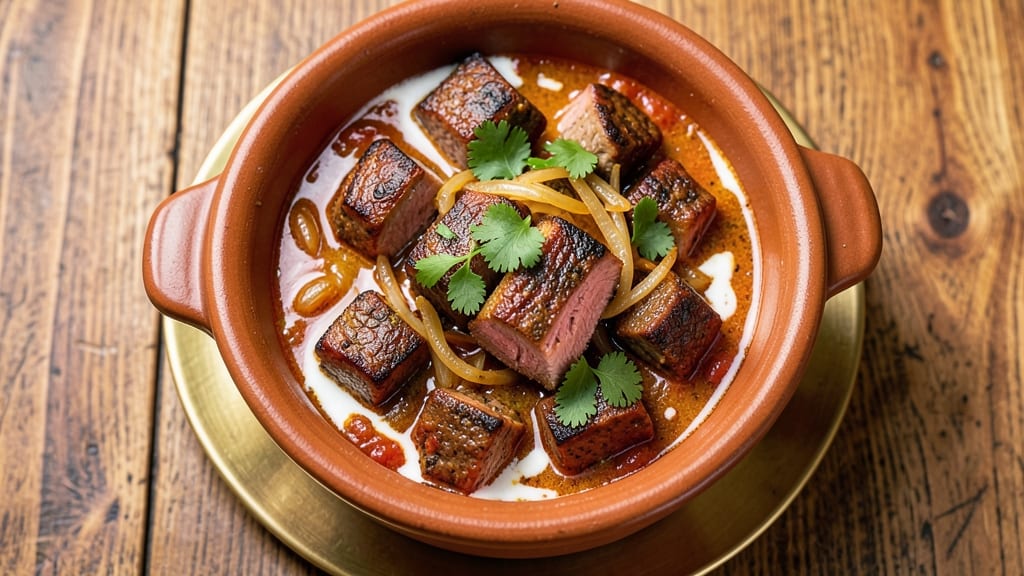
This African beef curry recipe delivers the bold, aromatic flavors of West Africa in every rich, spiced bite. The perfect balance of smoky berbere spices, sweet tomatoes, and creamy coconut creates a sauce so complex it'll transport you to a bustling street market.
I've perfected this version over years of testing—slow-cooked until the beef is fork-tender and the flavors meld into a velvety, deeply satisfying dish.
The secret lies in the spice blend: a mix of chili, coriander, and warm cinnamon that builds layers of heat and sweetness.
Unlike many curries that rely on heavy cream, this version uses coconut milk for a lighter yet equally rich texture, while tomato paste adds depth that's essential for that authentic African touch. The dish comes together in one pot, making it both impressive and practical for weeknight dinners.
By the time you're done, you'll have perfectly tender beef swimming in a sauce that's perfectly balanced—spicy but not overwhelming, creamy yet bright. The aroma alone will have everyone gathering at the table, and the first bite delivers that restaurant-quality flavor you crave.
Serve it over fluffy basmati rice or with warm flatbread to soak up every last drop of that incredible sauce.
This recipe works equally well for casual family meals or special occasions, and the leftovers reheat beautifully. The beauty of African curry is its adaptability—you can adjust the spice level or add vegetables like sweet potatoes to make it your own. Let's get cooking!
Ingredients for african beef curry
Bold spices, tender beef, and creamy coconut—this curry delivers authentic West African heat in one pot.
| Ingredient | Amount | Notes |
|---|---|---|
| Chuck Roast 🥩 | 2 lb | Cut into 1.5-inch cubes |
| Berbere Spice Blend 🌶️ | 2 tbsp | Homemade or store-bought |
| Tomato Paste 🍅 | 2 tbsp | Squeeze tube preferred |
| Coconut Milk 🥥 | 1 can (13.5 oz) | Full-fat for creaminess |
| Onion 🧅 | 1 large | Diced, about 2 cups |
| Garlic Cloves 🧄 | 6 cloves | Minced, about 1 tbsp |
| Fresh Ginger 🌿 | 1 inch | Peeled, grated |
| Ground Cumin 🌿 | 1 tsp | Toasted for depth |
| Ground Coriander 🌿 | 1 tsp | Freshly ground preferred |
| Cinnamon 🌿 | ½ tsp | Ground, not stick |
| Red Chili Flakes 🌶️ | 1 tsp | Adjust for heat |
| Salt 🧂 | 1 ½ tsp | Diamond Crystal preferred |
| Black Pepper 🌶️ | ½ tsp | Freshly ground |
| Olive Oil 🫒 | 2 tbsp | Extra-virgin for richness |
| Fresh Cilantro 🌿 | ¼ cup | Chopped, for garnish |
The berbere spice blend is non-negotiable here. Penzeys or African markets carry the best versions—look for a mix of chili, fenugreek, cardamom, and coriander. If you can't find it, blend 1 tbsp chili powder, 1 tsp each of cumin, coriander, and paprika, plus ½ tsp cinnamon. The chuck roast should have good marbling—Costco or Whole Foods usually have quality cuts. For the coconut milk, full-fat is worth it—the lighter versions make the sauce watery. I always grab two cans at once so I can make this twice.
No berbere? Blend your own or use 2 tbsp chili powder plus 1 tsp each of cumin, coriander, and smoked paprika. The tomato paste can be the squeeze tube kind from Trader Joe's—it's perfect for this. Fresh ginger is ideal, but powdered works at half the amount if you're in a pinch. The onions should be sweet—yellow or Vidalia work best. For the garlic, peel and smash the cloves with the side of your knife before mincing—it releases more flavor. The cilantro garnish is totally optional, but it adds that bright finish that makes the dish pop.
This curry tastes even better the next day as the flavors meld. Store leftovers in the fridge for 4-5 days or freeze for 3 months. I like to portion mine into containers with rice so I can grab it for lunches all week. The sauce thickens as it cools, so a splash of water or coconut milk brings it back to perfection when reheating. And if you make extra? Freeze portions in ice cube trays for quick curry boosts later.
Why You'll Love This Recipe
- One-Pot Magic: I swear by this recipe—just chop an onion, brown the chuck roast, dump in the berbere and tomato paste, then let it slow-simmer. The spices do all the work while you sip wine (or tea, no judgment).
- Spice Bomb Joy: That berbere blend? It’s the star—fiery, citrusy, with just enough heat to linger. The coconut milk softens the edges, leaving you with a rich, slightly sweet-savory sauce that clings to every bite like it’s been hugging the meat all day.
- Leftovers That Win: Between us, this curry tastes better the next day. The flavors meld into something deeper, and reheating it with a splash of water keeps it luscious. I make a double batch on Sundays because my kids beg for it all week.
- Budget-Friendly Feast: Chuck roast stretches for miles, and berbere (if you can’t find it pre-mixed) is just chiles, garlic, and spices—no fancy ingredients. A can of tomato paste and coconut milk round it out for under $15, and you’ll feed four (or five, if someone’s extra hungry).
Step-by-step instructions for African beef curry
Here's how to build rich, aromatic flavors layer by layer—this curry delivers deep spice and tender beef every time.
Sear the Beef for Maximum Flavor
Heat the 2 tablespoons olive oil in a heavy-bottomed pot over medium-high heat until shimmering. Add the 2 lb chuck roast, cut into 1.5-inch cubes, in a single layer. Let them sear undisturbed for 3-4 minutes until deep golden brown on all sides—this builds the foundation for rich flavor.
Don't overcrowd the pot or the beef will steam instead of develop that beautiful crust. Work in batches if needed, adding the remaining beef to the same pot after the first batch is browned. Once all pieces are seared, transfer them to a plate and set aside.
Build the Spice Base
In the same pot, reduce heat to medium and add the 1 large diced onion. Cook for 5-6 minutes until softened and beginning to caramelize—this adds sweet depth to the curry. Add the 6 minced garlic cloves and 1 inch grated fresh ginger, cooking for 1 minute until fragrant.
Stir in the 2 tablespoons berbere spice blend, 1 teaspoon ground cumin, 1 teaspoon ground coriander, 0.5 teaspoon cinnamon, and 1 teaspoon red chili flakes. Toast the spices for 1 minute until aromatic—this activates their flavors. Add the 2 tablespoons tomato paste and stir to coat the bottom of the pot.
Simmer the Curry Until Tender
Return the seared beef to the pot and pour in the 1 can (13.5 oz) coconut milk. Add 1.5 teaspoons salt and 0.5 teaspoon black pepper, then bring to a gentle simmer. Cover and cook for 1.5 hours on low heat, stirring occasionally, until the beef is fork-tender and easily pulls apart.
Here's the thing—patience is key. The longer it simmers, the deeper the flavors meld. If the sauce reduces too much before the beef is tender, add 1-2 tablespoons water to maintain the right consistency. You'll know it's ready when the beef shreds easily and the sauce coats the back of a spoon.
Finish and Garnish
Once the beef is tender, increase heat to medium-high and let the sauce reduce for 5-7 minutes until slightly thickened. Taste and adjust seasoning—you might need a pinch more salt or chili flakes to balance the flavors.
Remove from heat and stir in the 0.25 cup chopped fresh cilantro. Let the curry sit for 5 minutes to allow the flavors to settle. Serve immediately with steamed rice or crusty bread, garnished with extra cilantro if desired. The aroma alone will have everyone at the table eager to dig in!
Pro Tips For Making African Beef Curry
- SEAR THE CHUCK ROAST FIRST: That chuck roast won’t tenderize itself—get it screaming hot in a dry pan with oil before adding onions. I learned this the hard way: skipping the sear leaves you with a meal that’s more stew than curry, and the berbere flavor gets lost in the mix.
- TOAST THE BERBERE: Bloom that spice blend in oil for 30 seconds—just until you smell the garlic and fenugreek waking up. After burning three batches, I finally figured out this step makes the difference between "meh" and "wow," especially when you’re using store-bought berbere (which isn’t always fresh).
- SIMMER LOW AND LONG: Once the coconut milk hits, drop the heat to a bare simmer—no boiling, no rushing. I was skeptical until I tried it: letting the chuck roast cook for 2.5–3 hours at low heat turns it fork-tender without turning the curry into a watery mess.
- STIR IN TOMATO PASTE LAST: Add the tomato paste when the onions are soft but before the berbere—this way, it caramelizes just enough to deepen the color without burning. Sounds weird, but it works: your curry will look richer, and the acidity balances the coconut milk better.
Flavor customization for these flavors
Spice Level Control
Adjust the heat to your preference by modifying the red chili flakes or berbere blend. For a mild version, reduce the chili flakes to ½ teaspoon and use 1 tablespoon of berbere.
If you love heat, add ½ teaspoon cayenne pepper or a pinch of fresh chili powder at the end. I like to keep it medium—just enough to warm up the dish without overwhelming the rich coconut and tomato flavors. 🌶️
Sweet-Spicy Balance
Add a touch of sweetness to complement the spices by stirring in 1 tablespoon honey or 1 teaspoon brown sugar during the final 5 minutes of cooking. This works especially well if you're using a stronger berbere blend.
For a deeper sweetness, swap ½ cup of the coconut milk with ½ cup tomato sauce—it adds a tangy brightness that cuts through the heat. Trust me, this tweak makes all the difference.
Creamy Variations
For a richer texture, stir in ¼ cup plain Greek yogurt or 2 tablespoons coconut cream during the last 5 minutes of cooking. This adds a velvety finish and balances the heat beautifully.
If you prefer a lighter version, replace ¼ cup of the coconut milk with ¼ cup vegetable broth—it keeps the sauce bright and flavorful without heaviness. The key is to add these ingredients toward the end to avoid curdling.
Vegetable Add-Ins
Incorporate 1 cup diced sweet potatoes or 1 cup chopped bell peppers during the final 30 minutes of simmering. These veggies soak up the rich flavors and add natural sweetness. For a heartier dish, add 1 cup chopped okra or 1 cup sliced carrots—they hold up well to the long simmer. Just
Protein Swaps
Swap the beef for chickpeas (for a vegetarian version) or chicken thighs (for a lighter option). If using chicken, reduce the cooking time to 45 minutes and cut the meat into 1-inch pieces. For a seafood twist, add 1 lb shrimp during the last 10 minutes of cooking—just be sure to remove them first so they don’t overcook. Each swap changes the texture and flavor profile, so adjust the spices accordingly.
Herb Enhancements
Brighten the dish with 1 tablespoon fresh lemongrass (finely chopped) or 1 teaspoon ground fenugreek—both are staples in West African cooking. Lemongrass adds a citrusy aroma, while fenugreek deepens the earthy notes.
If you can’t find fresh lemongrass, use 1 teaspoon lemon zest instead. These herbs elevate the curry to restaurant-quality depth without overpowering the other flavors. ✨
Nutrition facts
Frequently asked questions
What makes this African beef curry different from Indian curry?
The key difference lies in the spice blend and cooking approach. This recipe uses berbere—a fiery, earthy mix of chili, fenugreek, and cardamom—rather than Indian garam masala or curry powder. The tomato-coconut base creates a brighter, slightly tangy profile, while the slow simmer develops deeper, smoky notes that Indian curries often achieve through yogurt or cream. Plus, African curries typically use less ginger and more garlic for a bolder punch!
Can I use ground beef instead of chuck roast?
You can, but the texture will be different. Ground beef will cook faster (45 minutes instead of 1.5 hours) and create a more saucy, stew-like consistency. For best results, use 80/20 lean-to-fat ratio ground beef and add 1 tablespoon tomato paste extra to prevent dryness. The flavor will be rich, but the meat won't have the same tender, shreddable quality as chuck roast.
How do I make this curry less spicy?
Reduce the red chili flakes to ½ teaspoon and use 1 tablespoon of berbere instead of 2 tablespoons. For extra mildness, add 1 teaspoon honey or ½ cup tomato sauce during the last 5 minutes of cooking—this sweetens the sauce and balances any lingering heat. Taste as you go! The coconut milk naturally mellows the spices, so don't worry about overpowering the dish.
What's the best way to reheat leftovers?
Reheat gently on the stovetop over low heat with 2 tablespoons water or coconut milk to restore moisture. Avoid microwaving—it can make the sauce watery. If the curry thickens too much, stir in 1-2 tablespoons broth while reheating. Leftovers actually improve overnight as flavors meld! Store in an airtight container for up to 5 days or freeze for 3 months.
Which sides pair best with this curry?
For a classic African meal, serve with jasmine rice or couscous to soak up the sauce. Warm flatbread (like injera or naan) adds texture, while a simple cucumber-yogurt salad cuts through the richness. For extra heartiness, add roasted sweet potatoes or steamed greens. The key is balancing the spicy, creamy curry with something light and fresh.