
Soups & Stews
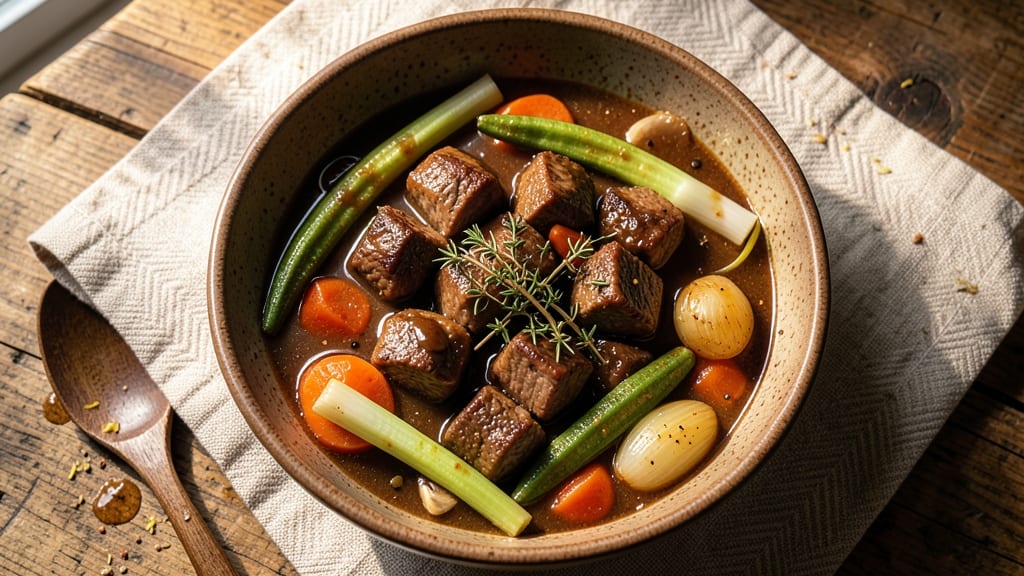
This African American beef stew recipe brings soulful comfort to every spoonful, where tender beef and okra create a thick, flavorful broth that's been simmering for hours. The slow-cooked magic transforms tough cuts into melt-in-your-mouth perfection, while traditional spices and herbs build depth that's both nostalgic and satisfying.
I've perfected this version to honor the rich culinary traditions while making it accessible for modern kitchens.
The secret lies in the okra—it thickens the stew naturally without losing its rustic charm, creating that signature velvety texture that defines this dish. You'll start with a rich browned beef base, then layer in aromatic vegetables, smoky spices, and a touch of vinegar for brightness.
This isn't just a stew; it's a celebration of slow cooking and flavor development that rewards patience with each tender bite.
What makes this recipe special is how it balances tradition with adaptability. The rich, hearty broth pairs beautifully with cornbread and collard greens, creating a complete meal that feels like home.
The slow simmer allows flavors to meld perfectly, resulting in a dish that's both comforting and impressive enough for gatherings. Every element comes together to create something truly memorable.
Whether you're serving this classic stew for family dinner or a special occasion, the result is always the same: deeply flavorful beef, a thick yet smooth okra-infused broth, and that unmistakable aroma that fills your home.
The technique is straightforward but requires time—something worth investing in for a dish this rewarding. Let's get started on creating this timeless recipe.
Ingredients for african american beef stew
Six aromatic vegetables, smoky spices, and tender beef simmered until fall-apart perfect—this stew is all about slow-cooked soul.
| Ingredient | Amount | Notes |
|---|---|---|
| Chuck Roast Beef 🥩 | 3 lb | Cut into 1.5-inch cubes |
| Fresh Okra 🌽 | 1 ½ cups | Trimmed, sliced into 1-inch pieces |
| Yellow Onion 🧅 | 1 whole | Diced, medium size |
| Carrots 🥕 | 4 whole | Peeled, cut into 1-inch chunks |
| Celery Stalks 🌿 | 3 whole | Diced, medium size |
| Garlic Cloves 🧄 | 6 cloves | Minced, fresh preferred |
| Dried Thyme 🍃 | 1 tbsp | Or 1 tbsp fresh thyme leaves |
| Ground Black Pepper 🌶️ | 1 tbsp | Freshly cracked preferred |
| Dried Oregano 🍃 | 1 tbsp | Mexican oregano if available |
| Smoked Paprika 🌶️ | 1 tbsp | For deep smoky flavor |
| Apple Cider Vinegar 🍎 | ½ cup | For brightness and tang |
| Beef Broth 💧 | 4 cups | Low-sodium preferred |
| Tomato Paste 🍅 | ½ cup | For rich depth |
| Bay Leaves 🌿 | 2 whole | For aromatic complexity |
| Salt 🧂 | 1 ½ tsp | Diamond Crystal preferred |
The chuck roast is non-negotiable here—its marbling makes this stew rich and tender. Costco or Whole Foods carry great cuts, but any grocery store's chuck roast works if it's well-marbled. Look for deep red color and visible fat. The okra? Fresh is best—frozen works in a pinch, but it won't thicken the stew as beautifully. I always grab extra okra because it cooks down dramatically. The yellow onion and celery form the base of what we call the 'holy trinity' in Southern cooking—don't skip this trio.
No smoked paprika? Regular paprika plus a pinch of liquid smoke gets you close. Fresh thyme is ideal, but dried works at one-third the amount. The beef broth can be homemade (always better) or a quality low-sodium store brand—Kirkland Signature or Swanson are solid choices. For the vinegar, apple cider adds that perfect tang, but red wine vinegar works too. The tomato paste? Trader Joe's squeeze tubes are perfect for this recipe—no waste, and they keep forever. If you're using frozen okra, thaw and pat it dry first to prevent watery stew.
This stew tastes even better the next day, so make a double batch. Store leftovers in the fridge for 5-6 days or freeze for up to 3 months. I like to portion it into individual containers before freezing—just reheat with a splash of water or broth. The okra will thicken the stew as it cooks, but if it's too thin, simmer uncovered for 10 minutes to reduce. The bay leaves should be removed before serving—just fish them out with tongs. Trust me, this dish is worth every minute of simmering.
Why You'll Love This Recipe
- One-Pot Wonder: The chuck roast and okra simmer together in the same pot—no extra dishes to wash. Honestly, I throw everything in, walk away for a few hours, and come back to something that smells like home.
- Okra Magic: That slimy texture? It’s not gross—it’s thickening power. The okra blends into the broth, giving it this rich, almost gravy-like consistency without needing flour or cornstarch. My kids still wrinkle their noses at it raw, but they’ll fight over seconds in the stew.
- Sunday Supper Ready: This isn’t just a weeknight meal—it’s the kind of dish that makes your house smell amazing for hours. Between us, I’ve served it at family reunions, potlucks, and even a last-minute dinner party. The beef gets tender, the carrots stay crisp, and everyone leaves happy.
- Budget-Friendly Feast: A chuck roast stretches across multiple meals, and the veggies (onion, celery, carrots) are cheap staples. I’ll be real: I’ve made this on a tight grocery budget and still felt like I fed my whole family like royalty. Plus, leftovers? Even better the next day.
Step-by-step instructions for African American beef stew
Here's how to create a hearty, slow-simmered stew with deep flavors and that signature okra thickness.
Prep and Sear the Chuck Roast Beef
Start by cutting the 3 lb chuck roast beef into 1.5-inch cubes—this ensures even cooking throughout. Pat each piece dry with paper towels, then season generously with 1.5 tsp salt, 1 tbsp ground black pepper, 1 tbsp smoked paprika, and 1 tbsp dried oregano. I like to massage the spices into the meat so they adhere well.
Heat a large Dutch oven over medium-high heat and add 2 tablespoons of oil. Working in batches to avoid overcrowding, sear the beef cubes until they develop a deep brown crust on all sides—about 3-4 minutes per batch. This step builds incredible flavor through the Maillard reaction. Transfer the seared beef to a plate and set aside.
Build the Flavor Base
In the same Dutch oven, add 2 tablespoons of oil and reduce heat to medium. Add the diced 1 whole yellow onion, 4 whole carrots cut into 1-inch chunks, and 3 whole celery stalks diced medium. Cook for 5-6 minutes, stirring occasionally, until the vegetables begin to soften and the onion becomes translucent.
Add the 6 cloves minced garlic and 1 tbsp dried thyme, cooking for another 30 seconds until the garlic is fragrant. Here's where it gets good—pour in the 0.5 cup apple cider vinegar and let it bubble away for 2 minutes. This brightens the stew and cuts through the richness of the beef.
Thicken with Okra and Tomato Paste
Return the seared beef to the Dutch oven. Stir in the 1.5 cups sliced fresh okra and 0.5 cup tomato paste, coating everything evenly. The okra will begin to soften and release its natural thickening properties, which is key for that perfect stew consistency.
Pour in the 4 cups beef broth and add the 2 whole bay leaves. Bring the mixture to a gentle simmer, then reduce heat to low. Here's the thing—you want this to bubble softly, not boil vigorously. A gentle simmer prevents the stew from becoming watery and allows the flavors to meld beautifully.
Slow Simmer to Perfection
Cover the Dutch oven and let the stew simmer for 2 to 2.5 hours. I know it seems like a long time, but this slow cooking is what transforms tough chuck roast into tender, melt-in-your-mouth beef. Check occasionally and add a splash of water if the stew gets too thick.
After 2 hours, remove the lid and increase heat slightly to reduce the stew if needed. The okra should have broken down completely, creating that signature thick, velvety texture. Taste and adjust seasoning with additional salt or pepper if needed. The stew should be rich, flavorful, and perfectly balanced.
Finish and Serve
Once the stew reaches your desired consistency, remove the bay leaves and discard them. Let the stew rest for 10 minutes off the heat—this allows the flavors to settle and the okra to fully thicken. Serve hot with crusty bread or over buttered egg noodles.
Each bite should deliver tender beef, sweet carrots, earthy okra, and a perfect balance of smoky, tangy, and savory flavors. This stew tastes even better the next day as the flavors continue to develop, so make extra if you can!
Pro Tips For Making African American Beef Stew
- SEAR THE CHUCK ROAST FIRST: Don’t skip this—high heat for 3-4 minutes per side builds flavor that slow cooking won’t replicate. I learned this the hard way when my stew tasted like broth with beef instead of deep, caramelized richness. Use a Dutch oven if you can; it holds heat better and keeps the meat from steaming.
- SLICE OKRA LENGTHWISE, NOT CROSSWISE: Thin, flat slices (about ¼-inch thick) cook faster and stay tender without turning mushy. Thick chunks or rounded slices turn to okra soup—trust me, you don’t want that. A sharp knife and a steady hand make this easy, and it’s the thing that matters most for texture.
- DON’T CROWD THE VEGETABLES: Pile them in too tight, and your carrots and celery will steam instead of brown. Spread them out in the pot so they crisp slightly—just 5 minutes at medium-high heat before adding liquid. This isn’t the prettiest method, but it’s the tastiest.
- ADD OKRA LATE (OR SKIP IT): Okra absorbs liquid like a sponge, so toss it in the last 20 minutes or hold it back entirely. If you’re short on time, swap it for frozen peas or green beans—they won’t overpower the stew, and you’ll save cleanup. I skip this when I’m lazy, but the dish is noticeably better when I don’t.
Wine and beer pairings for this african american beef stew
Red Wine Classics
For this rich, smoky stew, I reach for a bold red wine with enough body to stand up to the deep flavors. A Cabernet Sauvignon from Napa Valley—like Louis M. Martini—works beautifully with its dark fruit notes and subtle oak.
The tannins complement the beef's richness while the acidity cuts through the okra's thickness. 🍷
Malbec for Smoky Depth
If you prefer something fruitier with a touch of spice, try an Argentinian Malbec like Catena Zapata. The blackberry and plum flavors enhance the stew's smoky paprika, while its smooth finish balances the okra's earthiness. Malbec's natural acidity also brightens the apple cider vinegar in the stew.
Beer Pairings
A dark amber ale with caramel and toasted malt notes is my go-to beer pairing. Samuel Adams Boston Lager or Guinness both work wonders—their roasted malt flavors mirror the stew's depth, while the slight bitterness cleanses your palate between bites.
For something lighter, a wheat beer like Blue Moon adds a refreshing contrast.
Non-Alcoholic Options
Don't drink alcohol? No problem. A sparkling apple cider like Martinelli's Sparkling Apple Cider mirrors the vinegar's brightness while adding effervescence. For a richer option, try a smoky black tea like Lipton Smoky Mountain—the charred oak notes complement the stew's smoky paprika beautifully. 🍎
Serving Temperature
Serve your wine or beer slightly cooler than room temperature—about 55-60°F for reds and 45-50°F for whites or beers. Chilling enhances the drink's acidity and refreshes your palate between rich spoonfuls of stew.
I always pour a glass first to taste, then adjust the temperature based on how it feels against my wrist.
Make It a Meal
Pair this stew with cornbread and collard greens for a complete Southern-inspired meal. The buttery cornbread soaks up the rich broth, while the greens add a peppery contrast. For a modern twist, serve with mashed sweet potatoes—their natural sweetness balances the stew's smoky depth. 🍽️
Nutrition facts
Frequently asked questions
Why does this recipe use okra for thickening?
Okra is a traditional thickener in Southern and African American cooking because it creates a naturally rich, velvety texture without needing flour or cornstarch. The slimy okra pods break down during simmering, releasing a natural thickening agent called mucilage. This method keeps the stew gluten-free while adding subtle earthy flavor that complements the beef beautifully.
Can I substitute frozen okra in this recipe?
Yes, but with a few adjustments. Use 1 cup frozen okra instead of 1.5 cups fresh and thaw it first by soaking in cold water for 10 minutes. Pat it completely dry before adding to prevent a watery stew. Frozen okra works well, but fresh yields the best texture and flavor.
How do I make this stew in a slow cooker?
Follow the same prep steps, then brown the beef in a skillet first. Transfer everything to your slow cooker and add 1 cup extra broth to account for evaporation. Cook on low for 8 hours or high for 4-5 hours. The okra will thicken more during the longer cook time, so you may need to reduce it uncovered for 10 minutes at the end.
What cut of beef works best for this stew?
Chuck roast is ideal because its fat content makes the stew rich while the connective tissue breaks down beautifully during slow cooking. Other good options include stew meat or chuck shoulder. Avoid lean cuts like sirloin—they won't become tender enough. Look for well-marbled beef with good fat distribution for the best results.
Can I make this stew ahead of time?
This stew tastes even better the next day. Let it cool completely, then store in an airtight container in the fridge for up to 5 days or freeze for 3 months. Reheat gently on the stove over medium-low heat, adding a splash of broth if needed to restore moisture. The flavors will deepen and meld beautifully over time.