
Soups & Stews
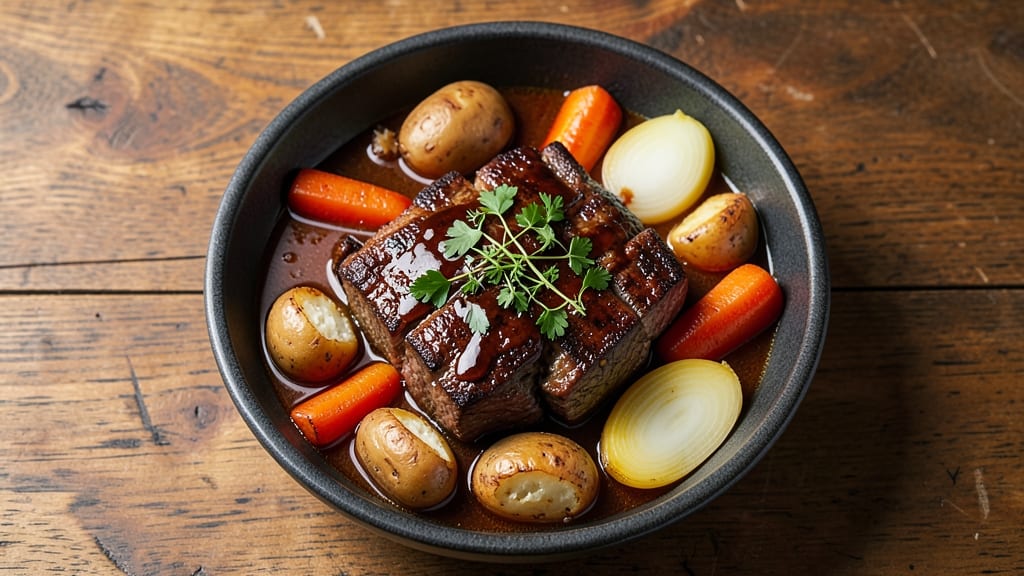
This A1 beef stew recipe transforms tough cuts of beef into melt-in-your-mouth tenderness with a rich, caramelized depth that comes from slow braising and A1 steak sauce.
The secret lies in searing the beef first—creating a flavorful crust that dissolves into the broth as it simmers for hours, while caramelized onions add natural sweetness that balances the sauce's tangy kick.
What makes this stew truly special is how the A1 sauce, added at the end, enhances the meat's natural flavors without overpowering them, resulting in a dish that's both comforting and restaurant-worthy.
Unlike many beef stews that rely on heavy spices or complex techniques, this recipe focuses on simple, high-quality ingredients—chuck roast, onions, carrots, and potatoes—cooked low and slow until the beef practically falls apart.
The A1 steak sauce isn't just an afterthought; it's the finishing touch that ties everything together, delivering that signature tangy, slightly sweet flavor that makes this stew unforgettable. The result is a hearty, deeply flavorful bowl of stew that's perfect for cold weather or a cozy family dinner.
By the time you're done, you'll have a pot of deeply aromatic stew with tender beef, caramelized onions, and vegetables that soak up the rich sauce. The texture is what sets this apart—fork-tender beef, soft yet slightly crisp edges on the potatoes, and onions that are sweet and jammy.
It's the kind of stew that tastes even better the next day, making it ideal for meal prep or feeding a crowd.
Serve it with crusty bread to soak up every last drop of that flavorful sauce, or pair it with a simple green salad for balance. The beauty of this recipe is its versatility—it's hearty enough for a main dish but flexible enough to adapt to your preferences.
Whether you're cooking on the stovetop or using a pressure cooker for faster results, this A1 beef stew delivers restaurant-quality comfort food at home.
Ingredients for a1 beef stew
Simple ingredients that pack serious flavor for this hearty A1 beef stew.
| Ingredient | Amount | Notes |
|---|---|---|
| Chuck Roast 🥩 | 3 lb | Cut into 1.5-inch cubes |
| Yellow Onions 🧅 | 3 whole | Large, peeled and sliced |
| Carrots 🥕 | 4 whole | Medium, peeled and cut into chunks |
| Russet Potatoes 🥔 | 3 whole | Medium, peeled and cut into chunks |
| A1 Steak Sauce 🍯 | ¼ cup | Original A1 sauce preferred |
| Beef Broth 💧 | 4 cups | Low-sodium preferred |
| Tomato Paste 🍅 | 2 tbsp | Squeeze tube or canned |
| Garlic Cloves 🧄 | 4 cloves | Minced for depth of flavor |
| Olive Oil 🫒 | 3 tbsp | For searing beef |
| Salt 🧂 | 1 ½ tsp | Kosher or sea salt |
| Black Pepper 🌶️ | 1 tsp | Freshly ground preferred |
| Bay Leaves 🌿 | 2 whole | For aromatic depth |
| Thyme Leaves 🌿 | 1 tbsp | Fresh or dried |
| Worcestershire Sauce 🍶 | 1 tbsp | Vegetarian if needed |
The chuck roast is the star here—look for good marbling at the butcher counter for that melt-in-your-mouth texture. Costco or Walmart usually have it pre-cut, which saves time. If you're buying a whole roast, ask for it to be cubed (1.5-inch pieces work best). The onions? Yellow onions caramelize better than red or white—save those for other dishes. For the beef broth, low-sodium is key so you control the saltiness. I always grab a box of Swanson or Pacific Foods when I'm making stews.
No A1 sauce? Substitute with a mix of soy sauce and a pinch of sugar—it won't be identical, but it'll get you close. Fresh thyme is ideal, but dried works at one-third the amount. If tomato paste feels like overkill for just two tablespoons, those squeeze tubes at Trader Joe's are perfect—no waste, and they keep for months. The carrots can be baby carrots if that's what's in the fridge, but whole carrots hold up better to long cooking. For Worcestershire, Lea & Perrins is the classic choice, but any brand will work.
This stew tastes even better the next day—plan ahead. Keeps for 5-6 days in the fridge, freezes for 3 months. I always make a double batch because it's perfect for meal prep. Store in airtight containers, and the flavors only deepen over time. The A1 sauce can be added fresh when reheating, or you can mix it in before storing. Either way, it's a game-changer for the final flavor.
Why You'll Love This Recipe
- One-Pot Magic: I swear by this recipe because it’s actually a one-pot deal. Chuck roast, onions, and carrots all simmer together—no chopping boards left to clean, no extra pans to wash. Just dump, stir, and let the A1 sauce work its savory magic while you sip wine (or coffee, no judgment).
- Rich, Tangy Kick: That A1 steak sauce isn’t just a garnish—it’s the star. The umami bomb cuts through the beef’s richness, and the caramelized onions? They turn the whole stew into a flavor party. Even my picky dad licks the plate.
- Leftovers for Days: Make a big batch on Sunday, and you’ll have hearty lunches all week. The potatoes soak up the sauce perfectly, so reheating is a breeze—just add a splash of water, and it’s like it was just made. (Yes, even my college-aged kids will fight over it.)
- Budget Feast: A chuck roast stretches farther than you’d think, especially when paired with potatoes and carrots. It’s the kind of meal that makes grocery day feel like a win—no fancy ingredients, just ridiculously satisfying flavor for half the cost of takeout.
Step-by-step instructions for A1 beef stew
Here's how to make a rich, deep-roasted beef stew with caramelized onions that'll have everyone asking for seconds.
Sear the Chuck Roast for Maximum Flavor
Heat a large Dutch oven over medium-high heat and add 2 tablespoons of the olive oil. Once hot, add the 3 lb chuck roast cut into 1.5-inch cubes in a single layer. Let them sear undisturbed for 3-4 minutes until they develop a deep brown crust.
This step is crucial—it locks in juices and builds that rich, meaty foundation for your stew. Once browned, remove the beef and set it aside. Add another 1 tablespoon of olive oil to the pot and repeat the process with the remaining beef cubes. You'll end up with beautifully browned meat that'll infuse the stew with incredible depth.
Build Layers of Flavor with Onions and Carrots
In the same Dutch oven, add 3 whole yellow onions sliced into strips and 4 whole carrots cut into chunks. Cook over medium heat for 8-10 minutes, stirring occasionally, until the onions soften and begin to caramelize. This process will take a few minutes longer than the carrots, but don't rush it—the caramelization adds sweetness that balances the rich beef.
After about 5 minutes, add the 2 tablespoons tomato paste and stir to coat the onions and carrots. Cook for another 2 minutes to let the tomato paste deepen in flavor. This creates a rich base that'll help thicken the stew and add complexity. If the mixture starts to stick, add a splash of beef broth to deglaze and keep everything moist.
Add Aromatics and Simmer the Stew
Push the onion and carrot mixture to one side of the Dutch oven and add the remaining 1 tablespoon olive oil to the empty space. Add the 4 cloves minced garlic and cook for 30 seconds until fragrant—you should smell that wonderful garlic aroma filling your kitchen.
Stir the garlic into the onion and carrot mixture, then return the seared beef to the pot. Add 4 cups beef broth, 0.25 cup A1 steak sauce, 1 tablespoon Worcestershire sauce, 1.5 teaspoons salt, 1 teaspoon black pepper, 2 bay leaves, and 1 tablespoon thyme leaves. Bring everything to a boil, then reduce heat to low and let it simmer uncovered for 1 hour.
Add Potatoes and Finish Cooking
After the initial 1-hour simmer, add the 3 whole russet potatoes cut into chunks. The potatoes will absorb some of the stew's liquid, so they'll help thicken it naturally. Return the stew to a simmer and cook uncovered for another 45-60 minutes until the potatoes are tender and the beef is fork-tender.
To check doneness, insert a fork into a beef cube—it should slide in easily with just slight resistance. The stew should have thickened slightly, with the potatoes absorbing the rich flavors. If it's too thin, simmer uncovered for another 10-15 minutes to reduce it to your preferred consistency. Taste and adjust seasoning if needed—you might want to add a bit more salt or pepper to balance the flavors.
Rest and Serve
Once the stew is perfectly tender, remove it from heat and let it rest for 10 minutes. This resting period allows the flavors to meld together and the juices to redistribute throughout the stew. It also makes serving easier—no more worrying about hot liquid splashing everywhere.
Before serving, skim off any excess fat that has risen to the top. Ladle the stew into bowls, making sure each serving gets a good portion of beef, vegetables, and flavorful broth. The deep caramelized onions and tender beef will make this stew a standout dish that's perfect for cold weather or any time you want comfort food at its finest.
Pro Tips For Making A1 Beef Stew
- SEAR THE ROAST FIRST: Toss that chuck roast in a hot Dutch oven with 2 tablespoons of oil—no crowding—and let it brown deep on all sides before adding anything else. I used to skip this, and my stew always tasted like it needed more sauce. That crust? It’s what turns tough meat into melt-in-your-mouth goodness.
- CUT POTATOES LARGE: Russets break down fast—chunk them into 2-inch pieces so they hold shape but still soften by the end. Small dice turns your stew into mush. (Yes, even if you’re impatient like me, resist the urge to make them bite-sized.)
- ADD A1 LATE: Pour that sauce in after the meat’s already tender, not at the start. The acid can toughen the beef if it cooks too long in it. Stir it in during the last 30 minutes—just enough time to coat everything without overpowering.
- DON’T SKIP THE BROWNED ONIONS: Caramelize those yellow onions first—they’re the flavor base. Let them cook low and slow until they’re golden, not just soft. I learned this the hard way when my stew tasted bland. (Pro move: Add a pinch of sugar if they’re stubborn about browning.)
Wine and beer pairings for this a1 beef stew
Red Wine Classics
A bold Cabernet Sauvignon from Napa Valley is my go-to pairing for this A1 beef stew. The rich, dark fruit notes and firm tannins cut through the sauce's sweetness while complementing the deep caramelized flavors.
Look for a 2019 or newer vintage with at least 14% alcohol—something like Caymus Vineyards or Opus One works beautifully. Serve slightly chilled (60-65°F) to enhance the wine's structure against the stew's heartiness. 🍷
Malbec Magic
For those who prefer something smoother, an Argentine Malbec brings incredible balance. The dark plum and chocolate flavors in a Mendoza Malbec (like Catena Zapata or Trapiche) mirror the stew's depth while its velvety texture softens the A1 sauce's tang.
Aim for a 13.5-14% alcohol bottle—this range enhances the meat's richness without overpowering it. Let it breathe for 15-20 minutes before serving for optimal aroma release.
Beer Pairings
A dark amber ale from New Belgium Brewing (like Fat Tire) adds a malty sweetness that pairs wonderfully with the caramelized onions. The caramel and biscuit notes in the beer complement the stew's natural sweetness, while its moderate bitterness balances the A1 sauce.
For something stronger, try a Belgian dubbel like Westmalle Tripel—the spiced complexity adds an interesting contrast to the beef's richness. Serve both beers at 50-55°F for the best flavor experience. 🍺
Light White Options
If you prefer white wine, a dry Riesling from Germany (like Dr. Loosen Blue Slate) offers surprising depth. The wine's bright acidity and hints of citrus cut through the stew's richness, while its mineral notes enhance the beef's natural flavors.
For a more approachable option, try a Sauvignon Blanc from New Zealand—look for one with 12-13% alcohol and crisp apple or grapefruit notes. Serve both chilled (45-50°F) to refresh your palate between bites.
Non-Alcoholic Pairings
Don't drink alcohol? No problem! A sparkling apple cider (like Martinelli's) adds refreshing acidity that cleanses your palate between bites. For something more substantial, try a ginger beer with a hint of spice—it complements the A1 sauce's tang while adding a zesty kick.
Both options work well at 40-45°F and pair beautifully with the stew's hearty flavors. 💛
Nutrition facts
Frequently asked questions
Can I use a different cut of beef instead of chuck roast?
For similar results, try stew meat (often sold pre-cut) or brisket. Avoid lean cuts like sirloin—they won't become tender enough. If using brisket, cut it into 1-inch cubes and increase simmering time by 30-45 minutes to ensure fork-tenderness.
Why does my stew turn out watery?
Watery stews usually happen from too much liquid or undercooking. Start with 4 cups broth and add potatoes last—they'll absorb excess liquid as they cook. Simmer uncovered for 10-15 extra minutes to reduce the sauce. For thicker stews, mash a few potatoes against the pot sides or mix in 1 tablespoon cornstarch dissolved in water.
Can I make this in a slow cooker or Instant Pot?
Yes! For slow cookers: Brown beef first, then combine all ingredients (except potatoes) and cook on low for 6-8 hours or high for 4-5 hours. Add potatoes during the last 1 hour. For Instant Pot: Sear beef, then cook on high pressure for 30 minutes (natural release), adding potatoes in the last 10 minutes. Both methods work beautifully!
What's the best way to reheat leftovers?
Reheat gently on the stovetop over low heat for 10-15 minutes, stirring occasionally. For microwave reheating, cover with a damp paper towel and heat in 1-minute intervals until warmed through. Add 1-2 tablespoons broth or water if the stew seems too thick. Never reheat to boiling—this can make the beef tough.
Can I prepare this stew ahead of time?
This stew tastes even better the next day! Store in an airtight container in the fridge for 5-6 days or freeze for 3 months. Reheat gently and add fresh A1 sauce before serving. The flavors deepen overnight, making it perfect for meal prep. For serving, let it sit at room temperature for 10 minutes before ladling.