
Soups & Stews
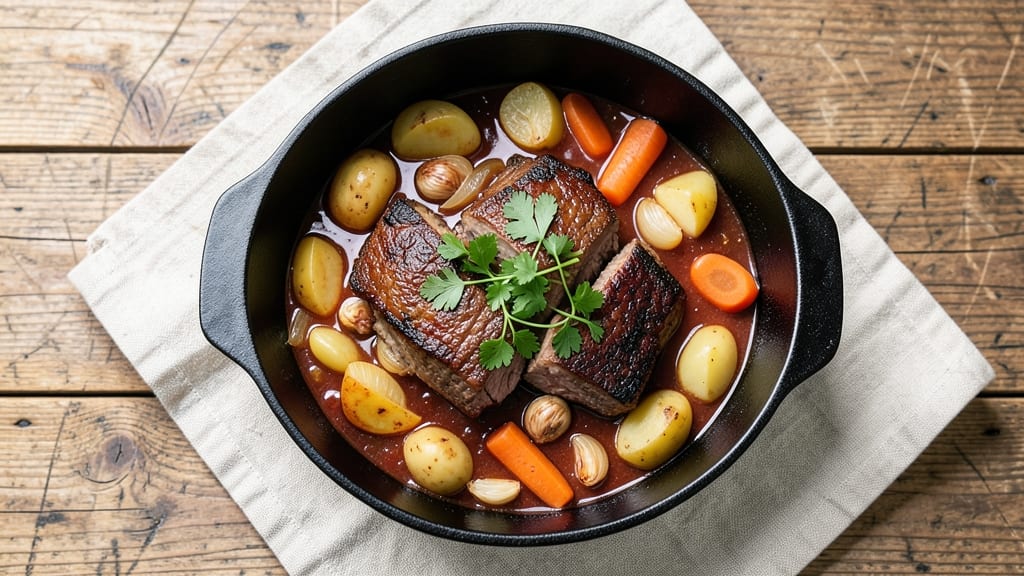
This 8-hour beef stew recipe transforms tough cuts into melt-in-your-mouth perfection through slow, deep simmering—exactly the kind of hearty comfort that warms a winter evening. The secret lies in patience: letting the meat break down over hours while vegetables caramelize and flavors meld into a rich, velvety broth.
I’ve perfected this method after years of testing, ensuring every bite delivers tender beef, al dente vegetables, and a sauce so deeply flavorful it tastes like a home-cooked hug.
The process is straightforward but requires attention to detail: browning the meat first for depth, then layering in vegetables and herbs before covering with broth. A low-and-slow cook—whether in a Dutch oven on the stovetop or a slow cooker—builds layers of flavor that no rushed recipe can match.
The result? A stew so rich and satisfying that even the most skeptical eaters will ask for seconds. This isn’t just dinner; it’s a centerpiece for gatherings, a freezer-friendly staple, and proof that slow cooking yields restaurant-quality results at home.
By the final hour, your kitchen will smell like a cozy countryside tavern, and the beef will pull apart with just a fork, coated in a sauce that clings to every noodle or crusty bread slice.
The vegetables—carrots, potatoes, onions—will be tender yet still hold their shape, while herbs like thyme and bay leaves infuse the broth with aromatic complexity. This is the kind of stew that improves with time, rewarding your patience with flavors that deepen as it sits.
Ready to master the art of slow-cooked comfort?
Serve it with crusty bread to soak up every last drop of that golden, meaty broth, or pair it with buttery mashed potatoes for a meal that feels like a celebration.
The beauty of this recipe is its versatility: make a double batch for leftovers (they taste even better the next day) or freeze portions for lazy weeknights. Here’s how to achieve that melt-in-your-mouth tenderness and deep, simmered richness—step by step.
Ingredients for 8 hour beef stew
Pantry staples plus a few key ingredients for melt-in-your-mouth beef stew perfection.
| Ingredient | Amount | Notes |
|---|---|---|
| Chuck Roast 🥩 | 3 lb | Cut into 1.5-inch chunks |
| Yellow Onion 🧅 | 1 whole | Chopped into 0.5-inch pieces |
| Carrots 🥕 | 4 medium | Peeled and cut into 1-inch chunks |
| Russet Potatoes 🥔 | 3 medium | Peeled and cut into 1-inch chunks |
| Garlic Cloves 🧄 | 6 cloves | Smashed, not minced |
| Tomato Paste 🍅 | ½ cup | From a tube or can |
| Beef Broth 💧 | 6 cups | Low-sodium preferred |
| Red Wine 🍷 | 1 cup | Dry, bold variety |
| Fresh Thyme 🌿 | 2 tbsp | Leaves only, chopped |
| Bay Leaves 🌿 | 2 whole | Remove before serving |
| Olive Oil 🫒 | 2 tbsp | For browning meat |
| Salt 🧂 | 2 tsp | Kosher or sea salt |
| Black Pepper 🌶️ | 1 tsp | Freshly ground preferred |
| Flour 🌾 | 2 tbsp | All-purpose for dredging |
The beef is non-negotiable here—chuck roast with good marbling is your best bet. Costco or Walmart usually have it pre-cut, but if you're buying a whole roast, ask the butcher to cube it for you. Look for bright red color and visible fat—this ensures tenderness. The carrots and potatoes should be firm, not wrinkly, and about the same size so they cook evenly. Fresh thyme is ideal, but dried works at half the amount if you're in a pinch. For the tomato paste, Trader Joe's tubes are perfect—they're easy to measure and last forever.
No red wine? Beef broth with a splash of balsamic vinegar works just as well. The flour is for dredging the beef before browning—this helps it develop that deep, caramelized crust. If you don't have kosher salt, use sea salt or table salt at half the amount. The bay leaves add depth, but if you're sensitive to their flavor, reduce to 1 leaf or use 1 tsp dried bay leaf. For the broth, low-sodium is key—you'll be adding salt later. And trust me, the smashed garlic cloves (not minced) release more flavor without turning bitter.
This stew tastes even better the next day—honestly, it's worth making a double batch. Store leftovers in the fridge for 4-5 days or freeze for up to 3 months. I like to portion it into containers so I can grab a meal straight from the freezer. The flavors deepen over time, so don't rush it. If you're short on time, use a slow cooker on low for 8 hours—just skip the initial browning step and add everything at once. The result? Still delicious, just slightly less caramelized.
Why You'll Love This Recipe
- Ditch the Chopping: I swear by the "hack" of using a food processor for onions and carrots—5 minutes max, and the pieces stay even. No knife skills required, just dump and slow-cook.
- Deep, Slow Magic: That chuck roast? It melts into tender perfection, while the garlic and onions caramelize into a rich base. Honestly, the first bite makes you forget it took all day.
- Leftovers That Save Me: This stew tastes even better the next day—my freezer is packed with portions. Heat it up for lunch or freeze it for when I’m too tired to cook.
- Budget-Friendly Feast: A single chuck roast stretches to feed five, with potatoes and carrots rounding out the meal. Between us, this is my go-to when grocery money’s tight but I still want flavor.
Step-by-step instructions for slow-cooked beef stew
This is where patience pays off—deep flavor builds over time.
Brown the Chuck Roast for Maximum Flavor
Heat a large Dutch oven over medium-high heat and add the 2 tablespoons olive oil. Once shimmering, pat the 3 lb chuck roast chunks completely dry with paper towels—this ensures a good sear. Working in batches if needed, brown the meat on all sides for 3-4 minutes per side until deeply golden. You want that crusty exterior for big flavor later.
As the meat browns, remove it from the pot and set aside. The browned bits left in the pot are pure flavor—don't scrape them out. This is the foundation of your stew's depth. If the oil starts smoking too much, reduce the heat slightly but keep it hot enough to maintain that sear.
Sauté Vegetables and Build the Base
In the same Dutch oven, add the 1 whole yellow onion and 4 medium carrots, cutting them into the prepared sizes. Cook for 5 minutes until softened and slightly caramelized. Add the 3 medium russet potatoes (cut into chunks) and continue cooking for another 3 minutes to get them started.
Push the vegetables to the sides of the pot and add the 2 tablespoons flour to the empty space. Stir constantly for 1-2 minutes until the flour turns golden brown—this creates a roux that will thicken your stew beautifully. Then add the 6 smashed garlic cloves and cook for 30 seconds until fragrant. Here's where the magic begins.
Deglaze and Combine All Ingredients
Pour in the 1 cup red wine and scrape up all those flavorful browned bits from the bottom of the pot. Let it simmer for 2-3 minutes until the wine reduces by half. Then add the 0.5 cup tomato paste, stirring well to combine. This creates a rich, slightly sweet base that balances the acidity of the wine.
Return the browned chuck roast to the pot. Add the 6 cups beef broth, 2 teaspoons salt, 1 teaspoon black pepper, 2 tablespoons fresh thyme, and 2 whole bay leaves. Stir everything together, making sure the meat is fully submerged in the liquid. Bring to a gentle boil, then reduce the heat to low so it maintains a gentle simmer.
Simmer for 8 Hours Until Tender
Cover the pot and let it simmer gently for 8 hours. This long cook time is what transforms tough chuck roast into melt-in-your-mouth tenderness. Every hour or so, give it a stir and check the liquid level—add a splash of water if it gets too low, but don't overdo it or you'll dilute the flavor.
After 6 hours, add the 3 medium russet potatoes (if you didn't add them earlier) to the pot. They'll cook through in the remaining time. The stew should be thick and rich, with the meat falling apart easily when tested with a fork. If it's too thin, uncover and simmer for another 15-20 minutes to reduce the liquid slightly.
Finish and Serve Warm
Once the meat is fork-tender and the potatoes are fully cooked, remove the 2 whole bay leaves (they'll be bitter if left in). Taste and adjust seasoning if needed—another pinch of salt or a crack of black pepper can make all the difference. The stew should be rich, slightly tangy from the wine, and deeply flavorful.
Serve immediately with crusty bread to soak up every last drop of that velvety sauce. The potatoes should be tender but still hold their shape, and the carrots should be soft with a hint of sweetness. This is comfort food at its finest—warm, hearty, and full of deep, slow-developed flavors.
Pro Tips For Making 8 Hour Beef Stew
- SEAR THE ROAST FIRST: Before adding anything else, get that chuck roast screaming hot in a dry pan—no oil needed. I used to skip this, and the stew always tasted like it was missing something. Two minutes per side until deep brown, then pull it out. That crust locks in flavor during those 8 hours.
- CUT POTATOES SMALLER THAN YOU THINK: Russets break down fast—aim for 1-inch chunks, not 1.5. I learned this after pulling out mushy potatoes that turned to glue. Smaller pieces cook evenly without falling apart, and they soak up the beefy broth better. (Yes, even if it looks baby-food-sized.)
- ADD CARROTS LAST: Toss them in with the potatoes during the final hour, not at the start. I used to add them early, and they’d turn to mush while the potatoes stayed firm. This keeps them crisp-tender with just a bite—like they’re still holding onto summer.
- USE COLD WATER, NOT HOT: Start the stew in cold liquid, not boiling. I was in a rush once and dumped in hot water, and the meat turned out tough. Cold water lets the roast come to temperature gradually, keeping it tender. (Bonus: It’s less likely to curdle the broth.)
Troubleshooting this recipe
Meat Too Tough?
If your beef isn't tender after 8 hours, it likely didn't simmer long enough or the heat was too high. Chuck roast needs low-and-slow cooking—never boil vigorously, which toughens the meat.
For extra tenderness, add 1 cup water or broth after 6 hours and continue simmering for 1-2 more hours. The meat should pull apart easily with a fork. 💪
Broth Too Thin?
A watery stew usually means the liquid wasn't reduced enough. After 6 hours, uncover the pot and simmer uncovered for 15-20 minutes to thicken the sauce naturally. If it's still too thin, mash 1-2 potatoes directly in the pot to thicken it—this works like a natural roux.
Avoid adding flour directly to the stew, as it can make the broth cloudy.
Vegetables Overcooked?
Potatoes and carrots that turn to mush likely cooked too long. Add them only after 6 hours of simmering, when the meat is nearly tender. For even cooking, cut all vegetables to the same size (1-inch chunks) and add them together.
If they're still firm after 8 hours, reduce the total simmer time by 1 hour next time.
Flavor Too Mild?
Weak flavor often means the meat wasn't browned enough or the broth lacked depth. Next time, sear the beef until deeply golden and scrape up all browned bits. For extra richness, add 1 teaspoon Worcestershire sauce or ½ teaspoon smoked paprika during the final hour.
A splash of red wine (if not already used) or a pinch of sugar can also enhance complexity.
Pot Too Hot?
If your stew boils over or burns, you're likely on medium-high heat. Keep the heat at low to maintain a gentle simmer—you should see just a few bubbles breaking the surface.
For even cooking, use a Dutch oven with a tight-fitting lid and avoid opening it frequently. If using a stovetop, reduce heat to medium-low after the first hour.
Stew Too Salty?
Over-salting happens when using high-sodium broth or adding too much salt early. If your stew tastes salty, add 1-2 potatoes peeled and cut into chunks to absorb excess salt as they cook.
Alternatively, stir in ½ cup heavy cream or yogurt at the end to dilute the saltiness slightly. Taste as you go—adjust gradually!
Nutrition facts
Frequently asked questions
Can I use a slow cooker instead of stovetop for this 8-hour beef stew?
For a slow cooker version, simply brown the meat first, then add all ingredients (including potatoes) and cook on low for 8 hours. The texture will be slightly less caramelized than stovetop but still incredibly tender. Just skip the roux step—it's not needed in a slow cooker. Pro tip: Add the potatoes after 4 hours to prevent them from turning mushy.
What's the best cut of beef for this recipe?
Chuck roast is ideal because its marbling and connective tissue break down beautifully during long cooking. For best results, look for a well-marbled piece (visible fat) and ask your butcher to cut it into 1.5-inch chunks. Brisket or short ribs also work but may need an extra 1-2 hours of cooking time.
How do I make this stew ahead of time?
This stew tastes even better the next day! Let it cool completely, then store in an airtight container in the fridge for 4-5 days or freeze for up to 3 months. Reheat gently on the stovetop over medium-low heat until warmed through. The flavors deepen as it sits, making it perfect for meal prep.
Can I substitute the red wine?
Yes! If you don't have red wine, use 1 cup beef broth with 1 tablespoon balsamic vinegar or 1 cup apple cider for a similar depth of flavor. The wine adds acidity that helps tenderize the meat and balances the richness. For a non-alcoholic version, try 1 cup cranberry juice instead.
Why does my stew need to simmer for 8 hours?
The 8-hour simmer is crucial for breaking down the tough collagen in chuck roast into gelatin, which creates that luxurious, melt-in-your-mouth texture. This slow process also allows all the ingredients to meld together, developing complex flavors that can't be achieved with faster cooking methods. Patience is key for that restaurant-quality result!