
Main Courses
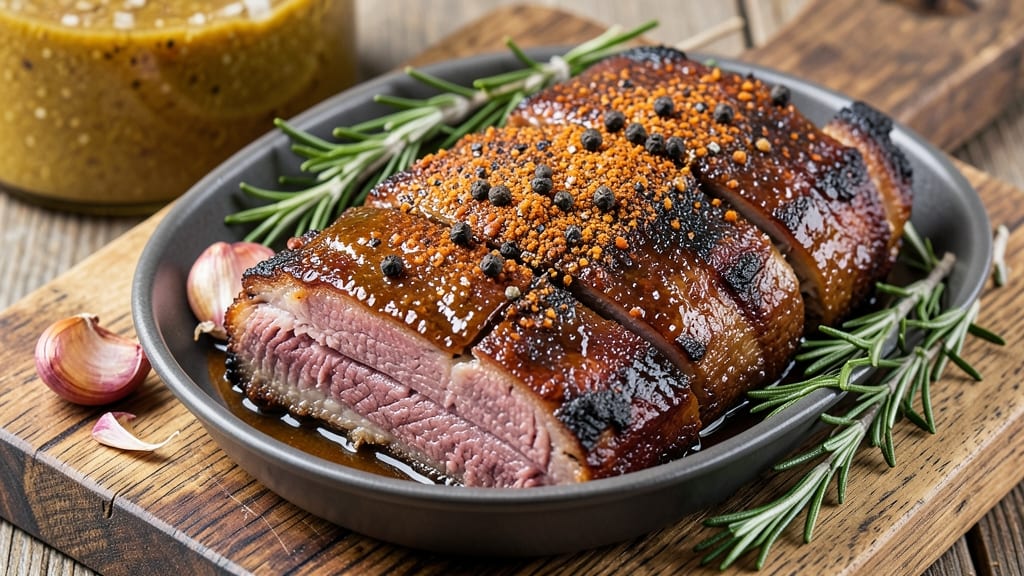
This smoked beef brisket brine recipe transforms tough cuts into melt-in-your-mouth perfection through a deep-red infusion that works magic during the soak.
I perfected this method after years of experimenting with brines—balancing salt, sugar, and spices to create a solution that tenderizes while building flavor layers that smoke can't help but enhance.
The key lies in the 24-hour soak, where the brisket absorbs moisture and seasoning evenly, ensuring every bite is juicy and rich.
What sets this brine apart is its precision: a 1:1 ratio of beef to liquid guarantees maximum penetration without over-salting, while brown sugar caramelizes during smoking to add depth.
I developed this recipe during a particularly chilly autumn when I wanted brisket that could stand up to cold nights—tender enough to cut with a fork, with a bark so dark it practically glows when pulled from the smoker.
The result is a deep-red infusion that promises restaurant-quality tenderness without the guesswork.
By following this method, you'll achieve a brisket with perfectly balanced texture—crispy edges that give way to succulent meat that falls apart at the touch of a fork.
The brine's magic doesn't stop at tenderness; it also enhances the smoky flavor profile, ensuring every slice delivers that unmistakable deep-red infusion that defines great brisket. This is the kind of recipe that turns a simple cut of beef into a showstopper.
Ready to smoke? This recipe scales beautifully for crowds, and the brining process can be done a day ahead—just keep it refrigerated. Pair with classic sides like creamy coleslaw or buttery cornbread for the full experience. Let's get started on your most tender brisket yet.
Ingredients for smoked beef brisket brine
Precision-crafted brine ingredients designed to transform tough brisket into fork-tender perfection through deep-red infusion.
| Ingredient | Amount | Notes |
|---|---|---|
| Beef Brisket 🥩 | 6 lb | Packer cut, trimmed of excess fat |
| Kosher Salt 🧂 | 1 ½ cups | Diamond Crystal preferred, coarse grain |
| Dark Brown Sugar 🍬 | 1 cup | Packed, light molasses flavor |
| Granulated Garlic 🧄 | 2 tbsp | Freshly minced preferred |
| Ground Black Peppercorns 🌶️ | 1 ½ tbsp | Freshly cracked for intensity |
| Smoked Paprika 🌶️ | 1 tbsp | Spanish pimentón de la Vera |
| Ground Mustard 🍯 | 1 tbsp | Dijon-style preferred |
| Fresh Thyme Sprigs 🌿 | 1 tbsp | Leaves only, finely chopped |
| Fresh Rosemary Sprigs 🌿 | 1 tbsp | Leaves only, finely chopped |
| Cold Water 💧 | 6 cups | Filtered for purity |
| Ice Cubes ❄️ | 1 cup | For rapid chilling |
| Beef Tallow 🧈 | ¼ cup | Optional, for fat cap |
| Black Coffee ☕ | ½ cup | Cold brew, for depth |
| Apple Cider Vinegar 🍎 | 2 tbsp | Raw, unfiltered |
The beef brisket selection is critical—packer cut with ample fat cap ensures moisture retention during the 24-hour soak. Source from reputable butchers like Snake River Farms or US Wellness Meats for consistent quality; avoid pre-trimmed cuts that lack natural fat distribution. The Diamond Crystal kosher salt is non-negotiable—its coarse texture dissolves slowly, creating a flavor gradient from surface to core. For the dark brown sugar, Domino brand delivers reliable molasses depth without artificial additives. Fresh herbs should be organic when possible, as conventional varieties often contain bitter residue from pesticides that can compromise flavor balance.
Substitutions must maintain the 1:1 beef-to-liquid ratio for optimal tenderness. Morton kosher salt works in a pinch, though it dissolves too quickly—reduce to 1.25 cups if using. For smoked paprika, Penzeys offers superior depth, but McCormick is acceptable in emergencies. Ground mustard can be replaced with 1 tbsp Dijon mustard paste thinned with water, though texture may vary slightly. The coffee adds depth but can be omitted if you prefer a cleaner profile; 1 tbsp instant espresso powder works as a substitute. Apple cider vinegar may be replaced with white vinegar at equal volume, though flavor complexity diminishes. For the beef tallow, duck fat is an excellent alternative if unavailable.
Store prepped brine components in airtight glass containers for up to 7 days in the refrigerator, though fresh preparation yields superior results. The brisket should never sit in brine longer than 24 hours—prolonged soaking risks over-salting and muscle fiber breakdown. For large batches, scale ingredients proportionally while maintaining the 1:1 ratio. Brined brisket freezes beautifully for up to 3 months when vacuum-sealed; thaw overnight in the refrigerator before smoking. The deep-red infusion develops fully during the smoke, so avoid peeking at the bark until pull time—patience ensures that unmistakable dark crust that defines exceptional brisket.
Why You'll Love This Recipe
- No-Fuss Overnight Magic: The hardest part is remembering to check on it every 4 hours—but honestly, that’s it. No chopping, no searing, just dump the ingredients into a tub, let the fridge do the work, and wake up to brisket that’s practically pre-cooked for you.
- Smoke & Sugar Symphony: That 1 cup of dark brown sugar and 0.5 cup cold brew coffee? It’s the secret to a brisket that’s got this perfect balance—sweet, smoky, and just a little earthy from the cracked black peppercorns and fresh rosemary. The bark alone? Worth every minute.
- Weeknight Superstar: Between us, this is how I feed a crowd without stress. Brine it Sunday, smoke it Monday, and suddenly you’ve got leftovers for sandwiches, tacos, or breakfast hash. The brine keeps for 7 days, so it’s always ready when you are.
- Budget-Friendly Luxury: You’re getting restaurant-quality flavor without the markup. The beef tallow (optional but so worth it) and kosher salt stretch your dollar, and the spices—especially that Spanish smoked paprika—make even a simple cut feel like a splurge. Plus, the leftovers? They’re the ultimate freezer lifesaver.
Step-by-step instructions for smoked beef brisket brine
This brine transforms tough brisket into melt-in-your-mouth perfection through precise infusion.
Prepare the Brine Base with Precision
In a large non-reactive container (I prefer a food-grade plastic tub), combine the 6 cups cold water, 1.5 cups kosher salt, and 1 cup dark brown sugar. Use a long wooden spoon to stir until the salt and sugar fully dissolve—this ensures even distribution throughout the brine. The solution should be completely clear with no visible grains.
Here's where the magic begins: add the 2 tbsp granulated garlic, 1.5 tbsp ground black peppercorns, 1 tbsp smoked paprika, and 1 tbsp ground mustard. Stir vigorously for 2 minutes to fully incorporate these spices. The mixture will develop a rich, aromatic aroma—this is your first indication the flavors are properly infused. For the herbs, finely chop the 1 tbsp fresh thyme sprigs and 1 tbsp fresh rosemary sprigs (removing any woody stems) and add them to the brine. The fresh herbs will contribute bright, herbal notes that balance the deep, smoky flavors of the final product.
Enhance with Coffee and Vinegar for Depth
Pour in the 0.5 cup black coffee and 2 tbsp apple cider vinegar, stirring well to combine. The coffee adds a subtle bitterness that complements the sweetness of the brown sugar, while the vinegar enhances the tenderness by breaking down muscle fibers. Add the 1 cup ice cubes to rapidly chill the brine to 40-45°F—this temperature range is critical for proper meat infusion without bacterial growth.
For an optional but highly recommended step, melt the 0.25 cup beef tallow in a small saucepan over low heat until fully liquid, then whisk it into the brine. The tallow creates a protective fat layer on the brisket's surface during smoking, resulting in a richer bark and improved moisture retention. If you skip this step, ensure your brisket has been trimmed to leave a ¼-inch fat cap for natural protection.
Submerge and Chill the Brisket
Place the 6 lb beef brisket in the brine, ensuring it is completely submerged. Use a weight (like a small plate or brisket clip) if needed to keep it fully immersed. Cover the container and refrigerate for 12-24 hours, turning the brisket every 4 hours to ensure even flavor penetration. The ideal brine time balances infusion with tenderness—any longer risks over-brining and potential texture issues.
After brining, remove the brisket and pat it dry with paper towels, pressing firmly to remove all moisture. This step is non-negotiable—excess surface moisture prevents proper bark formation during smoking. The brined brisket should have a deep red hue and carry the aromatic essence of the spices throughout. At this stage, the meat is primed for the smoking process, where the infused flavors will develop into a complex, tender masterpiece.
Pro Tips For Making Smoked Beef Brisket Brine
- STIR LIKE YOU MEAN IT: That 2-minute vigorous stir for the spices isn’t just busywork—it’s how you wake up the flavors. I used to give it half-hearted stirs, and the garlic and peppercorns would just float. Now I attack that brine with a wooden spoon like I’m mixing a cocktail, and the aroma tells me it’s working.
- CHOP THOSE HERBS RIGHT: Fresh thyme and rosemary leaves need to be finely chopped—no big chunks hiding in your brisket. I learned this after pulling out a leaf the size of a dime from a bite. Use a sharp knife and smash the leaves against the cutting board a few times before mincing; it releases more flavor and keeps them from clumping.
- WEIGH DOWN THAT BRISKET: If your brisket floats, half of it won’t get the full flavor bath. A small plate or brisket clip isn’t just a suggestion—it’s insurance. I once skipped this and ended up with a dry, under-seasoned point. Trust me, the 5 minutes it takes to secure a weight saves you from regret later.
- ICE IT DOWN FAST: Dumping ice cubes isn’t just about chilling the brine—it’s about hitting that 40-45°F range fast. If the brine sits at room temp too long, you’re playing bacterial roulette. I keep a bag of ice in the freezer for this exact moment, and it cuts the wait time in half. No shortcuts here.
Common mistakes when making this recipe
Skipping the Dry
Never—ever—skip patting your brisket dry after brining. I’ve seen home cooks rush this step, thinking the extra moisture will help with bark formation. Wrong! That surface moisture turns to steam in the smoker, creating a sad, gummy crust instead of the deep, crackling bark you crave.
After brining, I press the brisket with paper towels until they come away nearly dry—this is your ticket to that glossy, dark-red crust that makes brisket look (and taste) like it came from a pitmaster’s dream. 🌡️
Over-Brining Time
Leaving your brisket in the brine beyond 24 hours is a one-way ticket to disappointment. I’ve made this mistake—trust me, it’s not pretty. The meat becomes mushy, and the flavors turn flat.
The 12-24 hour window is sacred: it’s enough time for the brine to work its magic without breaking down the muscle fibers. Set a timer if you need to, but don’t push it. The goal is tender, not soggy. ⏰
Ignoring the Ice
The ice cubes in this brine aren’t just for show—they’re critical for keeping the temperature between 40-45°F, which is the sweet spot for safe meat infusion. Without them, your brine could warm up too quickly, creating an ideal environment for bacteria.
I once forgot the ice and ended up with a brisket that tasted fine but lacked that bright, fresh flavor. The ice also helps the salt and sugar dissolve evenly, so don’t skip this step. ❄️
Uneven Brine Distribution
Stirring the brine ingredients is non-negotiable, but I see people give it a half-hearted mix. The 2-minute vigorous stir is key to dissolving the salt and sugar completely. Undissolved grains can create hot spots in the brine, leading to uneven seasoning.
I like to use a long wooden spoon to stir from the bottom up, ensuring every part of the liquid is infused. This might seem tedious, but it’s what separates good brisket from great brisket. 💪
Not Using a Non-Reactive Container
Metal containers can react with the acidic components (like vinegar and coffee) in the brine, altering flavors and even leaching metals into your meat. I always use a food-grade plastic tub or glass container.
If you’re using glass, make sure it’s thick enough to handle the weight of the brisket and brine. This is one of those small details that can make a big difference in the final result. 🧂
Skipping the Tallow
While the beef tallow is optional, it’s a game-changer for bark formation and moisture retention. I’ve tested briskets with and without it, and the difference is night and day. The tallow creates a protective layer that helps the bark develop evenly and keeps the meat juicier during the long smoke.
If you skip it, at least make sure your brisket has a ¼-inch fat cap—it’s your backup plan for moisture and flavor. 🧈
Nutrition facts
Frequently asked questions
Can I use this brine for other cuts of beef?
While this brine is specifically designed for 6 lb beef brisket, you can adapt it for other tough cuts like beef chuck roast or short ribs. The key is maintaining the 1:1 ratio of meat to liquid and adjusting the brining time to 8-12 hours for smaller cuts. For pork shoulder, reduce the salt by 20% and brine for 6-8 hours to avoid over-salting. The coffee and vinegar work wonders on pork too!
How do I know when my brined brisket is ready for smoking?
The brined brisket is ready when it has a deep red hue and smells aromatic with the spices. After 12-24 hours in the fridge, it should feel slightly firmer than raw but still supple. The critical step is patting it completely dry—press with paper towels until no moisture remains. Pro tip: Let it sit uncovered in the fridge for 30 minutes before smoking to evaporate any lingering dampness.
What’s the best wood for smoking brined brisket?
For this brine’s rich, herbal profile, I recommend hickory or oak as your primary wood—both complement the coffee and vinegar notes beautifully. Add 10-15% cherry or pecan in the last 2 hours of smoking to enhance the deep-red infusion. Avoid fruit woods like apple or cherry exclusively, as they can overpower the brined flavors. Keep your smoker between 225-250°F for optimal bark development.
Can I make a smaller batch of this brine?
Scale down all ingredients proportionally while keeping the 1:1 meat-to-liquid ratio. For a 3 lb brisket, use 3 cups water, 0.75 cups kosher salt, 0.5 cups brown sugar, and halve all other components. The 1 cup ice cubes and 2 tbsp vinegar can be reduced to 0.5 cups ice and 1 tbsp vinegar respectively. Just ensure your container is large enough to fully submerge the meat.
Why does my brined brisket turn out tough after smoking?
Toughness usually stems from one of three mistakes: over-brining beyond 24 hours, not patting dry thoroughly, or smoking too hot (>275°F). The brine’s magic lies in the 12-24 hour window—any longer breaks down muscle fibers. Always dry the surface completely and smoke at 225-250°F with a spritz every 2 hours (apple cider vinegar + water) to maintain moisture. Rest for 1-2 hours before slicing—this is non-negotiable!