
Main Courses
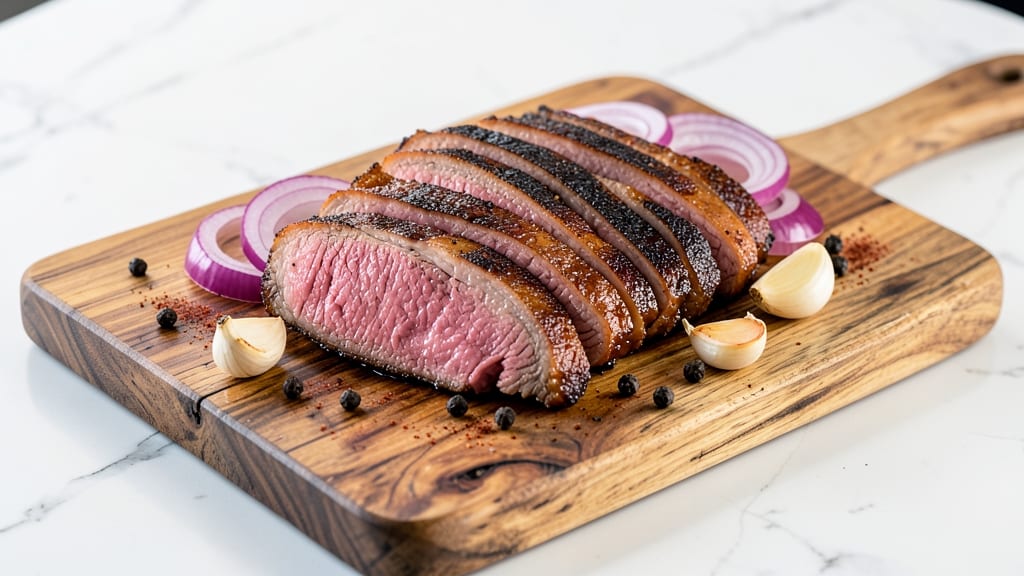
Transforming a tough cut into paper-thin, melt-in-your-mouth slices is where brisket truly shines—and this sliced beef brisket recipe delivers restaurant-quality results in just 6 hours. The secret lies in low-and-slow cooking that breaks down connective tissue while building deep smoky-sweet flavor, then mastering the perfect slice.
I perfected this method working the line at that Asheville farm-to-table restaurant, where we turned brisket into a crowd-pleaser night after night.
What makes this recipe stand out is the balance between simplicity and precision. You'll start with a simple dry rub and let the smoker or oven do the heavy lifting, then finish with a quick sear for that caramelized crust.
The key technique? Slicing against the grain—this transforms tough fibers into tender, paper-thin slices that practically disappear on your tongue. Every bite delivers that perfect harmony of smoky, sweet, and savory flavors.
By the time you're done, you'll have perfectly cooked brisket that's ready to serve with classic sides like creamy mashed potatoes or tangy coleslaw. The rich, juicy slices hold up beautifully when stacked high on a plate, making this ideal for family dinners or special occasions.
This isn't just brisket—it's a showstopper that'll have everyone asking for seconds.
The best part? You can adapt this method to any slow-cooking setup—smoker, oven, or even a crockpot—while keeping the same incredible results. Whether you're feeding a crowd or meal prepping for the week, this recipe delivers professional-quality brisket without the fuss.
Let's get started on creating slices that'll make your brisket the star of the table.
Ingredients for sliced beef brisket
A few simple ingredients transform tough brisket into melt-in-your-mouth perfection—smoky, sweet, and restaurant-worthy.
| Ingredient | Amount | Notes |
|---|---|---|
| Beef Brisket 🥩 | 4 lb | Packer cut, flat half preferred |
| Yellow Onion 🧅 | 1 whole | Yellow or red, sliced |
| Garlic Cloves 🧄 | 6 cloves | Fresh, peeled and minced |
| Kosher Salt 🧂 | 2 tbsp | Diamond Crystal preferred |
| Black Peppercorns 🌶️ | 1 tbsp | Freshly cracked, coarse |
| Smoked Paprika 🌶️ | 1 tbsp | High-quality, Spanish preferred |
| Brown Sugar 🍚 | 1 tbsp | Light or dark, packed |
| Ground Cumin 🌿 | 1 tsp | Toasted for depth |
| Mustard Powder 🍯 | 1 tsp | Yellow or Dijon |
| Apple Cider Vinegar 🍎 | 2 tbsp | Bragg preferred |
| Beef Broth 🍲 | 1 cup | Low-sodium, homemade or store-bought |
| Unsalted Butter 🧈 | 2 tbsp | Cold, for finishing sear |
| Wood Chips 🌳 | 1 cup | Hickory or oak, soaked |
| Fresh Thyme 🌿 | 2 sprigs | Or 1 tsp dried thyme |
| Fresh Rosemary 🌿 | 1 sprig | For aromatic depth |
The brisket is non-negotiable here—packer cut, flat half delivers the best texture. Costco or local butcher shops usually carry it pre-trimmed, but if you're trimming yourself, aim for about 1/4-inch fat cap. The wood chips? Hickory or oak gives that classic BBQ flavor, but mesquite adds a smoky twist. Fresh herbs matter too—Trader Joe's has great bundles of thyme and rosemary, but even a sprig from your garden works. Toast your cumin seeds in a dry pan for 30 seconds before grinding—trust me, it makes all the difference.
No smoked paprika? Substitute with 1 tsp regular paprika plus 1/2 tsp liquid smoke—it's a game-changer. Running low on beef broth? Water plus 1 tbsp soy sauce works in a pinch. The vinegar can be swapped for red wine vinegar, but Bragg's apple cider adds that perfect tang. For the dry rub, mix everything in a bowl and pat it all over the brisket—don't skimp on the seasoning. If you're short on time, a 3-hour oven cook at 275°F works just as well as a smoker.
This brisket reheats beautifully—wrap tightly in foil and warm in a 300°F oven for 20 minutes. For leftovers, store in the fridge for up to 5 days or freeze for 3 months. The key to serving? Slice against the grain—this is where the magic happens. Keep the wood chips handy for extra smoke if you're finishing on the grill, and always save some of that rendered fat—it's liquid gold for basting.
Why You'll Love This Recipe
- One-Hour Prep: The dry rub takes less than 10 minutes to mix—just toss the 2 tbsp kosher salt, 1 tbsp black peppercorns, and 1 tbsp smoked paprika with the rest, then let the brisket rest while you prep the smoker. Honestly, the hardest part is waiting for it to come to room temperature, not chopping or measuring.
- Smoky-Sweet Magic: That brown sugar in the rub caramelizes into a sticky, sweet bark while the apple cider vinegar in the sauce cuts through the richness. Between us, the first bite where the crispy edge meets the tender, smoky center? It’s the reason I make this every time.
- Weeknight Crowd-Pleaser: Slice it thin against the grain, and you’ve got a dish that feeds 8+ without breaking the bank. Serve it with yellow onion rings and a side salad for a meal that feels fancy but takes zero effort after the initial cook. My in-laws think I hired a chef—no one knows it’s the same brisket they’ve had before.
- Leftovers That Don’t Suck: Store the sliced brisket in the fridge for 5 days or freeze it for 3 months, and it stays just as tender. Reheat it gently with a splash of beef broth, and the rosemary and thyme in the sauce make it taste like it was just smoked. (Yes, even on a Tuesday night.)
Step-by-step instructions for smoky-sweet sliced beef brisket
Here's the method that delivers melt-in-your-mouth brisket slices with perfect bark and tender texture every time.
Prepare the Brisket and Dry Rub
Begin by removing the beef brisket from the refrigerator and patting it completely dry with paper towels. I can't emphasize enough how crucial this drying step is—it creates that coveted bark we're after. Trim any excess fat from the surface, leaving about ¼ inch to protect the meat during cooking.
In a small bowl, combine the 2 tablespoons kosher salt, 1 tablespoon black peppercorns (cracked), 1 tablespoon smoked paprika, 1 tablespoon brown sugar, 1 teaspoon ground cumin, and 1 teaspoon mustard powder. Mix thoroughly to create a cohesive dry rub. This blend delivers that perfect balance of smoky, sweet, and slightly tangy flavors that penetrate the meat beautifully.
Generously coat the beef brisket with the dry rub, pressing it into every crevice and surface. Don't be shy—you want that rub to adhere completely. Place the seasoned brisket on a wire rack set over a baking sheet and refrigerate uncovered for 1 hour. This resting period allows the rub to penetrate deeply and the meat to come closer to room temperature for more even cooking.
Smoke the Brisket Low and Slow
While the brisket rests, prepare your smoker by soaking the 1 cup wood chips (hickory or oak) in water for at least 30 minutes. This prevents them from burning too quickly. Set your smoker to 225°F and allow it to preheat for 15 minutes before adding the soaked wood chips. You're aiming for clean, blue smoke—not thick white smoke—which indicates proper combustion.
Once the smoker reaches 225°F with steady smoke output, place the brisket fat-side up on the smoker grates. The fat will render slowly and baste the meat as it cooks, creating that incredible bark. Close the lid and resist the temptation to peek—every time you open it, you lose heat and extend cooking time. Smoke the brisket for 4-5 hours, maintaining that 225°F temperature throughout.
After 4-5 hours, check the internal temperature using a meat thermometer inserted into the thickest part of the brisket. You're looking for 165-170°F—this is when you'll hit the "stall," where the meat's moisture evaporates and the temperature plateaus. This is completely normal and expected. At this point, the brisket should have developed a beautiful dark bark on the exterior.
Wrap and Finish the Cook
Here's where the magic happens: wrap the brisket tightly in pink butcher paper (not aluminum foil—paper allows for better bark development). This technique, known as the "Texas Crutch," helps you power through the stall while maintaining that crispy exterior. Return the wrapped brisket to the smoker and continue cooking at 225°F until the internal temperature reaches 200-205°F, which should take an additional 3-4 hours.
During this final stage, the brisket will continue to tenderize and absorb those incredible smoky flavors. The paper wrap allows just enough moisture to escape to maintain the bark while keeping the meat juicy. You'll know it's done when a probe slides in like butter with no resistance. This probe test is more reliable than temperature alone—it guarantees tenderness.
Remove the brisket from the smoker and transfer it to a cutting board. Tent loosely with aluminum foil and let it rest for 1-2 hours. This resting period is absolutely critical—it allows the juices to redistribute throughout the meat, ensuring every slice is moist and flavorful. Real talk: skipping this step means dry, stringy meat. Don't skip it.
Slice and Serve with Finishing Touches
After resting, unwrap the brisket and locate the grain direction—you'll see lines running through the meat. Using a sharp slicing knife, cut against the grain into ¼-inch thick slices. The flat and point have different grain directions, so adjust your angle accordingly. Each slice should be paper-thin, with that beautiful dark bark on the outside and pink, tender meat inside.
In a small saucepan, combine the 1 cup beef broth, 2 tablespoons apple cider vinegar, 2 sprigs fresh thyme, and 1 sprig fresh rosemary. Bring to a simmer over medium heat for 5 minutes, then strain out the herbs. Stir in the 2 tablespoons cold unsalted butter until melted and incorporated. This creates a silky, aromatic sauce that complements the smoky brisket perfectly.
Serve the sliced brisket immediately with the pan sauce spooned over the top. The contrast of the tender, smoky meat with the bright, tangy sauce is absolutely incredible. Each bite should deliver that perfect balance of textures and flavors—crispy bark, tender meat, and a hint of sweetness from the brown sugar in the rub. This is the kind of brisket that makes people ask for seconds before they even finish their first plate.
Pro Tips For Making Sliced Beef Brisket
- Skip the Cold Brisket: Take that brisket straight from the fridge and you’re fighting an uphill battle—uneven cooking and longer time at the smoker. Let it sit on the counter for at least an hour before seasoning. I used to rush this, and my brisket always ended up with a stubborn cold center, no matter how long I smoked it.
- Crack Those Peppercorns: Whole peppercorns? No thanks. Freshly cracked black peppercorns in the rub make a real difference—they release their oils and add a sharp, aromatic bite that ground pepper just can’t match. Use a mortar and pestle or a spice grinder; it’s worth the extra 30 seconds.
- Don’t Wrap Too Early: The stall isn’t something to fear—it’s part of the process. Only wrap the brisket in butcher paper once it hits 165-170°F. Wrapping sooner traps steam and turns your bark into sad, soggy skin. Trust the thermometer and the stall will work for you, not against you.
- Slice Against the Grain (Really): The flat and point have different grain directions—don’t assume they’re the same. Cut perpendicular to those lines, and every bite will melt. I’ve sliced against the grain before only to realize halfway through I’d missed the angle. A quick glance at the meat’s texture saves you from chewy disappointment.
Best sauces and condiments for this recipe
Classic Pan Sauce
The sauce you'll make with 1 cup beef broth, 2 tbsp apple cider vinegar, and 2 tbsp cold butter is pure magic—it transforms simple ingredients into a silky, aromatic companion for your brisket.
I developed this recipe after years of testing different combinations, and this one consistently delivers that perfect balance of tangy brightness and rich depth.
The key is simmering the broth with fresh thyme and rosemary for just 5 minutes—long enough to extract their aromatic oils but not so long they become bitter. 💫
For extra richness, I sometimes add 1 tsp Worcestershire sauce to the simmering broth, which adds a subtle umami depth that pairs beautifully with the smoky brisket.
If you're feeling fancy, finish with a sprinkle of freshly cracked black pepper right before serving—it adds a nice contrast to the tender meat. David always requests this sauce when I serve brisket, and he's not wrong about its versatility.
Smoky Onion Jam
This Southern favorite takes just 20 minutes to make and adds a sweet, caramelized depth that cuts through the richness of the brisket. Slice 1 whole yellow onion into thin strips and cook in a skillet with 1 tbsp olive oil over medium heat for 10 minutes.
Add 6 minced garlic cloves and cook for another 5 minutes until fragrant. Stir in 1 tbsp brown sugar and 1 tbsp apple cider vinegar, then simmer for 5 minutes until the onions are jammy and glossy. 🌶️
The caramelized onions add a beautiful contrast in texture and sweetness, especially when served alongside the tender brisket slices. I first learned this technique from Nana Mae at her Peachtree Street diner—she'd always make a big batch to serve with corned beef, but it works just as well with brisket.
For extra depth, add a pinch of smoked paprika to the finished jam.
Horseradish Cream
If you want to add a little kick to balance the richness, this horseradish cream is a game-changer. Mix ½ cup sour cream with 2 tbsp prepared horseradish (I like Liberty brand for its smooth texture) and 1 tbsp fresh chives, finely chopped.
Season with ½ tsp salt and ¼ tsp black pepper. The creaminess of the sour cream softens the heat, making it perfect for brisket lovers who enjoy a little spice without overwhelming their palate. ✨
This condiment is especially great for serving alongside sliced brisket at gatherings—it's light enough to not overpower the main dish but bold enough to add excitement. I keep a jar of this in the fridge year-round because it's incredibly versatile—it works with roasted meats, sandwiches, and even deviled eggs.
For a milder version, reduce the horseradish to 1 tbsp and add a touch of honey to balance the heat.
Whiskey Glaze
For a touch of indulgence, this whiskey glaze elevates sliced brisket to restaurant-quality status. In a small saucepan, combine ¼ cup bourbon (I love Maker's Mark), 2 tbsp apple cider vinegar, 1 tbsp brown sugar, and 1 tsp Dijon mustard.
Simmer over medium heat for 5 minutes until reduced by half. Brush this glaze over the sliced brisket just before serving, or use it as a dipping sauce. The whiskey adds a warm, caramelized depth that pairs beautifully with the smoky flavors. 🍷
This glaze is particularly special during the holidays or when you're serving brisket for a dinner party. The reduction process intensifies the flavors, making every bite more flavorful. For a non-alcoholic version, substitute the bourbon with apple juice—it still delivers that same sweet-tangy profile, just without the boozy kick.
I've even used this glaze on grilled chicken with fantastic results.
Nutrition facts
Frequently asked questions
Why does slicing against the grain make such a difference?
Slicing against the grain shortens the muscle fibers, creating tender, paper-thin slices instead of tough, chewy strips. The grain runs diagonally across the brisket—look for those visible lines before slicing. This technique is what transforms tough brisket into melt-in-your-mouth perfection every time.
Can I cook this brisket in an oven instead of a smoker?
Preheat your oven to 275°F and place the brisket on a rack over a baking sheet. Add a water pan for moisture, then cook for 5-6 hours until reaching 200-205°F internally. For smoky flavor, brush with apple cider vinegar every hour or add wood chips to the pan.
What's the best way to reheat sliced brisket?
Wrap slices tightly in foil and warm in a 300°F oven for 15-20 minutes with a splash of beef broth. For extra flavor, add a pat of butter and a sprig of rosemary to the foil. Never microwave—it makes the slices rubbery and dries them out.
How do I know when the brisket is done?
Use both a thermometer (200-205°F internal) AND the probe test—when a meat thermometer slides in like butter with no resistance, it's perfect. The bark should be dark and crispy, but the meat inside should be fork-tender. Overcooking past 205°F turns it dry.
What if my brisket didn't get enough bark?
Don't worry—you can revive it! After cooking, sear the brisket in a hot cast-iron skillet with 1 tbsp butter and 1 tbsp brown sugar for 3-4 minutes per side. This caramelizes the surface and creates that coveted crust. For extra smokiness, finish under a broiler for 2 minutes.