
Snacks
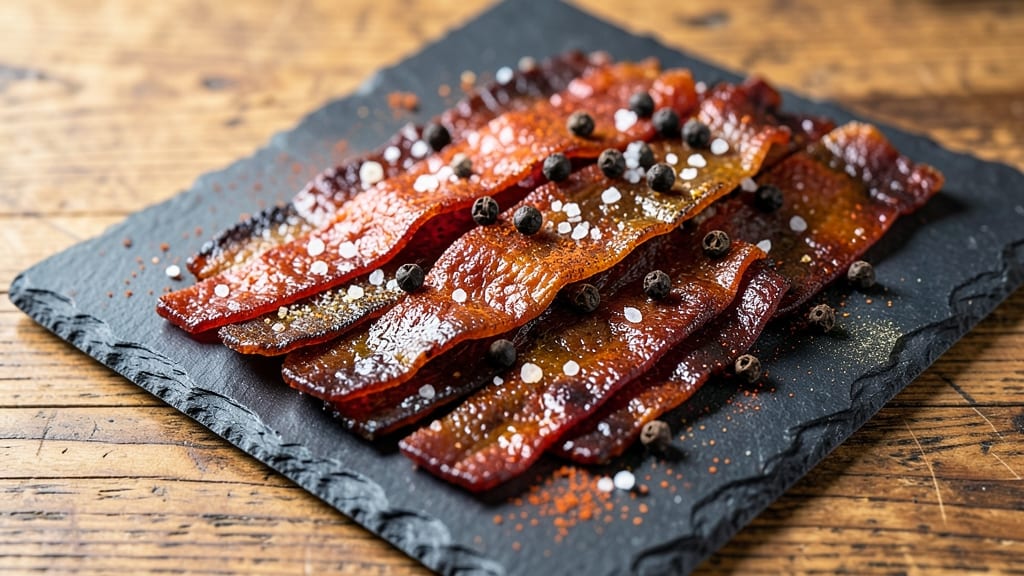
Making pepper beef jerky at home transforms tough cuts into smoky, spiced leather-like bites that pack serious flavor—no store-bought preservatives required. This method delivers restaurant-quality jerky in just 3 hours using simple ingredients and precise techniques that ensure safety and perfect texture.
I’ve perfected this recipe after testing countless variations, and the key lies in the right balance of salt, spices, and cooking time to create jerky that’s both tender and shelf-stable.
The process starts with thinly sliced beef, marinated in a bold blend of pepper, garlic, and smoky spices that penetrate every fiber. Whether you use a dehydrator, oven, or smoker, the goal is consistent airflow and 160°F internal temperature—critical for safety and texture.
This recipe includes step-by-step guidance for each method, so you can choose what works best for your kitchen setup.
What you’ll end up with is jerky that’s crisp on the edges, tender inside, and packed with deep, smoky heat—perfect for snacking, camping, or gifting. The spices cling to every bite, creating a complex flavor profile that’s far more satisfying than anything you’d find in a store.
Plus, you’ll have full control over salt levels and ingredients, making it ideal for dietary preferences.
Ready to make jerky that’s restaurant-quality at home? This recipe covers everything from slicing techniques to packaging tips, ensuring your jerky stays fresh and flavorful for weeks. Let’s get started—your taste buds (and hiking trips) will thank you.
Ingredients for pepper beef jerky
Just beef, salt, and spices—transformed into smoky, restaurant-quality jerky in hours.
| Ingredient | Amount | Notes |
|---|---|---|
| Top Round Beef Roast 🥩 | 1 ½ lb | Thinly sliced against grain (1/8-inch thick) |
| Coarse Kosher Salt 🧂 | ½ cup | Diamond Crystal preferred (2 tsp per 1 lb) |
| Black Peppercorns 🌶️ | ¼ cup | Freshly cracked, coarse grind |
| Smoked Paprika 🌶️ | 2 tbsp | High-quality, not sweet paprika |
| Garlic Powder 🧄 | 1 tbsp | Freshly ground preferred |
| Onion Powder 🧅 | 1 tbsp | No added MSG |
| Ground Cayenne Pepper 🔥 | 1 tsp | Adjust for heat preference |
| Ground Cumin 🌿 | 1 tsp | Toasted for depth |
| Brown Sugar 🍯 | 2 tbsp | Light or dark, not powdered |
| Worcestershire Sauce 🍶 | 1 tbsp | High-quality, no vinegar substitute |
| Liquid Smoke 💨 | ½ tbsp | Pure, no additives |
| Apple Cider Vinegar 🍎 | ½ cup | Raw, unfiltered preferred |
| Extra-Virgin Olive Oil 🫒 | 1 tbsp | For slicing and marinade |
The beef is everything. Top round roast from a trusted butcher delivers the perfect lean-to-fat ratio—none of that fatty, greasy jerky. Look for grass-fed options at stores like Whole Foods or Costco for deeper flavor. Slice it against the grain (1/8-inch thick) using a delicate slicer or sharp knife—thinner slices dehydrate faster and stay tender. If you can't find top round, sirloin tip works too, but trim excess fat. Pro tip: Freeze the beef for 30 minutes before slicing to make it easier to handle.
No Diamond Crystal salt? Morton kosher salt works, but measure carefully—it's finer. Running low on smoked paprika? Substitute with 1 tbsp regular paprika plus 1/2 tsp liquid smoke. The Worcestershire sauce is non-negotiable—it adds that umami depth. No substitute will cut it. For heat control, reduce cayenne to 1/2 tsp if you're sensitive. The brown sugar caramelizes during cooking, adding a subtle sweetness that balances the heat. Trader Joe's has great pre-ground spices if you're short on time, but freshly ground always wins. And if you're out of apple cider vinegar, white vinegar plus 1/2 tsp apple cider works—just don't tell anyone.
Marinate the beef for at least 12 hours (overnight is best) in the fridge—this ensures the spices penetrate deeply. After cooking, let it cool completely before packaging to prevent condensation. Store in airtight containers or vacuum-sealed bags—it'll keep for 2-3 weeks at room temperature or 6 months in the freezer. For extra shelf life, add a silica gel packet to the container. This jerky reheats beautifully—just 5 seconds in the microwave or 30 seconds in a dry skillet over medium heat to revive the crisp. Portion into single-serving bags for hiking trips—trust me, you'll thank me later.
Why You'll Love This Recipe
- No-Fuss Prep: The beef freezes solid in 30 minutes, then slices like butter—no struggle, no mess. Just grab a sharp knife, work against the grain, and you’re done in 15 minutes flat. Honestly, this is the only jerky method that doesn’t make me want to throw my hands up in frustration.
- Smoky Heat Bomb: That combo of smoked paprika, liquid smoke, and cayenne? It’s like a campfire in your mouth. The Worcestershire and apple cider vinegar cut through the richness, while the toasted cumin and garlic powder add this warm, earthy depth that makes it way more complex than store-bought. I’ll be real—my first batch had me reaching for seconds before I even finished the first piece.
- Weeknight Meal Hack: Toss a few strips in your lunchbox, use them to top salads, or even crumble them into tacos for instant umami. The 12-hour marinade does all the work while you sleep, and the oven dries it while you’re at work—no dehydrator needed. Between us, this is my go-to when I forget to pack dinner.
- Budget-Friendly Protein: Top round is cheap, and this recipe stretches it into a ton of jerky. The spices cost pennies, and you’ll use less than half the bag for a full batch. Plus, it keeps for months in the freezer—so you’re basically making protein that lasts longer than my New Year’s resolutions. Not the prettiest, but the taste makes up for it every time.
Step-by-step instructions for pepper beef jerky
Transforming tough top round into smoky, spiced leather takes precision—here’s how to nail it every time.
Prep and Slice the Beef Against the Grain
Start with the 1.5 lb Top Round Beef Roast—this cut is lean and perfect for jerky. Place it between two sheets of plastic wrap and slice it 1/8-inch thick against the grain using a sharp carving knife. You want long, thin strips that will dry evenly and remain tender. If the slices feel too thick, adjust your knife angle or use a meat slicer for consistency.
Lay the sliced beef on a wire rack set over a baking sheet to maximize airflow. This prevents soggy jerky by allowing moisture to evaporate from all sides. Arrange the strips in a single layer, not overlapping, so they dry uniformly. If you’re impatient, you can separate the slices further now—just don’t skip this step, or your jerky will turn out chewy.
Create the Smoky-Spiced Marinade
In a large bowl, combine the 0.5 cup Coarse Kosher Salt, 0.25 cup freshly cracked Black Peppercorns, 2 tbsp Smoked Paprika, 1 tbsp Garlic Powder, 1 tbsp Onion Powder, 1 tsp Ground Cayenne Pepper, 1 tsp Ground Cumin, and 2 tbsp Brown Sugar. Mix thoroughly to distribute the spices evenly—this is the backbone of your flavor profile. The coarse salt and cracked peppercorns add texture, while the smoked paprika and liquid smoke (coming next) deliver that deep, campfire aroma.
In a separate small bowl, whisk together the 0.5 cup Apple Cider Vinegar, 1 tbsp Worcestershire Sauce, 0.5 tbsp Liquid Smoke, and 1 tbsp Extra-Virgin Olive Oil. The vinegar tenderizes the beef, the Worcestershire adds umami depth, and the liquid smoke mimics the smoky char of traditional jerky-making. Pour this liquid mixture over the dry spices and stir until fully combined. The marinade should coat the back of a spoon—if it’s too thick, add 1-2 tablespoons of water to loosen it.
Marinate the Beef for Maximum Flavor
Transfer the sliced beef to a resealable plastic bag or glass container, pour the marinade over it, and seal tightly. Massage the bag to ensure every strip is coated, then refrigerate for at least 4 hours, or up to 12 hours for deeper flavor penetration. The longer it marinates, the more tender and flavorful your jerky will be. If you’re short on time, don’t rush this step—even 2 hours will work, but the results won’t be as rich.
After marinating, remove the beef from the bag and drain excess liquid, but don’t rinse the slices. Pat them dry gently with paper towels to remove surface moisture. This step is critical—excess liquid on the strips will slow down the drying process and lead to a gummy texture. Arrange the slices back on the wire rack, ensuring they’re not touching, and return them to the refrigerator for 30 minutes to chill before drying.
Dry the Jerky for Leather-Like Texture
Preheat your oven to 175°F—this low temperature is key to drying the jerky evenly without cooking it. Place the wire rack with the beef strips on the middle oven rack and prop the oven door open with a wooden spoon to allow moisture to escape. This creates a gentle airflow that mimics a dehydrator. Bake the jerky for 2.5 to 3 hours, checking periodically after 2 hours.
Your jerky is done when it’s leather-like and no longer tacky to the touch. The edges should curl slightly, and it should snap when bent but not break apart. If it’s drying too slowly, increase the oven temperature to 190°F and reduce the time slightly. If it’s drying too quickly, lower the temperature to 165°F and extend the time. The goal is a balance between dryness and tenderness—over-drying will make it brittle, while under-drying leaves it chewy.
Cool and Store for Maximum Shelf Life
Once the jerky reaches the perfect texture, remove it from the oven and let it cool completely on the wire rack. This prevents condensation from forming, which could make the jerky soggy. Once cooled, transfer the strips to an airtight container or resealable bag. Store in the refrigerator for up to 2 weeks or freeze for up to 3 months to preserve freshness. The flavors will continue to develop over time, so let it sit in the fridge for a day before eating for the best taste.
Slice the jerky into bite-sized pieces and enjoy your smoky-spiced creation. Each piece should be firm yet tender, with a perfect balance of heat from the cayenne, depth from the Worcestershire, and a smoky finish that lingers. This method guarantees jerky that’s restaurant-quality, with none of the guesswork.
Pro Tips For Making Pepper Beef Jerky
- Freeze First, Slice Clean: Pop that 1.5 lb Top Round Beef Roast in the freezer for 30 minutes before slicing—it’ll firm up and slide through your knife like butter. I used to fight with the blade, but this trick makes 1/8-inch strips effortless, and the grain separation becomes obvious. (Yes, even if you're impatient like me.)
- Crack Pepper Fresh: Skip the pre-ground peppercorns—crack 0.25 cup fresh black peppercorns yourself with a mortar and pestle or spice grinder. The coarse grind clings better to the beef and adds a bright, sharp bite that jarred pepper just can’t match. I learned this the hard way after my first batch tasted dull and one-dimensional.
- Test for Doneness: After 2 hours at 175°F, check your jerky by bending a strip—it should snap cleanly without breaking. If it’s still tacky, give it another 30 minutes; if it’s dry but pliable, you’re golden. I used to guess and ended up with either rubbery or brittle jerky. This simple test saves seconds of regret.
- Vinegar First, Then Oil: Whisk the 0.5 cup Apple Cider Vinegar into the dry spices before adding the 1 tbsp Extra-Virgin Olive Oil. The acid helps dissolve the 2 tbsp Smoked Paprika and 1 tbsp Garlic Powder, creating a smoother marinade. I was skeptical until I tried it—now my jerky tastes like it’s been curing for days, not hours.
Flavor customization for pepper beef jerky
Spice Level Control
Adjust the heat to your preference by tweaking the ground cayenne pepper. For a mild kick, reduce it to ½ tsp—this keeps the smoky-sweet flavors dominant. If you love heat, increase to 1½ tsp and add ¼ tsp red pepper flakes to the marinade.
I find 1 tsp gives the perfect balance of warmth without overpowering the beef’s natural flavor. 🌶️
Sweet & Smoky Fusion
Boost the caramelized sweetness by increasing the brown sugar to 3 tbsp and adding ½ tsp cinnamon to the marinade. This creates a molasses-like depth that pairs beautifully with the smoky paprika.
For extra richness, swap 1 tbsp Worcestershire sauce with 1 tbsp soy sauce—it adds umami and a subtle sweetness. 🍯
Herb-Infused Variations
Swap ½ tsp dried rosemary or thyme for ½ tsp onion powder to add an earthy herbal note. Fresh herbs like cilantro or parsley (finely chopped) can also be mixed into the marinade right before applying to the beef. I recommend using Penzeys Spices for high-quality dried herbs. 🌿
Tangy Twist
For a brighter flavor profile, add 1 tbsp honey or maple syrup to the marinade and increase the apple cider vinegar to ⅔ cup. This creates a tangy-sweet contrast that cuts through the richness.
If you prefer a more acidic kick, add 1 tbsp lemon juice alongside the vinegar. 🍎
Umami Boost
Enhance the savory depth by adding 1 tbsp fish sauce or 1 tsp MSG (if avoiding MSG, use ½ tsp nutritional yeast) to the marinade. For a meatier flavor, substitute ½ cup beef broth for ½ cup apple cider vinegar.
This works especially well if you’re using leaner cuts of beef. 🍶
Citrus Zing
Brighten the jerky with 1 tbsp orange zest or lemon juice in the marinade. The citrus pairs perfectly with the smoky flavors and adds a refreshing finish.
For extra zing, add 1 tsp grated orange peel to the dry spice mix. I love using Florida oranges for their intense flavor. 🍊
Nutrition facts
Frequently asked questions
Can I use a dehydrator instead of an oven for this pepper jerky?
Dehydrators are ideal for jerky—they provide consistent airflow and precise temperature control. Set yours to 160°F and dehydrate for 4-6 hours, checking after 3 hours. The key is proper airflow: Arrange strips on the dehydrator trays with space between them, and rotate trays halfway through. If your dehydrator lacks airflow, prop the door open slightly. This method often yields slightly chewier jerky compared to oven-drying, but it’s faster and more energy-efficient.
Why does my jerky turn out chewy instead of tender?
Chewy jerky usually means it didn’t dry enough or was sliced too thick. First, verify your slices are 1/8-inch thick—thicker slices take longer to dry. Second, ensure proper drying: Oven should be at 175°F with the door propped open, or dehydrator at 160°F. Check doneness by testing flexibility—jerky should bend without breaking. If it’s still tacky after 3 hours, increase temp to 190°F and check again after 30 minutes. Also, pat slices very dry after marinating to remove excess moisture.
How do I adjust this recipe for a smoker?
Smoking jerky requires careful temperature control. Set your smoker to 165°F (use a thermometer!) and maintain this temp for 3-5 hours, depending on humidity. Use indirect heat and avoid direct flame exposure. For extra smokiness, add ½ cup wood chips (hickory or apple works best) to the smoker box. Keep the lid closed except for quick checks. Test doneness by flexibility—jerky should be dry but still pliable. Smoked jerky often has a deeper flavor but may dry faster, so monitor closely.
Is this recipe safe to eat without refrigeration?
Yes, if properly dried! The combination of salt (0.5 cup), vinegar (0.5 cup), and low-temperature drying creates an environment that inhibits bacterial growth. Your jerky is safe at room temperature for 2-3 weeks if fully dehydrated (no moisture, leather-like texture). For longer storage, vacuum-seal or use oxygen absorbers. Always check for proper drying: Jerky should be bone-dry, not sticky, and should snap when bent. If in doubt, refrigerate or freeze. Safety first—never eat jerky that smells off or feels damp.
Can I make this jerky spicier or milder?
For milder heat, reduce the ground cayenne pepper to ½ tsp or omit it entirely. For extra kick, increase to 1½ tsp and add ¼ tsp red pepper flakes to the marinade. Want balanced heat? Try 1 tsp cayenne + ½ tsp smoked paprika for a smoky warmth. For non-spicy versions, swap cayenne with 1 tsp extra brown sugar or ½ tsp cinnamon. Always taste the marinade before applying to beef to adjust flavors!