
Main Courses
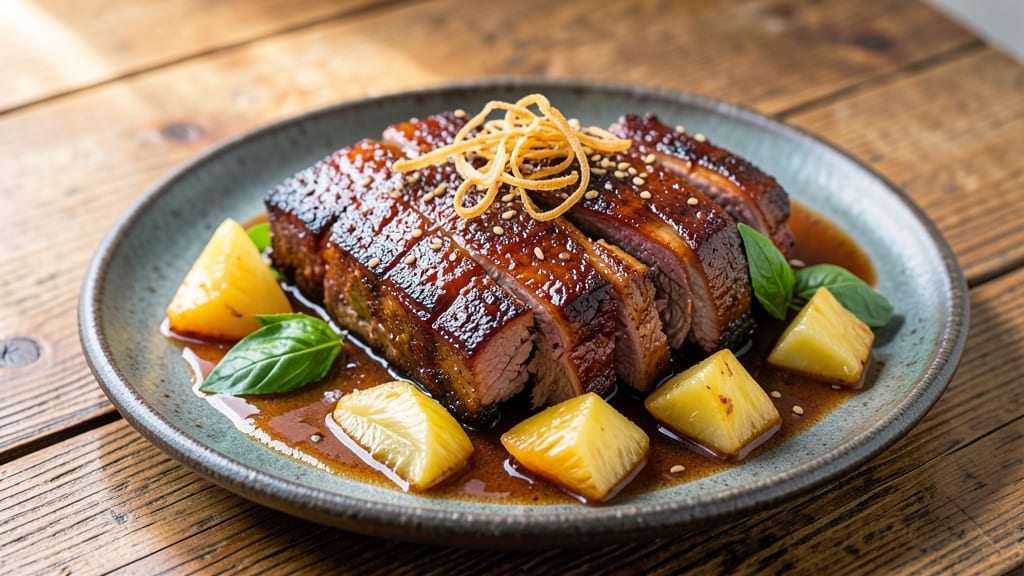
This Hawaiian beef short ribs recipe delivers melt-in-your-mouth tenderness with a sweet-tangy pineapple glaze that balances rich beef perfectly. After years of perfecting this dish, I’ve developed a method that transforms tough ribs into fork-tender bites—no special equipment required.
The slow braise builds deep flavor while keeping the meat juicy, and the pineapple glaze adds a bright, tropical contrast that’s pure comfort food.
The beauty of this recipe lies in its simplicity: just a handful of pantry staples and 3 hours of hands-off cooking time. You’ll start with a dry rub of brown sugar and spices to create a flavorful crust, then braise the ribs until they’re effortlessly tender.
The pineapple glaze, made from fresh juice and a touch of soy sauce, caramelizes beautifully, adding a glossy finish that makes every bite irresistible.
By the end, you’ll have ribs that are so tender they practically fall apart, coated in a sticky-sweet glaze with just the right amount of heat. This dish pairs perfectly with steamed jasmine rice or a fresh pineapple salsa to cut through the richness.
It’s the kind of meal that feels like a celebration—whether you’re feeding a crowd or treating yourself to a special dinner.
For those short on time, I’ll also share an Instant Pot adaptation that cuts cooking time in half without sacrificing flavor. The key is patience and precision, but the results are worth every minute. Let’s get cooking!
Ingredients for hawaiian beef short ribs
Pantry staples meet tropical flavors in this melt-in-your-mouth Hawaiian beef short ribs dish.
| Ingredient | Amount | Notes |
|---|---|---|
| Beef Short Ribs 🥩 | 3 lb | Bone-in, 1.5-2 inches thick |
| Brown Sugar 🍚 | ½ cup | Packed, light or dark |
| Kosher Salt 🧂 | 2 tbsp | Diamond Crystal preferred |
| Black Peppercorns 🌶️ | 1 tbsp | Freshly cracked preferred |
| Ground Ginger 🌿 | 1 tbsp | Freshly grated for best flavor |
| Garlic Cloves 🧄 | 6 cloves | Peeled, roughly chopped |
| Extra-Virgin Olive Oil 🫒 | 2 tbsp | For searing ribs |
| Yellow Onion 🧅 | 1 whole | Chopped, medium size |
| Fresh Pineapple Juice 🍍 | 1 cup | Freshly squeezed preferred |
| Soy Sauce 🥢 | 2 tbsp | Light or dark variety |
| Honey 🍯 | 2 tbsp | Wildflower preferred |
| Fresh Ginger 🌿 | ½ cup | Finely grated, peeled |
| Low-Sodium Beef Broth 💧 | 2 cups | Homemade or quality store-bought |
| Fresh Pineapple Chunks 🍍 | 1 cup | For garnish, optional |
| Fresh Cilantro 🌿 | ¼ cup | Chopped, for garnish |
The ribs are the star, so look for bone-in beef short ribs with good marbling—they’re worth the hunt at Whole Foods or your local butcher. If you can’t find them, chuck roast cut into 1.5-inch cubes works in a pinch. The fresh ginger is non-negotiable here—Trader Joe’s sells pre-grated, but grating your own from a knob makes all the difference. For the pineapple juice, fresh is ideal, but canned pineapple juice (no sugar added) from the Latin aisle at Costco is a solid backup.
No fresh ginger? Ground ginger at half the amount will work, but you’ll lose that bright, zesty kick. Short on pineapple juice? Orange juice plus a splash of lime gives a similar tang. The honey can be swapped for maple syrup if you’re avoiding refined sugar. For the soy sauce, tamari works for gluten-free versions. If you’re using pre-grated ginger, toast it in a dry pan for 30 seconds to deepen the flavor—worth the extra minute.
These ribs reheat beautifully—350°F for 15 minutes with a splash of beef broth keeps them moist. Store leftovers in the fridge for 4-5 days or freeze for 3 months. I like to portion them into meal prep containers with rice so they’re ready to grab and go. The pineapple glaze thickens as it cools, so reheat it gently if you want to drizzle extra on top.
Why You'll Love This Recipe
- Toss-and-Forget Magic: The only prep is searing ribs and sprinkling spices—no fancy techniques. Honestly, I just dump everything in a bag, shake it, and walk away. That brown sugar and ginger caramelize into a sticky, sweet-savory crust while you’re doing anything else.
- Sweet-Savory Bomb: The brown sugar turns the ribs into a glossy, caramelized masterpiece, while the black peppercorns add a subtle kick. Between us, the ginger gives it this warm, spicy depth that makes it taste like a vacation in every bite.
- Budget-Friendly Luxury: Short ribs are cheaper than steak but feel like a splurge. A single bag of ribs, a spoonful of sugar, and a pinch of spices stretch into three meals—no takeout needed. My wallet and taste buds both win.
Step-by-step instructions for Hawaiian beef short ribs
Here's the method that delivers melt-in-your-mouth tenderness with tropical depth of flavor.
Sear the Short Ribs for Deep Flavor
Pat the 3 lb beef short ribs completely dry with paper towels—this ensures maximum browning. In a heavy Dutch oven, heat 2 tablespoons extra-virgin olive oil over medium-high heat until shimmering. Working in batches if needed, sear the ribs for 3-4 minutes per side until developing a deep mahogany crust. The key is patience here—don't rush or they'll steam instead of sear.
As they brown, you'll notice the fat rendering out and the ribs releasing easily from the pan. This is your signal they're ready. Transfer the seared ribs to a plate and set aside. The browned bits left in the pot will form the foundation of your braising liquid, so don't scrape them out yet.
Build the Tropical Braising Base
In the same Dutch oven, add the 1 whole yellow onion (chopped) and cook for 5 minutes until softened. Add the 6 cloves garlic cloves (roughly chopped) and 0.5 cup finely grated fresh ginger, cooking for 1 minute until fragrant. This aromatic base forms the flavor backbone of your dish.
Deglaze the pot by pouring in the 1 cup fresh pineapple juice, scraping up all those caramelized bits from the bottom. Let it simmer for 3 minutes until reduced by half. Then add 2 tablespoons soy sauce, 2 tablespoons honey, 0.5 cup packed brown sugar, 1 tablespoon ground ginger, and 2 tablespoons kosher salt. Stir well to combine all ingredients into a cohesive paste.
Braise Until Fork-Tender
Return the seared ribs to the pot, bone-side up. Add 2 cups low-sodium beef broth until the ribs are mostly submerged. Bring to a gentle simmer, then cover tightly and transfer to a 325°F oven for 2.5 hours. This low-and-slow approach breaks down the connective tissue, transforming tough ribs into tender morsels.
About 45 minutes into cooking, check the liquid level. If it's reduced too much, add ¼ cup water to maintain proper braising. You'll know they're ready when they easily pull apart with a fork and the sauce has thickened into a glossy glaze. The ribs should have absorbed all that tropical sweetness and spice.
Finish with Pineapple and Garnish
Remove the ribs from the pot and transfer them to a serving platter. Skim any excess fat from the braising liquid, then stir in the 1 cup fresh pineapple chunks and simmer for 2 minutes to infuse their sweetness. Pour this fragrant sauce over the ribs and garnish with 0.25 cup chopped fresh cilantro. The bright acidity of the pineapple cuts through the richness while the cilantro adds a fresh finish.
Let the ribs rest for 5 minutes before serving, allowing the juices to redistribute. Each bite should deliver perfectly tender meat with layers of caramelized sweetness, savory depth, and tropical brightness. Serve with steamed jasmine rice to soak up every last drop of that luscious sauce.
Pro Tips For Making Hawaiian Beef Short Ribs
- Don’t Skimp on Searing: I learned this the hard way—skipping the full 3-4 minutes per side means you’ll end up with ribs that steam instead of develop that deep mahogany crust. That crust isn’t just for looks; it’s the flavor foundation. If your pan isn’t shimmering with oil, you’re not ready to start searing.
- Grate Ginger Like a Pro: Freshly grated ginger makes all the difference here, but don’t just eyeball it. Use the 0.5 cup finely grated from the recipe—any less, and the tropical warmth fades. A microplane works best, and if you’re using pre-grated, drain it first to avoid watery sauce.
- Check Liquid Early: About 45 minutes into braising, the sauce will reduce faster than you think. If it looks like it’s evaporating too much before the 2.5-hour mark, add that ¼ cup water now. Waiting until the ribs are almost done means you’ll end up with dry meat and a glaze that’s more syrup than sauce.
- Save Time with Pre-Chopped Aromatics: Chopping the onion and garlic while the ribs sear is a classic move, but if you’re short on time, pre-chop them and store them in the fridge until you’re ready. Just don’t overdo it—softened onions and garlic lose their punch if sitting too long, so use them within an hour of chopping.
Dietary considerations for hawaiian beef short ribs
Gluten-Free Adaptations
To make this recipe gluten-free, simply swap the soy sauce for tamari, a naturally gluten-free alternative with a similar umami depth. I’ve tested this substitution and found it works perfectly without altering the dish’s tropical-savory balance. The ribs still absorb all the pineapple and ginger flavors beautifully. 🌱
Lower-Sugar Options
If you're watching sugar intake, reduce the 0.5 cup brown sugar to 0.25 cup and replace the remaining 2 tbsp honey with 2 tbsp maple syrup. This cuts the total sugar by about 40% while keeping the glaze caramelized.
The ribs will still be tender, but with a slightly less pronounced sweetness that lets the pineapple shine.
Dairy-Free Considerations
This recipe is naturally dairy-free, but if you're serving it alongside creamy sides, opt for coconut milk rice or a dairy-free macaroni salad. The ribs’ rich, caramelized glaze stands up beautifully to dairy-free pairings. Just ensure any garnishes—like a pineapple salsa—don’t include hidden dairy ingredients like sour cream.
Protein Swaps
For a lighter option, substitute the beef short ribs with pork shoulder or chicken thighs, though cooking times will vary. Pork shoulder works best with a slightly longer braise (3 hours at 325°F), while chicken thighs are ready in about 1.5 hours.
The pineapple glaze adapts seamlessly to these proteins, maintaining the dish’s signature tropical-sweet contrast. 🍍
Allergen-Friendly Tips
For nut allergies, avoid garnishing with toasted coconut or macadamia nuts (common in some Hawaiian sides). If you’re sensitive to sulfites, check your soy sauce and beef broth labels—many brands contain added sulfites. For a sulfite-free version, use certified sulfite-free soy sauce like San-J Tamari.
Keto-Friendly Adjustments
To adapt this for keto, replace the 0.5 cup brown sugar and 2 tbsp honey with 2 tbsp erythritol or monk fruit sweetener. Use 1 cup unsweetened pineapple juice (no added sugars) and reduce the 2 tbsp soy sauce to 1 tbsp to cut carbs further.
The ribs remain rich and tender, with a subtly sweeter glaze that still balances the savory depth. 💪
Nutrition facts
Frequently asked questions
Can I use bone-in or boneless beef short ribs for this recipe?
This recipe is designed specifically for bone-in beef short ribs (1.5-2 inches thick) to maximize flavor and tenderness. The bones add depth to the braising liquid, creating a richer sauce. If you must use boneless, opt for chuck roast cut into similar-sized pieces, but expect slightly less sauce.
What's the secret to getting the ribs fork-tender without drying them out?
The key is the 325°F oven temperature and 2.5-hour braise time—low and slow breaks down collagen while keeping the meat moist. Never rush the process, and always cover the pot tightly to trap steam. The ribs should pull apart easily when tested with a fork at the end.
Can I make this recipe in a slow cooker instead of the oven?
Sear the ribs first, then transfer everything to a slow cooker and cook on low for 6-7 hours or high for 4-5 hours. The pineapple juice may reduce faster, so add a splash of beef broth if needed. The texture will be just as tender, though the sauce might be slightly thinner.
How do I know when the pineapple glaze is ready?
The glaze is perfect when it coats the back of a spoon and has a glossy, syrupy consistency. This typically happens during the final 2 minutes of simmering with the pineapple chunks. If it thickens too much, add 1-2 tablespoons beef broth to loosen it before serving.
What's the best way to reheat leftovers without drying out the ribs?
Reheat at 350°F for 15 minutes with a splash of beef broth to keep them moist. For extra tenderness, cover the dish with foil halfway through. Avoid microwaving—it can make the sauce watery and the ribs tough.