
Main Courses
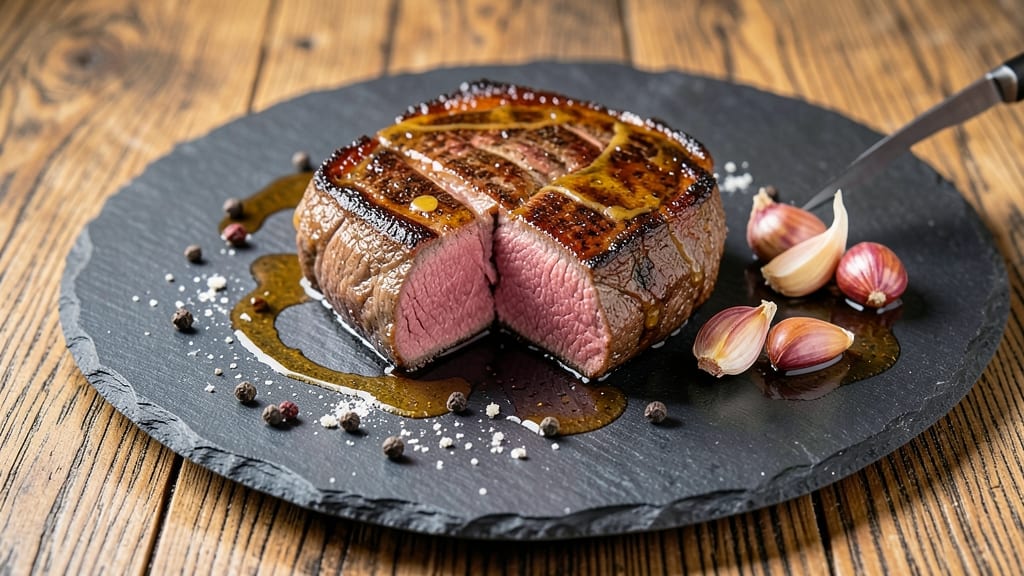
Mastering a beef loin New York strip steak with a hotel-quality crust starts with the reverse-sear method—my secret weapon for achieving perfect medium-rare every time. This technique transforms tough cuts into melt-in-your-mouth tenderness with a crisp, caramelized exterior that’ll impress even the most discerning guests.
After years of testing, I’ve refined this approach to deliver restaurant-worthy results at home, using precise timing and temperature control.
The beauty of this method lies in its simplicity: begin by gently warming the steak in the oven, then finish with a quick sear in a screaming-hot cast-iron skillet. This ensures even cooking without overcooking the exterior, while the high heat creates that coveted crust.
With just a few key ingredients—quality beef, kosher salt, black pepper, and butter—you’ll achieve a steak that’s juicy, flavorful, and impossible to resist.
What you’ll end up with is a steak that’s perfectly medium-rare throughout, with a deep mahogany crust that crackles when cut. The reverse-sear method guarantees consistent results, even if you’re cooking multiple steaks at once.
This technique also works beautifully for thicker cuts, ensuring the center remains tender while the edges achieve that coveted sear.
Pair your steak with classic sides like roasted garlic mashed potatoes or a crisp green salad, and don’t forget a drizzle of red wine reduction for added elegance.
The key to success is patience—letting the steak rest before serving ensures every bite is as tender as the first. Let’s get cooking!
Ingredients for beef loin new york strip steak
Eleven ingredients for the steak itself, plus a few for the red wine reduction that'll make it unforgettable.
| Ingredient | Amount | Notes |
|---|---|---|
| Beef Loin New York Strip Steak 🥩 | 1 ½ lb | 1.5-inch thick cut, center-cut preferred |
| Unsalted Butter 🧈 | 4 tbsp | Cold, cut into 4 equal pieces |
| Kosher Salt 🧂 | 1 ½ tsp | Diamond Crystal preferred, coarse grain |
| Freshly Ground Black Pepper 🌶️ | 1 tsp | Cracked peppercorns preferred |
| Extra-Virgin Olive Oil 🫒 | 2 tbsp | High smoke point, fruity variety |
| Garlic Cloves 🧄 | 4 cloves | Smash with side of knife for flavor |
| Fresh Rosemary 🌿 | 1 sprig | Woody stems removed, leaves chopped |
| Fresh Thyme 🌿 | 1 sprig | Leaves only, finely chopped |
| Red Wine 🍷 | ¼ cup | Bold dry red, like Cabernet Sauvignon |
| Heavy Cream 🥛 | ¼ cup | Full-fat for richness |
| Dried Parsley 🌿 | 1 tsp | For garnish, finely chopped |
The steak is everything here—center-cut New York strip with that marbled fat is non-negotiable. Whole Foods or a quality butcher is your best bet for this cut; avoid pre-cut steaks from the grocery store's freezer section. Look for bright red color and good marbling—those white streaks are flavor gold. If you can't find center-cut, strip steak from the outer edge works too, but trim any excess fat. The thickness matters: 1.5 inches ensures even cooking without overcooking the center. Let it sit at room temp for 30-45 minutes before cooking—this is critical for even doneness.
No red wine? Beef broth with a splash of balsamic works in a pinch, though the acidity won't be as bright. Fresh herbs are ideal but dried thyme at one-third the amount gets you close. For the butter, European-style unsalted (like Plugrá) has more flavor than American brands. The garlic and rosemary can be roasted whole with the steak for extra depth—just smash the garlic cloves first. If you're cooking multiple steaks, use a meat thermometer to avoid overcooking; the reverse-sear method is forgiving but precision pays off.
Steaks rest best on a wire rack over a baking sheet—keeps them warm and lets air circulate. The red wine reduction can be made ahead and reheated gently; it keeps for 5 days in the fridge. For leftovers (if there are any), slice against the grain and reheat in a 350°F oven for 10 minutes. The crust won't be as crisp, but the steak stays juicy. I always make extra reduction—it's perfect for drizzling over eggs or mashed potatoes the next day.
Why You'll Love This Recipe
- Hotel Crust at Home: I swear by that buttery, crackling crust you’d pay $80 for at a steakhouse—except this one comes from my own kitchen using just 4 tablespoons of cold unsalted butter and a heavy skillet. The secret? Letting it melt into a foamy bath before searing the steak for exactly 2 minutes per side. No fancy tools, just patience and a little elbow grease.
- Wine-Soaked Flavor Bomb: That ¼ cup of bold red wine isn’t just for show—it transforms into a rich, velvety sauce that clings to every slice like a hug. Between us, the garlic, rosemary, and thyme in the sear? They wake up the steak’s natural beefy goodness, while the heavy cream adds this luxurious silkiness that makes it taste like you slaved over it for hours. (Spoiler: you didn’t.)
- Weeknight Date Night: This steak is my go-to when I need to impress someone without stressing. The oven does 90% of the work while I chop veggies or pour a glass of that same Cabernet Sauvignon you’re using in the sauce. Serve it with a simple salad, and suddenly you’re hosting a dinner party—no takeout menus required.
- Leftovers That Don’t Suck: Here’s the thing about sliced New York strip: it reheats beautifully, and this method makes it even better the second time. Toss the leftovers in a 350°F oven for 10 minutes, and they’ll still be tender with that crust intact. (Yes, even on a Tuesday night.) Plus, the wine reduction keeps for 5 days, so you’ve got a quick sauce fix for whatever’s calling your name.
Step-by-step instructions for beef loin New York strip steak
This reverse-sear method guarantees a perfect hotel-style crust with juicy meat every time.
Prep and Season the Steak
Remove the beef loin New York strip steak from the refrigerator and let it sit at room temperature for 30 minutes. This ensures even cooking throughout the thick cut. Pat the steak dry completely with paper towels—moisture is the enemy of a good sear. Season both sides generously with 1.5 teaspoons kosher salt and 1 teaspoon freshly ground black pepper, pressing the seasoning into the meat so it adheres evenly.
Here's the thing—don't skimp on the salt. The steak needs time to absorb the seasoning before hitting the heat. I like to season it about 10 minutes before cooking to let the salt penetrate slightly. This step is non-negotiable for flavor development.
Low-Temperature Oven Cook for Even Doneness
Preheat your oven to 250°F. Place the seasoned steak on a wire rack set over a baking sheet (the rack allows air circulation for even cooking). Cook for 45-60 minutes, depending on thickness, until the internal temperature reaches 110-115°F when measured with a meat thermometer. This low-and-slow approach ensures the steak cooks through without overcooking the exterior.
The reason we stop at this temperature is that it leaves the steak perfectly rare in the center while allowing us to develop that legendary crust in the next step. Your oven might run hot, so start checking at the 40-minute mark with an instant-read thermometer inserted into the thickest part of the steak.
Build the Perfect Crust with Butter and Aromatics
While the steak is still warm from the oven, heat 2 tablespoons extra-virgin olive oil in a heavy skillet over medium-high heat until shimmering. Add 4 cloves smashed garlic, 1 sprig chopped fresh rosemary, and 1 sprig chopped fresh thyme, cooking for 30 seconds until fragrant. Remove the aromatics and set aside.
Add 4 tablespoons cold unsalted butter to the skillet, cut into equal pieces. Let it melt slowly, creating a foamy butter bath. This butter will become the foundation of your crust. Once the butter is fully melted and foaming, place the steak in the skillet, fat-side down first, and let it sear undisturbed for 2 minutes until golden brown. Flip carefully and sear the other side for another 2 minutes.
Deglaze and Finish with Wine and Cream
Remove the steak from the skillet and let it rest on a cutting board for 5 minutes (this is crucial for juiciness). Pour the 0.25 cup red wine into the skillet and scrape up all the browned bits from the bottom with a wooden spoon. This deglazing captures all the flavor that would otherwise be lost.
Add the 0.25 cup heavy cream and bring to a gentle simmer, reducing for 2-3 minutes until slightly thickened. The sauce should coat the back of a spoon—this will be your finishing sauce. Taste and adjust seasoning if needed, then spoon a generous amount over the steak before serving.
Rest and Serve with Garnish
Slice the steak against the grain into ½-inch thick portions. Sprinkle each serving with the reserved 1 teaspoon finely chopped dried parsley for a pop of color and freshness. The steak should be medium-rare in the center with a beautiful crust on the outside. Serve immediately with the wine-cream sauce drizzled over the top.
Real talk: the steak will continue to carry over in temperature as it rests, so don't overcook it to reach your desired doneness. Each slice should be tender with a perfect pink center and that coveted crust you'd find in high-end hotels. Enjoy it with a simple side of roasted vegetables or a fresh salad to let the steak shine.
Pro Tips For Making Beef Loin New York Strip Steak
- Use Two Zones: Start with a screaming-hot pan—cast iron if you’ve got it—and get the steak searing immediately. Once it’s browned halfway through (about 2 minutes per side), lower the heat to medium and finish cooking. I used to burn the outside while the inside stayed raw—this method fixes that.
- Salt Before Butter: Season the steak generously with kosher salt and pepper before it hits the pan—let it sit for 10 minutes if you’re patient. The butter will melt into that salt crust, locking in flavor instead of just pooling on the pan. (Yes, even if you’re impatient like me.)
- Skip the Thermometer: For medium-rare, pull the steak when it’s still slightly springy in the center—about 125°F if you must, but trust your finger. Over-relying on a thermometer turns your steak into a science experiment, not a restaurant-quality meal.
- Butter Last Minute: Add the cold unsalted butter in the last 30 seconds of cooking—it’ll foam and baste the steak like a fancy restaurant. If you add it too early, it’ll burn before the steak is done. (I learned this after one very smoky disaster.)
Make-ahead tips for beef loin new york strip steak
Prep Ahead
Season your steak up to 24 hours ahead and store it uncovered in the fridge. This allows the salt to penetrate deeply, enhancing flavor without over-drying the meat. Wrap it in parchment paper and refrigerate—just bring it to room temperature for 30 minutes before cooking.
I do this when hosting dinner parties to save time on the big day. 💡
Sauce Prep
Make the red wine reduction 1-2 days ahead and store it in an airtight container. Reheat gently in a saucepan over low heat until warmed through—never microwave, as it can break the sauce's emulsion.
This step is a game-changer for busy weeknights. The sauce keeps its richness and depth when reheated properly.
Oven Prep
Preheat your oven to 250°F while the steak rests at room temperature. Place a wire rack on a baking sheet and position it near your cooking station. This setup ensures you can transfer the steak directly from oven to skillet without losing heat.
I like to preheat my oven while I prep the aromatics and butter for the final sear. ⏰
Butter Bath
Cut your 4 tbsp unsalted butter into equal pieces and chill them in the freezer for 10 minutes before cooking. This keeps the butter cold longer, creating a better crust when it melts in the skillet.
I store the butter pieces in a small ramekin in the freezer until ready to use—this is a pro trick I learned from a line cook in Chicago. 🧈
Resting Strategy
Use a meat thermometer to monitor internal temperature during the oven phase, then let the steak rest on a cutting board for 5 minutes before slicing. For make-ahead meals, slice the steak after resting and store it in an airtight container.
Reheat slices in a 350°F oven for 10 minutes to maintain juiciness—this works best for leftovers. 🍽️
Equipment Setup
Arrange all your tools before starting: a heavy skillet (I use Lodge cast iron), a wire rack, baking sheet, and cutting board. Keep your instant-read thermometer handy for precise temperature checks.
This organized approach prevents last-minute scrambling and keeps the process smooth. I even label my containers with dates to track freshness. ✨
Nutrition facts
Frequently asked questions
Why does the reverse-sear method work better for thick steaks?
The reverse-sear method prevents overcooking the exterior while ensuring the center reaches perfect doneness. By warming the steak slowly in the oven first (250°F), you eliminate hot spots that can create uneven cooking. The final high-heat sear builds that coveted crust without overcooking the interior. This technique is especially critical for 1.5-inch thick cuts like New York strip steaks, where traditional methods often leave the outside tough or the center undercooked.
Can I use a different cut of beef instead of New York strip?
Yes, but with adjustments. Ribeye (similar thickness) works beautifully, while filet mignon (more tender but less flavorful) needs slightly less time. Avoid lean cuts like sirloin—they won't develop the same crust. For 1.5-inch thick cuts, the reverse-sear method remains ideal. If using a thinner cut (1-inch), reduce oven time by 10-15 minutes and sear for 1 minute per side instead.
What if my steak doesn't reach the right temperature in the oven?
Check your oven's accuracy first—many run 25°F hotter than set. If the steak isn't heating evenly, try placing it on a wire rack over a baking sheet to improve air circulation. For stubborn cold spots, increase oven temp to 275°F and add 5-10 minutes to the cook time. Never rush the oven phase—this is where the magic happens for even doneness.
How do I know when the steak is done without a thermometer?
Press the steak gently with your finger—it should feel very firm for medium-rare. For a 1.5-inch thick steak, the center should yield slightly like "the palm of your hand" (not spongy). Visual cues: a deep mahogany crust and a 130-135°F internal temp (use a knife to check—juices should run pink, not red). Pro tip: Practice with a thermometer first, then trust your touch.
Can I make this recipe on a grill instead of in the oven?
For the oven phase, use your grill on low heat (250°F) with the lid closed. Cook the steak for 45-60 minutes until it reaches 110-115°F. For the final sear, crank the grill to high heat and sear for 2-3 minutes per side. The butter bath step works the same—just use a grill-safe skillet or cast-iron pan. Charcoal grills work best for this method.