
Soups & Stews
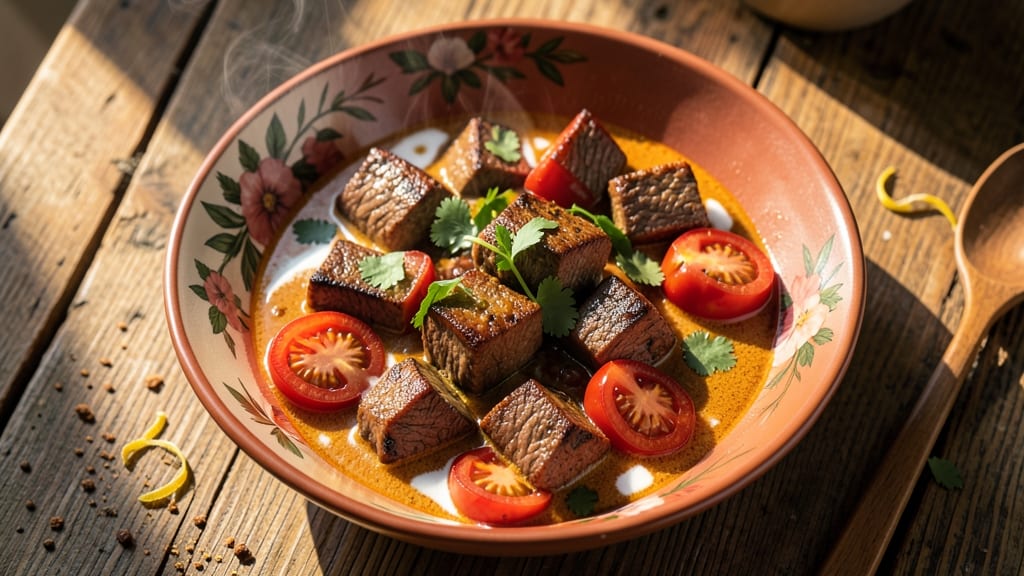
This beef and tomato curry recipe delivers restaurant-quality tenderness and aromatic depth in one 30-minute simmer. The secret lies in slow-cooked beef that practically melts in your mouth, balanced by sweet tomatoes and a spice blend that layers warmth without overpowering.
I developed this version after years of testing—it’s the one that finally earned rave reviews from even the most stubborn curry skeptics in my family.
What sets this dish apart is the technique: browning the beef first creates a flavorful crust that deepens as it simmers, while blooming whole spices in hot oil unlocks their aromatic potential.
Fresh tomatoes (or high-quality canned) provide natural sweetness that cuts through the richness, and a touch of coconut milk at the end ensures the sauce is velvety without being heavy. The result is a curry that’s rich yet balanced, tender yet robust.
By the time you serve it, you’ll have perfectly tender beef chunks swimming in a sauce that’s just thick enough to coat each bite, with tomatoes that’ve softened into sweet, caramelized pieces.
The spices—cumin, coriander, and a hint of cinnamon—create warmth that lingers, while the acidity from tomatoes keeps the flavors vibrant. This is the kind of curry that pairs beautifully with basmati rice or warm naan, making it ideal for family dinners or cozy weeknight meals.
The best part? This recipe scales effortlessly—double it for a crowd or halve it for a quiet night in. Every element comes together in a way that feels both comforting and impressive, proving you don’t need a restaurant kitchen to create a dish worth savoring. Let’s get cooking.
Ingredients for beef and tomato curry
The secret to restaurant-quality curry lies in these 15 ingredients—tender beef, aromatic spices, and tomatoes that caramelize into sweet perfection.
| Ingredient | Amount | Notes |
|---|---|---|
| Beef Chuck Roast 🥩 | 1 ½ lb | Cut into 1-inch cubes |
| Fresh Tomatoes 🍅 | 2 cups | Diced, medium size |
| Yellow Onion 🧅 | 1 whole | Chopped, medium size |
| Garlic Cloves 🧄 | 4 cloves | Minced, fresh preferred |
| Ginger Root 🌿 | 1 inch | Fresh, peeled, grated |
| Coconut Milk 🥥 | ½ cup | Full-fat for creaminess |
| Ground Cumin 🌿 | 1 tbsp | Toasted for deeper flavor |
| Ground Coriander 🌿 | 1 tbsp | Freshly ground preferred |
| Ground Turmeric 🌶️ | ½ tsp | Bright yellow color |
| Cinnamon Stick 🌿 | 1 whole | For aroma, remove before serving |
| Olive Oil 🫒 | 2 tbsp | Extra-virgin for richness |
| Salt 🧂 | 1 tsp | Kosher or sea salt |
| Black Pepper 🌶️ | ½ tsp | Freshly ground preferred |
| Tomato Paste 🍅 | 1 tbsp | High-quality for depth |
| Fresh Cilantro 🌿 | ¼ cup | Chopped, for garnish |
The beef is the star here, so don’t skimp on quality. Chuck roast is ideal—it’s flavorful and tender when cooked low and slow. Most grocery stores carry it pre-cut, but if you’re buying a whole roast, ask the butcher to cube it for you. Costco or Whole Foods usually have the best selection. For tomatoes, fresh is ideal (Roma or vine-ripened), but San Marzano canned tomatoes work beautifully if you’re short on time. The ginger and garlic? Fresh, always. Pre-minced garlic lacks the punch you need here.
No fresh ginger? Ground ginger at half the amount works in a pinch, but fresh is worth the peel-and-grate effort. Running out of coconut milk? Heavy cream thinned with a little water mimics the richness, though it won’t taste identical. The spices are non-negotiable—Penzeys or Spicewalla for the best quality, but the regular grocery store stuff works fine if it’s labeled ‘ground’ (not ‘pre-mixed’). For tomato paste, Muir Glen is my go-to—it’s smooth and never watery. The cilantro? Fresh if you’ve got it, dried at one-third the amount if you don’t. And trust me, the cinnamon stick isn’t just for show—it infuses the dish with warmth.
This curry tastes even better the next day, so make extra. Store leftovers in an airtight container in the fridge for up to 4 days, or freeze for 3 months. I like to portion it into containers with a scoop of basmati rice—grab-and-go lunches sorted. The spices mellow slightly after a day, so reheat gently on the stove with a splash of water to restore the sauce’s silkiness. And if you’re feeling fancy, garnish with a dollop of yogurt or a sprinkle of toasted cashews before serving.
Why You'll Love This Recipe
- One-Pot Magic: I swear by this recipe—just chop the onion, slice the tomatoes, and let the slow cooker do the rest. No fancy techniques, no constant stirring. The chuck roast practically melts into tender perfection while you sip tea.
- Deep, Rich Layers: That beef chuck roast? It turns buttery after hours of simmering, while the fresh tomatoes add a bright, tangy punch. Honestly, the ginger and garlic sear at the start—this isn’t just curry, it’s aromatic curry.
- Leftovers That Shine: This curry tastes better the next day. I make a double batch on Sundays, freeze half, and reheat it for lazy nights or when company drops by. The flavors only deepen, and it’s still hearty enough to feed a crowd.
- Budget-Friendly Feast: Chuck roast is affordable, and you’re using whole ingredients—not some pre-mixed paste. A single roast stretches for four meals, and the spices (cumin, coriander, turmeric) cost pennies. Frugal? Yes. Delicious? Absolutely.
Step-by-step instructions for beef and tomato curry
Here's how to create a rich, aromatic curry with melt-in-your-mouth beef and vibrant tomato flavors.
Prepare the Beef and Aromatics
Start by cutting the 1.5 lb Beef Chuck Roast into 1-inch cubes—this size ensures even cooking and tender results. Pat the beef dry with paper towels to help it develop a good sear. In a large bowl, combine the beef with 1 tbsp Ground Cumin, 1 tbsp Ground Coriander, 0.5 tsp Ground Turmeric, 1 tsp Salt, and 0.5 tsp Black Pepper. Toss until the spices coat the beef evenly. This step infuses the meat with flavor and prevents it from drying out during cooking.
While the beef marinates, peel and grate the 1 inch Ginger Root, then mince the 4 cloves Garlic Cloves. Chop the 1 whole Yellow Onion into medium dice. Dice the 2 cups Fresh Tomatoes into medium-sized pieces. The fresh ginger and garlic will add a bright, zesty kick to the curry, while the onions and tomatoes form the base of the sauce.
Sear the Beef for Depth of Flavor
Heat 2 tbsp Olive Oil in a large, heavy-bottomed pot or Dutch oven over medium-high heat. Once the oil shimmers, add the spiced beef in a single layer, leaving space between the pieces. Let it sear undisturbed for 3-4 minutes until the edges turn deep golden brown—this builds a rich, caramelized crust that adds layers of flavor. Only then should you stir the beef and cook for another 2-3 minutes until it begins to brown all over.
Remove the beef from the pot and set it aside. The residual heat will keep it warm while you build the sauce. If the pot starts to smoke or the oil looks too dark, reduce the heat slightly—you want to cook, not burn. This step is crucial for developing the deep, savory foundation of your curry.
Build the Curry Base
In the same pot, reduce the heat to medium and add the chopped onion. Cook for 4-5 minutes, stirring occasionally, until the onions soften and turn golden brown—this sweetens them and deepens their flavor. Add the minced garlic and grated ginger, stirring for 1 minute until fragrant. The aroma should fill your kitchen, signaling that the aromatics are ready to release their full potential.
Stir in the 1 tbsp Tomato Paste and cook for 1 minute to toast its rich, concentrated flavor. Pour in 1 cup of water and scrape up any browned bits from the bottom of the pot—these bits, called fond, are packed with flavor. Add the 1 whole Cinnamon Stick and let the mixture simmer for 3-4 minutes until the onions are fully softened and the liquid reduces slightly.
Simmer the Curry to Perfection
Return the beef to the pot and pour in the 2 cups diced Fresh Tomatoes. Stir to combine, then add the 0.5 cup Coconut Milk. Bring the mixture to a gentle simmer, then reduce the heat to low. Cover the pot and let it cook for 1 hour to 1 hour 15 minutes, stirring occasionally. The curry should simmer gently, allowing the beef to become fork-tender while the flavors meld together.
Check the beef after 45 minutes—it should be soft enough to pierce easily with a fork. If the curry is too thick, add 2-3 tablespoons of water to loosen it. The sauce should coat the back of a spoon but still be thick enough to cling to the beef. Taste and adjust the seasoning with more salt or black pepper if needed. The cinnamon stick can be removed before serving, but leave it in during cooking for maximum aroma.
Finish and Serve with Fresh Cilantro
Once the beef is tender and the flavors are well balanced, remove the cinnamon stick. Stir in the 0.25 cup chopped Fresh Cilantro and let the curry sit off the heat for 5 minutes to allow the flavors to settle. The cilantro adds a bright, fresh contrast to the rich, spiced beef and tomatoes, finishing the dish with a pop of color and herbaceousness.
Serve the curry hot over steamed basmati rice or with warm naan bread. Each bite should deliver tender beef, a velvety tomato-coconut sauce, and a harmonious blend of spices. The curry tastes even better the next day as the flavors continue to deepen, so it’s perfect for meal prep or a comforting dinner.
Pro Tips For Making Beef And Tomato Curry
- BROWN THE BEEF FIRST: Chuck roast is tough—don’t skip the deep golden crust. Sear it in 2 tablespoons of oil over high heat for 8-10 minutes, turning occasionally, until it’s caramelized in spots. I used to rush this, and the curry always tasted underdeveloped. This step locks in flavor and makes the meat tender later.
- PEEL AND CHAR THE TOMATOES: Fresh tomatoes add brightness, but their skins can turn slimy. Peel them, then cut into wedges and sear skin-side down in a dry pan for 2-3 minutes until blackened. This concentrates their sweetness and cuts cooking time later—no mushy texture.
- LOW AND SLOW FOR TENDERNESS: After browning, reduce heat to a simmer (180-190°F) and cover the pot. Chuck roast needs 2.5-3 hours to break down, not 1.5. I learned this the hard way—rushing it leaves it chewy. Check occasionally, adding a splash of water if it’s too dry.
- GINGER-GARLIC PASTE SAVES TIME: Grate ginger and garlic, then mix with 1 tablespoon water to form a paste. This blends smoother than mincing and sticks to the pot better. No clumps, no burning—just even distribution. (Yes, even if you’re impatient like me.)
Pro cooking tips for great beef and tomato curry
Blooming Spices
Start by toasting your whole spices in a dry pan over medium-low heat for 1-2 minutes until fragrant—this unlocks their full aroma. Then, add 1 tbsp olive oil to the same pot and gently bloom the spices by cooking them for 30 seconds until they sizzle.
This step is crucial because it releases their essential oils, which infuse the entire dish with depth. I like to use 1 cinnamon stick, 2 bay leaves, and 4 cardamom pods for extra complexity. 🌿
Searing the Beef
Never overcrowd the pan when searing your beef—this ensures a proper Maillard reaction that creates deep, caramelized flavors. Work in batches if needed, and let each piece sear for 3-4 minutes until deep golden brown before stirring.
The beef should develop a crust that adds richness to the sauce. I recommend using a heavy-bottomed Dutch oven like the Le Creuset for even heat distribution. 🔥
Tomato Integration
Add your 2 cups diced tomatoes (fresh or canned) after the onions have softened but before adding the coconut milk. This ensures the tomatoes have time to break down and caramelize slightly, enhancing their natural sweetness.
If using canned tomatoes, crush them slightly with your hands to release their juices. For extra depth, stir in 1 tbsp tomato paste along with the spices. ✨
Simmering Low and Slow
Maintain a gentle simmer at low heat to prevent the sauce from curdling or the beef from toughening. The curry should take 1 hour to 1 hour 15 minutes to reach perfection.
Stir occasionally and add 2-3 tbsp water if the sauce becomes too thick. The key is patience—the longer the beef simmers, the more tender and flavorful it becomes. 💫
Finishing Touches
Stir in the 0.5 cup coconut milk in the last 10 minutes of cooking to create a velvety texture without overpowering the dish. Remove the cinnamon stick before serving, but leave the bay leaves in for extra aroma.
Garnish with fresh cilantro and a squeeze of lime just before serving to brighten the flavors. This final step elevates the dish from good to restaurant-quality. 💡
Nutrition facts
Frequently asked questions
Can I use ground beef instead of cubed chuck roast?
Ground beef works but won't give you the same tender, melt-in-your-mouth texture. For best results, use 80/20 ground beef (20% fat) and brown it thoroughly before adding other ingredients. Cook for 15-20 minutes instead of simmering, stirring occasionally to prevent burning. The fat content helps keep it moist, but expect a slightly different mouthfeel than cubed beef.
How can I make this curry spicier?
Add 1 tsp cayenne pepper or 1 chopped fresh chili when blooming your spices. For heat lovers, stir in 1 tbsp hot sauce or 1 tsp red pepper flakes during the final 10 minutes of cooking. Remember, spices build flavor over time—start with half the amount and adjust to taste at the end.
Can I make this curry in an Instant Pot?
Sear the beef first, then add all ingredients except coconut milk. Cook on high pressure for 25 minutes, then quick-release. Stir in coconut milk and let sit for 5 minutes before serving. The Instant Pot version cooks faster but may need 1-2 tbsp extra water to prevent burning. Taste and adjust seasoning after pressure cooking.
What's the best way to store leftovers?
Store in an airtight container in the fridge for up to 4 days or freeze for 3 months. Portion into meal-sized containers with rice for easy reheating. To restore texture, warm gently on low heat with 1-2 tbsp water. The flavors actually improve overnight as spices meld!
Why did my curry turn out too acidic?
This usually happens when tomatoes overpower other flavors. Balance it by adding 1 tsp sugar or 1 tbsp honey to sweeten, or stir in 2 tbsp coconut milk to mellow the acidity. For future batches, reduce tomato quantity by 1/4 cup or add 1/2 tsp baking soda (just enough to neutralize acidity).