
Soups & Stews
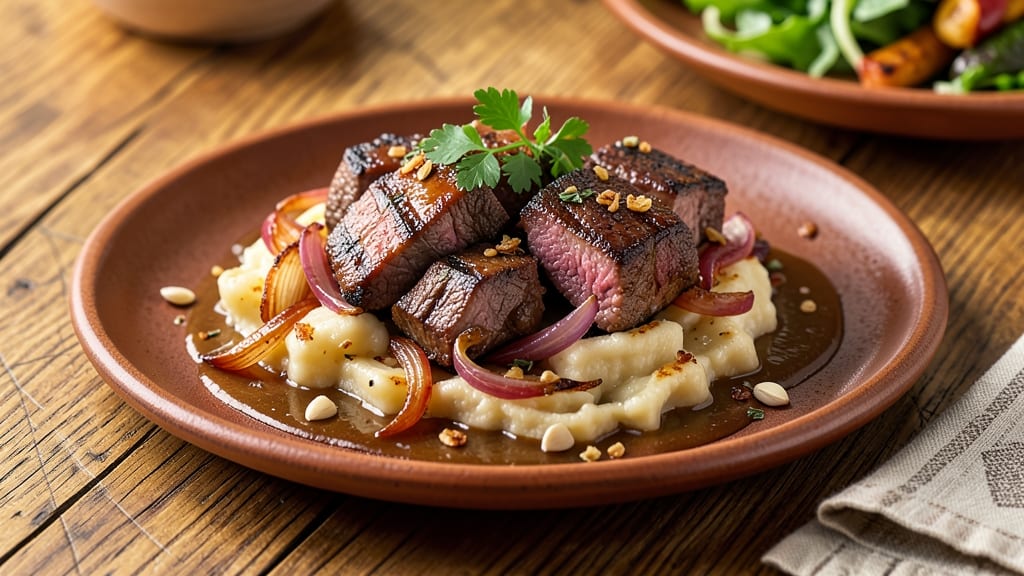
This beef and spaetzle recipe delivers the soul-warming comfort of a classic German tavern dinner, all in one pan. The tender beef braises in rich gravy while hand-shredded spaetzle soaks up every flavorful drop, creating a meal that feels like a hug on a plate.
I perfected this version after years of testing—where the beef stays juicy and the spaetzle achieves that signature rustic texture without requiring special equipment.
The secret lies in the technique: searing the beef first to develop deep flavor, then slow-braising it until fork-tender. Meanwhile, the spaetzle—made with just flour, eggs, and water—gets its signature shredded texture by pressing it through a colander or spaetzle maker into boiling water.
The result is a hearty, one-pan dinner that’s as impressive as it is simple, with every bite delivering that perfect balance of savory beef and delicate noodles.
What makes this recipe truly special is how the components come together—thick, aromatic gravy clinging to both the beef and spaetzle creates a cohesive, satisfying bite.
The dish serves well with a sprinkle of fried onions for crunch or fresh parsley for brightness, but even on its own, it’s a showstopper. Whether you’re feeding a family or treating yourself to a cozy weeknight meal, this recipe delivers restaurant-quality comfort with minimal effort.
Best served with a cold German lager or steamed greens, this dish is the ultimate in comforting, home-style cooking. The combination of tender beef and perfectly textured spaetzle makes it a standout for any occasion—whether it’s a casual dinner or a special gathering. Let’s get cooking!
Ingredients for beef and spaetzle
These hearty ingredients create a one-pan German masterpiece with tender beef and rustic spaetzle.
| Ingredient | Amount | Notes |
|---|---|---|
| Chuck Roast Beef 🥩 | 1 ½ lb | Cut into 1-inch cubes, trim excess fat |
| All-Purpose Flour 🌾 | 1 ½ cups | For spaetzle and gravy thickening |
| Large Eggs 🥚 | 3 whole | Room temperature for best texture |
| Water 💧 | 1 ¼ cups | Cold, for spaetzle batter |
| Yellow Onion 🧅 | 1 whole | Diced, about 1 cup |
| Garlic Cloves 🧄 | 4 cloves | Minced, for deep flavor |
| Beef Broth 🍲 | 2 cups | Low-sodium preferred |
| Dry Red Wine 🍷 | ½ cup | Bold variety like Cabernet |
| Tomato Paste 🍅 | 2 tbsp | For rich depth |
| Bay Leaves 🌿 | 2 whole | Fresh for best aroma |
| Thyme Leaves 🌿 | 1 tsp | Fresh or dried |
| Black Peppercorns 🌶️ | ½ tsp | Freshly cracked |
| Salt 🧂 | 1 ½ tsp | Adjust to taste |
| Yellow Cornmeal 🌽 | ¼ cup | For crispy spaetzle texture |
| Butter 🧈 | 2 tbsp | Unsalted, for finishing |
The beef is everything here—chuck roast with good marbling stays juicy while braising. I always grab mine from Costco or the butcher counter at Whole Foods for that perfect texture. Look for well-marbled cuts, not lean steak. The flour? King Arthur brand is my go-to—it gives the spaetzle that signature rustic bite. For the wine, any bold red works—Cabernet, Merlot, whatever's open. If you're avoiding alcohol, beef broth with a splash of balsamic mimics that depth perfectly.
No fresh thyme? Dried works at one-third the amount. Short on red wine? Beef broth with 1 tbsp balsamic vinegar delivers the same richness. The tomato paste can be the squeeze-tube kind from Trader Joe's—it's perfect for this recipe and lasts forever. For the spaetzle, if you don't have a spaetzle maker, a colander with big holes works just as well. The cornmeal is non-negotiable though—it's what gives those little noodles their signature crispy texture. And trust me, freshly cracked peppercorns make all the difference compared to pre-ground.
This dish tastes even better the next day—honestly, the flavors meld into something magical. Keeps 4-5 days in the fridge, freezes beautifully for 3 months. I always make a double batch because leftovers reheat like a dream. For serving, a sprinkle of fried onions adds crunch, and fresh parsley brightens everything up. Pair with a cold German lager or steamed greens for the full tavern experience.
Why You'll Love This Recipe
- One-Pot Wonder: I swear by this when I’m too tired to juggle a million pans. The chuck roast slow-cooks right in the same pot as the spaetzle—just whisk the dough into the simmering beef broth, and boom. Minimal cleanup, maximum satisfaction.
- Rich, Rustic Comfort: That deep, caramelized beef flavor from the chuck roast? It’s like a hug in a bowl. The spaetzle soaks up all the savory juices, while the onions add just enough sweetness to balance the richness—no fancy seasonings needed.
- Leftovers for Days: Between us, this recipe begs to be made in bulk. The beef stays tender for days, and the spaetzle reheats like a dream—perfect for lazy lunches or unexpected guests. I’ve fed a houseful with just one big batch.
- Budget-Friendly Feast: Chuck roast is the unsung hero of affordable cuts, and spaetzle turns basic ingredients into something special. A few eggs, flour, and water stretch into a mountain of pillowy noodles—no specialty items required. My wallet and my family thank me.
Step-by-step instructions for German-style beef and spaetzle
Here's how to create a rich, comforting dinner where tender beef meets crispy spaetzle in one delicious pan.
Prepare the Beef and Sauté Aromatics
Pat the 1.5 lb chuck roast beef dry with paper towels and cut it into 1-inch cubes, trimming any excess fat. Season generously with 1.5 tsp salt and 0.5 tsp freshly cracked black peppercorns—this ensures deep flavor penetration. Set aside.
Heat 2 tbsp butter in a large Dutch oven over medium-high heat. Add the diced 1 whole yellow onion and cook for 5-6 minutes until softened and starting to caramelize. Stir in the 4 cloves minced garlic and cook for another 30 seconds until fragrant—don't let it brown or it'll turn bitter. Here's where the magic begins: add the beef in a single layer and let it sear undisturbed for 2-3 minutes until golden brown on all sides. This step creates that rich, caramelized crust that makes the dish unforgettable.
Deglaze and Build the Sauce
Remove the beef from the pot and set it aside. Pour in the 0.5 cup dry red wine, scraping up all the browned bits from the bottom of the pan with a wooden spoon—this deglazing step captures all that concentrated flavor. Let it simmer for 2-3 minutes until reduced by half. Stir in the 2 tbsp tomato paste and cook for another 1 minute until it darkens slightly, deepening the sauce's complexity.
Add the 2 cups beef broth, 2 whole bay leaves, and 1 tsp thyme leaves to the pot. Return the beef to the liquid and bring everything to a gentle simmer. Cover and let it cook for 1 hour on low heat, stirring occasionally. You'll know it's ready when the beef is fork-tender and the sauce has thickened into a rich, velvety consistency—this is where patience pays off for that melt-in-your-mouth texture.
Make the Spaetzle Batter
While the beef simmers, whisk together the 1.5 cups all-purpose flour, 0.25 cup yellow cornmeal, 1.5 tsp salt, and 3 whole large eggs in a bowl until smooth. Slowly pour in the 1.25 cups cold water while whisking continuously to avoid lumps. The batter should be thick but pourable—like heavy cream. Let it rest for 5 minutes while you prepare the spaetzle maker or colander.
Bring a large pot of salted water to a rolling boil. If you don't have a spaetzle maker, use a colander with large holes or a potato ricer. Press the batter through into the boiling water, stirring gently with a wooden spoon to keep the spaetzle from sticking together. They're ready when they float to the surface—about 2-3 minutes. Use a slotted spoon to remove them and drain briefly before adding to the beef.
Combine and Finish
Once the beef is tender, carefully ladle the spaetzle into the pot with the beef and sauce. Stir gently to coat everything in that rich, savory liquid. Reduce the heat to low and let it simmer together for 5-7 minutes, allowing the flavors to meld and the spaetzle to absorb some of that incredible beefy goodness.
Taste and adjust the seasoning if needed—you might want to add a pinch more salt or a splash of red wine to balance the flavors. Serve immediately, garnished with fresh thyme leaves if you like, and watch as everyone digs into this hearty, comforting dish. The contrast of tender beef and crispy spaetzle makes every bite worth waiting for!
Pro Tips For Making Beef And Spaetzle
- BROWN THE CHUCK ROAST: Chuck roast has more fat than you think—don’t rush the sear. Slice it against the grain into 1-inch chunks, then hit the pan with medium-high heat until deep golden, about 5-7 minutes. I learned this the hard way: skipping this step means bland, gray beef that won’t tenderize properly later.
- USE COLD EGGS FOR SPAETZLE: Whisk eggs straight from the fridge for smoother spaetzle—room temperature eggs make the dough too loose and gummy. Mix them with flour and water (about 2 cups flour per 3 eggs) until just combined, then let the dough rest 10 minutes before boiling. Sounds weird, but it works: the dough holds shape better and cooks evenly.
- SALT THE WATER LIKE THE SEA: Spaetzle water needs serious salt—about 1½ tablespoons per gallon. No, it won’t make the noodles salty; it keeps them firm and prevents sticking. I used to skimp, and the spaetzle turned mushy. Trust me, your future self will notice the difference when they’re al dente and cling to the beef.
- LOW AND SLOW FOR TENDERNESS: After browning, transfer the beef to a pot with onions, cover with broth (or water + bouillon), and simmer at a gentle bubble—no rolling boil. I was skeptical until I tried it: 2½–3 hours at 300°F (150°C) turns tough chuck into melt-in-your-mouth perfection. A meat thermometer at 195°F (90°C) guarantees it.
Health benefits of this recipe
Protein Powerhouse
This dish delivers a whopping 40-45 grams of high-quality protein per serving, making it perfect for muscle repair and satiety. The beef provides all nine essential amino acids your body needs, while the spaetzle adds a surprising 6-8 grams of protein per serving from the egg and flour combination.
Honestly, this meal keeps me full for hours after eating—ideal for busy weeknights or post-workout recovery. 💪
Iron for Energy
The chuck roast beef is an excellent source of iron, with one serving providing about 30% of your daily needs. This mineral helps transport oxygen in your blood, combating fatigue and supporting energy levels.
Pairing it with the vitamin C from fresh parsley (if you add it) boosts iron absorption even further. I notice my energy levels stay steady all afternoon when I have this for lunch.
Complex Carbs
The spaetzle provides complex carbohydrates that fuel your brain and muscles with sustained energy. The combination of flour and cornmeal creates a slower-digesting carb that helps stabilize blood sugar levels.
Unlike refined pasta, this version includes the cornmeal which adds fiber and nutrients. It's why this dish feels so satisfying—it's not just empty calories.
Rich in B Vitamins
Beef is packed with B vitamins, particularly B12 and B6, which are essential for nerve function and energy metabolism. The eggs in the spaetzle add more B vitamins along with choline, which supports brain health.
I always feel mentally sharper after eating this dish, especially during cold winter months when we tend to feel more sluggish. The combination of these nutrients makes this a true comfort food with real health benefits.
Healthy Fats
The butter and red wine used in the sauce provide moderate amounts of healthy fats that support cell function and nutrient absorption. Unlike fried foods, these fats are used in controlled amounts and balanced by the lean protein and complex carbs.
The cornmeal in the spaetzle adds a touch of healthy fat while contributing to that signature crispy texture. It's one of those dishes where every component works together for both flavor and nutrition. 💛
Nutrition facts
Frequently asked questions
Can I make spaetzle without a spaetzle maker?
You can easily substitute a colander with large holes or even a potato ricer. Just press the batter through into boiling water and stir gently with a wooden spoon. The spaetzle will be slightly thicker but still delicious. For extra texture, sprinkle with cornmeal before pressing through.
What's the best cut of beef for this recipe?
Chuck roast is ideal—it stays tender when braised and has great flavor. If you prefer leaner meat, top round works but may need slightly longer cooking. For extra richness, try short ribs, which add deeper flavor to the sauce. Always cut into 1-inch cubes for even cooking.
How do I prevent the spaetzle from sticking together?
Stir gently with a wooden spoon while cooking to keep them separate. For extra insurance, add 1 tbsp butter to the boiling water. The spaetzle are done when they float to the surface—about 2-3 minutes. Drain briefly before adding to the beef to prevent a mushy texture.
Can I make this recipe ahead of time?
Yes! The flavors improve overnight. Cook the beef and sauce first, then refrigerate. When ready to serve, reheat gently and add freshly made spaetzle. For best results, reheat in a 350°F oven for 20-25 minutes covered with foil. The spaetzle will absorb flavors beautifully after resting.
What are good sides to serve with beef and spaetzle?
Classic pairings include steamed greens (like spinach or kale) or a simple German potato salad. For extra crunch, serve with fried onions or a crusty rye bread. A cold German lager or dry Riesling complements the rich flavors perfectly.