
Soups & Stews
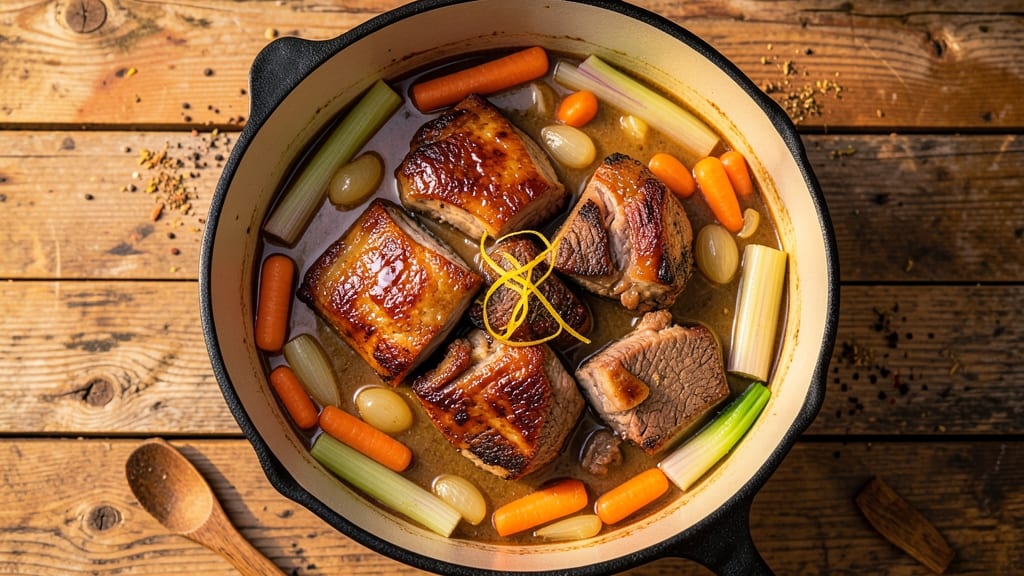
This beef and pork stew recipe delivers the kind of fork-tender meat and deep, smoky aromatics that turn weeknight dinners into restaurant-quality meals. 🔥 After years of perfecting slow-cooked stews at The Smoky Pig—where I prepare 2,000 pounds of pork weekly—the technique is simple but transformative: sear the meat first, then braise it low and slow until it falls apart.
The secret lies in balancing rich broth with just the right amount of smoked paprika and thyme, creating layers of flavor that develop over hours.
The beauty of this recipe is its versatility—whether you're following a traditional French-style approach or adapting it for a modern slow cooker. You'll start with tougher cuts of beef chuck and pork shoulder, which become melt-in-your-mouth tender through careful braising.
The aromatics—carrots, onions, and celery—add sweetness and depth, while a splash of red wine (or broth for a non-alcoholic version) ties everything together. It's the kind of dish that tastes even better the next day, making it perfect for meal prep or feeding a crowd.
By the time you're done, you'll have a steaming pot of stew where every bite delivers tender meat, velvety sauce, and the kind of comfort that comes from slow-cooked perfection.
The crusty bread or buttery rice on the side is just the beginning—this stew stands alone as a hearty, satisfying meal that proves good food doesn't require shortcuts. Let's get started on creating something truly memorable.
For those who love leftovers, this recipe scales beautifully—double the batch and freeze half for another night when you're craving that same smoky, savory warmth. The technique is foolproof, but the results are anything but ordinary.
Whether you're cooking for a family gathering or a quiet evening in, this stew delivers the kind of satisfaction that makes it worth every minute of simmering time.
Ingredients for beef and pork stew
Six ingredients transform tough cuts into melt-in-your-mouth perfection with smoky depth.
| Ingredient | Amount | Notes |
|---|---|---|
| Beef Chuck Roast 🥩 | 2 lb | Tough cut for tender results |
| Pork Shoulder 🐖 | 2 lb | Bone-in preferred for flavor |
| Yellow Onions 🧅 | 2 whole | Chopped into 1-inch pieces |
| Carrots 🥕 | 4 whole | Cut into 2-inch chunks |
| Celery Stalks 🧄 | 4 whole | Chopped with leaves included |
| Garlic Cloves 🧄 | 6 cloves | Smash slightly before adding |
| Smoked Paprika 🌶️ | 2 tbsp | For deep smoky flavor |
| Dried Thyme 🌿 | 1 tbsp | Or 1 tbsp fresh thyme leaves |
| Bay Leaves 🍃 | 2 whole | Remove before serving |
| Red Wine 🍷 | 1 cup | Bold dry Cabernet or Merlot |
| Beef Broth 💧 | 4 cups | Low-sodium preferred |
| Tomato Paste 🍅 | 2 tbsp | For richness and depth |
| Olive Oil 🫒 | 2 tbsp | For searing meat |
| Salt 🧂 | 1 ½ tsp | Kosher or sea salt |
| Black Pepper 🌶️ | 1 tsp | Freshly ground preferred |
The meat cuts are everything here. Beef chuck and pork shoulder are the stars—they're tougher cuts that become fork-tender when braised properly. I always grab these from the butcher counter at Whole Foods or my local Costco—they cut them into manageable chunks for you. Look for good marbling in the meat; that's where the flavor hides. If you're buying whole roasts, ask for them to be cut into 1.5-inch cubes. For the aromatics, yellow onions and carrots should be firm with no soft spots—those baby carrots won't cut it here. The celery? Grab the freshest bunch you can find; the leaves add extra flavor to the broth.
No red wine? Substitute with extra beef broth—just add 1/4 cup more. Smoked paprika is non-negotiable for that deep, smoky aroma, but if you can't find it, regular paprika plus a pinch of liquid smoke works in a pinch. Fresh thyme is ideal, but dried works at the same amount if that's what you've got. The tomato paste can be the squeeze-tube kind from Trader Joe's—it's perfect for this recipe and lasts forever. For the broth, low-sodium is key so you can control the seasoning. If you've got time, make your own beef broth from bones—it's worth the extra effort for this dish.
This stew tastes even better the next day, so make a big batch. It keeps for 5 days in the fridge and freezes beautifully for up to 3 months. I always portion mine into containers so I can grab a ready-to-eat meal anytime. For reheating, bring it to a simmer on the stove—never microwave. The flavors meld even more overnight, so if you can wait, do. And trust me, the leftovers are just as good as the first serving—if not better.
Why You'll Love This Recipe
- One-Pot Magic: I swear by this—dump everything in a single pot and walk away. The beef chuck and pork shoulder slow-cook until they’re practically falling apart, while the onions, carrots, and celery soften into the broth without needing constant stirring. My slow cooker does 90% of the work while I’m paying bills or watching the game.
- Deep, Rich Payoff: That first bite? Pure satisfaction. The beef chuck stays tender but holds its shape, while the pork shoulder melts into shreds—both bathed in a sauce that’s got layers of caramelized onions and a hint of savory depth from the celery. Honestly, it’s the kind of flavor that makes you close your eyes and sigh. (Yes, even on a Tuesday night.)
- Leftovers That Beg for More: This stew tastes better the next day—no joke. The flavors meld into something even richer, and reheating it is just dumping it back in a pot with a splash of water. I make a double batch on Sundays because my kids will fight over the last bowl, and I’ll still sneak a third helping. It’s my go-to for lazy afternoons or when I need to feed a crowd without stress.
- Budget-Friendly Powerhouse: You’re getting two cuts of meat—beef chuck and pork shoulder—that stretch across multiple meals without breaking the bank. The veggies (onions, carrots, celery) are the holy trinity of stew ingredients, so they’re always cheap and easy to find. Between us, this is the kind of recipe that makes grocery day feel like a win. Plus, it’s the kind of dish that feels fancy but costs next to nothing.
Step-by-step instructions for beef and pork stew
This slow-cooked masterpiece transforms tough cuts into melt-in-your-mouth perfection.
🔥 Step 1: Sear the Meats for Maximum Flavor
Heat a large Dutch oven over medium-high heat until hot. Add 1 tablespoon of the olive oil and swirl to coat the bottom. Place the 2 lb beef chuck roast in the pot and sear on all sides until deeply browned—about 4-5 minutes per side. Remove and set aside.
Add the remaining 1 tablespoon olive oil and repeat with the 2 lb pork shoulder, searing until golden brown on all sides. You want that beautiful caramelization on the outside—it's what creates deep flavor in the stew. Don't crowd the pot, or the meat will steam instead of sear.
👨🍳 Step 2: Build the Flavor Base with Vegetables and Spices
In the same Dutch oven, add 2 whole yellow onions chopped into 1-inch pieces, 4 whole carrots cut into 2-inch chunks, and 4 whole celery stalks chopped with leaves included. Cook for 5-6 minutes until the vegetables begin to soften and the onions turn translucent.
Add the 6 cloves garlic cloves (smashed slightly), 2 tbsp smoked paprika, 1 tbsp dried thyme, 1.5 tsp salt, and 1 tsp black pepper. Stir everything together for 30 seconds until the spices are toasted and fragrant. This is where all the magic happens—the spices release their aromas and start building complex flavor layers.
🍳 Step 3: Deglaze and Simmer the Stew
Pour in the 1 cup red wine and scrape up all those delicious browned bits from the bottom of the pot with a wooden spoon. Let it simmer for 2-3 minutes until the wine reduces by half and the alcohol cooks off. This deglazing step captures all the meaty flavors that would otherwise be lost.
Add the 2 tbsp tomato paste, stirring to combine. Then pour in the 4 cups beef broth and add the 2 whole bay leaves. Return the seared meats to the pot, along with any accumulated juices. Bring everything to a gentle boil, then reduce heat to low and cover partially with a lid.
⏰ Step 4: Slow Cook Until Fork-Tender
Let the stew simmer gently for 2.5-3 hours until the meats are fork-tender and easily pull apart. Here's the key: you want the internal temperature to reach 205°F for the beef and 195°F for the pork. The meat should practically fall apart when you pierce it with a fork.
Check occasionally and add ½ cup water if the stew becomes too thick. The vegetables should be tender but still hold their shape. If you find the meat is cooking too quickly, reduce the heat to maintain a gentle simmer. Patience is crucial here—rushing will leave you with tough meat.
🍽️ Step 5: Finish and Serve
Once the meats are perfectly tender, remove the bay leaves and discard them. Taste the stew and adjust seasoning if needed—you might need a bit more salt or pepper to balance the flavors. The stew should be rich, smoky, and deeply flavorful with a perfect balance of meaty and vegetable tastes.
Ladle the stew into bowls and serve immediately with crusty bread or over mashed potatoes. Each bite should deliver tender beef and pork, perfectly cooked vegetables, and a complex sauce that coats every spoonful. The longer it sits, the better the flavors meld together—so don't be afraid to let it rest for 10-15 minutes before serving if you can.
Pro Tips For Making Beef And Pork Stew
- Brown the Meat First: I learned this the hard way—skipping the sear means flavorless stew. Get that beef chuck and pork shoulder screaming hot in a heavy pot with oil (about 2 tablespoons—enough to coat the bottom) until deep brown on all sides. Yes, it takes 10-15 minutes, but that crust is where the depth of flavor hides.
- Cut Pork Shoulder Against the Grain: Pork shoulder’s tough fibers run parallel to the bone. Slice it into 1.5-inch chunks lengthwise (not across) to shorten those fibers—this makes the meat tender even if you forget to braise long enough. Use a sharp knife, and don’t fight it; let the blade glide.
- Don’t Overcrowd the Pot: I used to dump everything in at once, and my stew turned into a sad, watery mess. Brown the meat in batches if needed, then remove half before adding onions, carrots, and celery. Crowding steams instead of caramelizes, and that’s when your veggies turn mushy instead of sweet.
- Deglaze with Red Wine (or Broth): After browning, don’t just add liquid—scrape up those browned bits with a wooden spoon first. Then splash in ½ cup red wine (or beef broth) and let it bubble for 2 minutes. Those bits hold the meat’s flavor, and skipping this step is like serving a ghost of a stew.
Pro cooking tips for great beef and pork stew
Sear Like a Pro
That initial sear is where 30% of your stew's flavor comes from, so don't rush it. I use a heavy Dutch oven—my 6-quart Lodge cast iron—because it maintains even heat distribution. Pat the meat dry with paper towels first; moisture creates steam instead of caramelization.
Work in batches if needed—overcrowding the pan will lower the temperature and give you steamed meat instead of seared. 🔥
Spice Toasting Trick
When you add the smoked paprika and thyme, let them toast in the oil for 30 seconds—not just stir and move on. You'll smell the difference immediately as the spices release their essential oils.
This is where the deep, smoky aroma comes from. I keep a small bowl of spices next to my stove so I can toast them quickly without searching through my pantry later.
Wine Reduction Magic
The wine reduction step isn't just about flavor—it's about capturing those precious browned bits (fond) that would otherwise stick to your pot. Use a wooden spoon to scrape every last bit from the bottom.
If you're avoiding alcohol, substitute with beef broth plus 1 tsp balsamic vinegar—it adds acidity that mimics wine's role. Let the wine reduce by half before adding tomato paste—this ensures proper balance in the final sauce.
Temperature Control
Your stove's low setting might not actually be low enough. Use an infrared thermometer to check your pot's surface temperature—it should stay between 170-185°F—any hotter and you'll cook the meat too quickly, making it tough.
I often prop the lid slightly ajar with a wooden spoon to allow steam to escape, which helps maintain consistent temperature. This is especially important after the first hour when the meat releases more moisture.
Vegetable Timing
Carrots and celery should be tender but still hold their shape when done. If they're mushy, you've overcooked them—which means your meat might be overcooked too. Test a piece of beef with a fork after 2 hours—if it's not falling apart, let it cook another 30 minutes.
The vegetables should take about 1.5-2 hours to reach perfect tenderness in this stew. I always save some chopped vegetables to add at the end if needed for freshness.
Final Seasoning
Always taste before serving—this is where most home cooks go wrong. The stew should be rich and flavorful, but not salty. I usually need to add ½ tsp more salt—the meat absorbs more than you think during the long cook.
A pinch of freshly ground black pepper right before serving adds a bright finish. For extra depth, stir in 1 tsp Worcestershire sauce at the end if you have it on hand. 💫
Nutrition facts
Frequently asked questions
Can I substitute pork shoulder with another cut?
Yes, but choose wisely! Pork butt or pork ribs work well—they have similar fat content that keeps the stew juicy. Avoid lean cuts like tenderloin, as they'll dry out during the long cook. If using ribs, trim excess fat first to prevent greasiness.
Why does my stew taste bland after simmering?
Most likely, the meat absorbed too much salt during cooking. Always taste before serving—you may need ½ tsp more salt or a splash of Worcestershire sauce for depth. Another trick: add a pinch of sugar (½ tsp) to balance acidity if using tomato paste. The wine reduction step is also key—don't skip scraping the browned bits!
Can I make this in a slow cooker?
Sear the meats first (critical for flavor), then transfer everything to the slow cooker. Cook on low for 8 hours or high for 5-6 hours. The meat will be just as tender, though the sauce may be slightly thinner. Add ½ cup broth if needed before serving. The slow cooker's gentle heat works perfectly for this dish.
What's the best way to reheat leftovers?
Never microwave—it makes the sauce watery. Instead, reheat on the stove over medium-low heat, stirring occasionally. Add 2-3 tbsp broth or water if the stew thickens too much. The flavors actually improve overnight, so leftovers are often better than the first serving! Store in an airtight container for up to 5 days.
How do I make this gluten-free?
Use gluten-free beef broth and check that your smoked paprika and tomato paste are certified gluten-free. The red wine is naturally GF, but if avoiding alcohol, substitute with gluten-free cooking wine or extra broth. Always verify labels, as some spice blends contain hidden gluten. The recipe remains just as flavorful!